Wild Ice

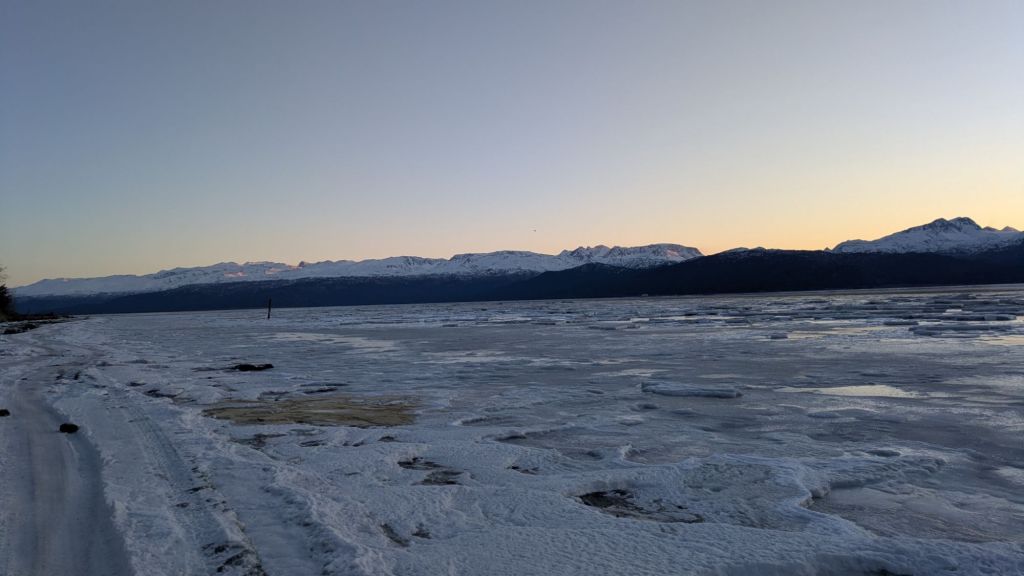
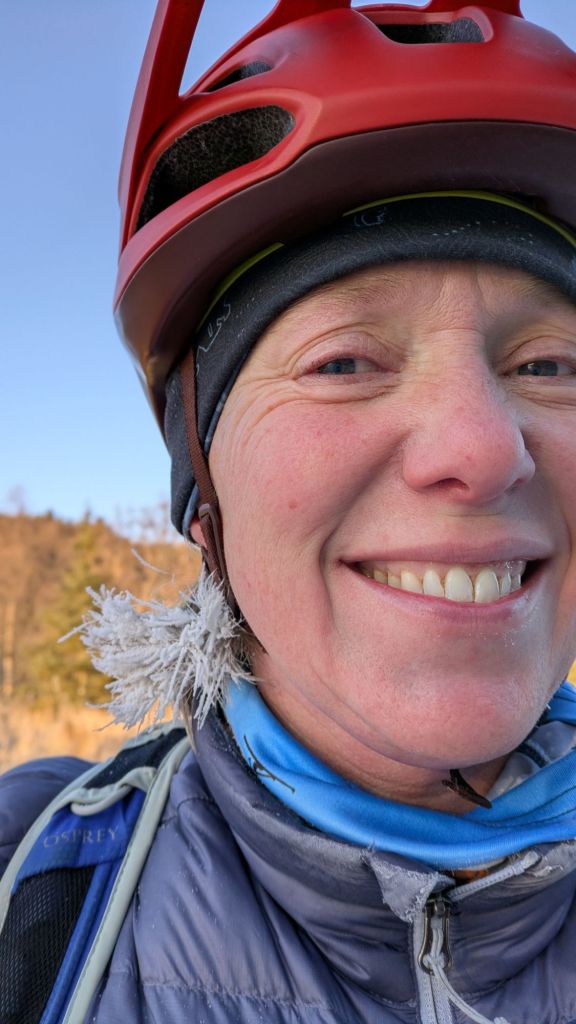
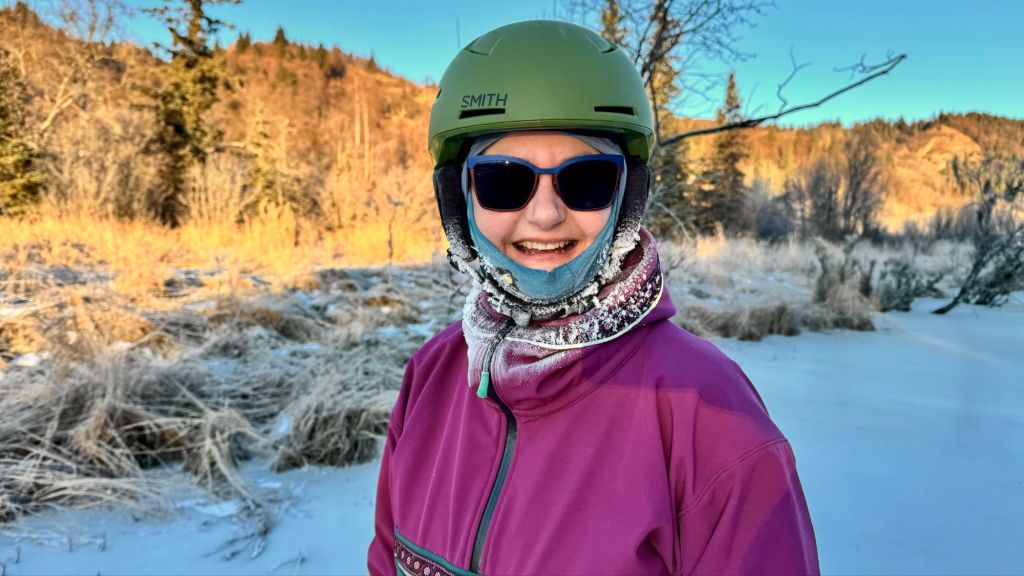
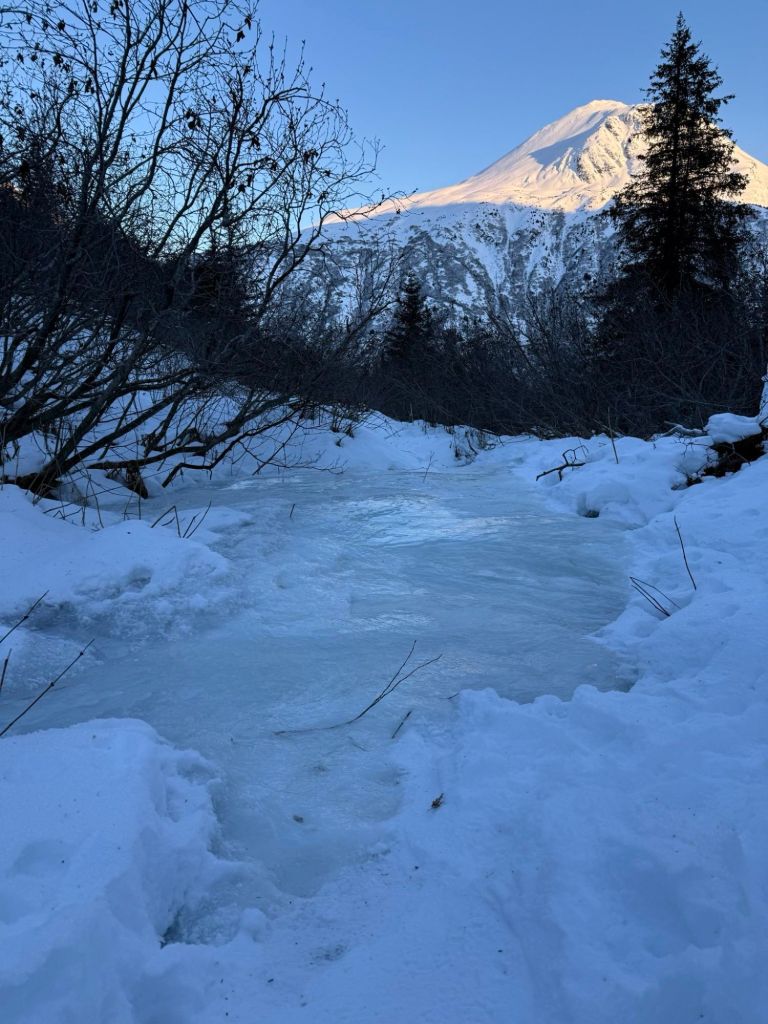
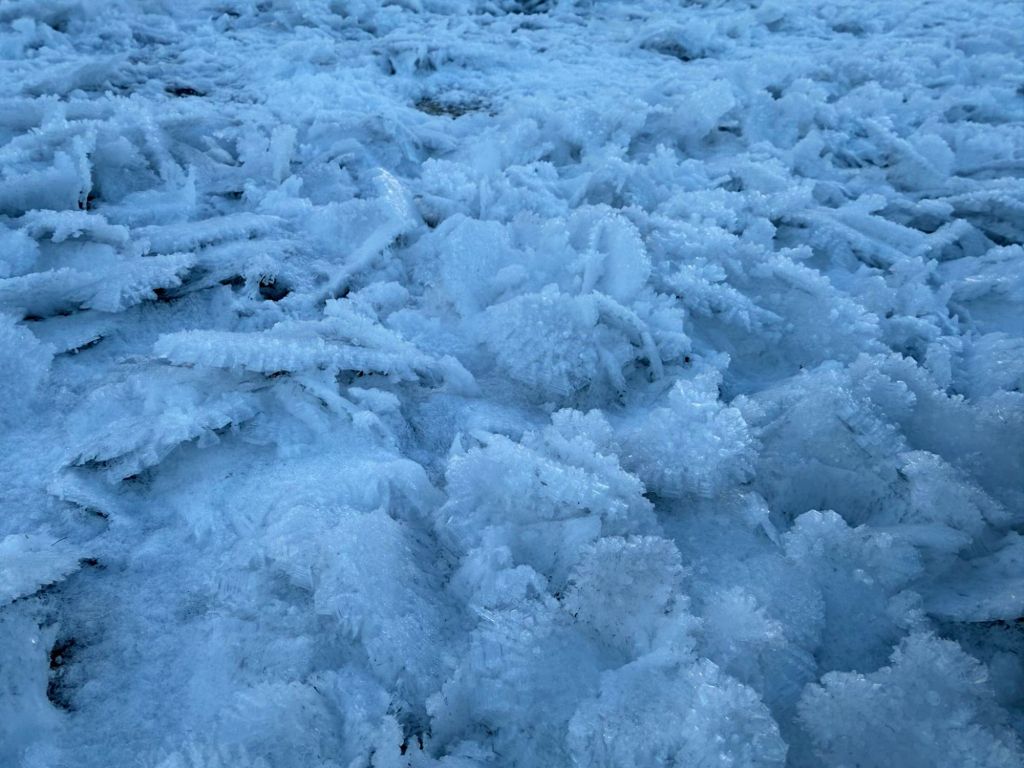
December started warm and wet, melting most of the snow we had. Then it froze, hard. We are looking at days and days of temperatures in the teens, and single digits at night.

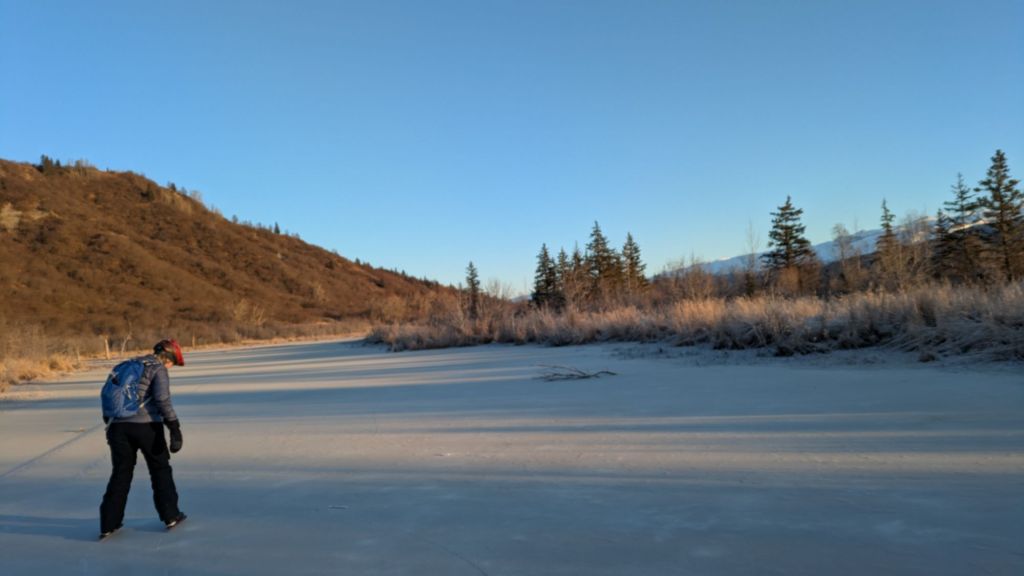
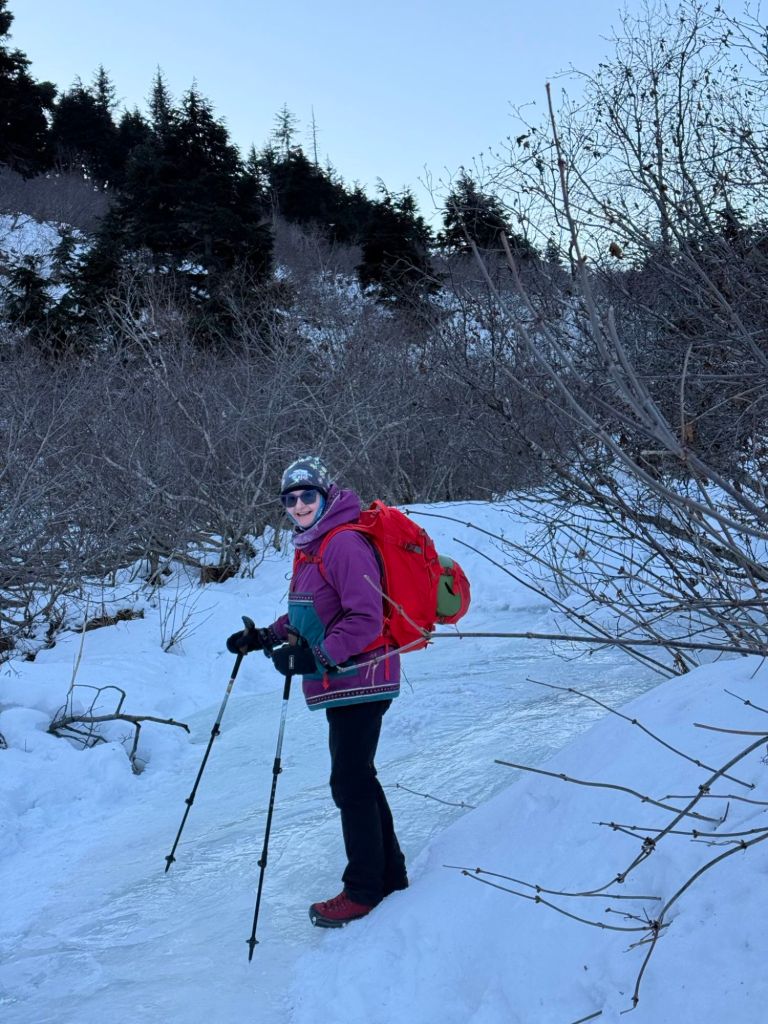
Skiing is out of the question… So the Nordic Skates are going to get a lot of use.


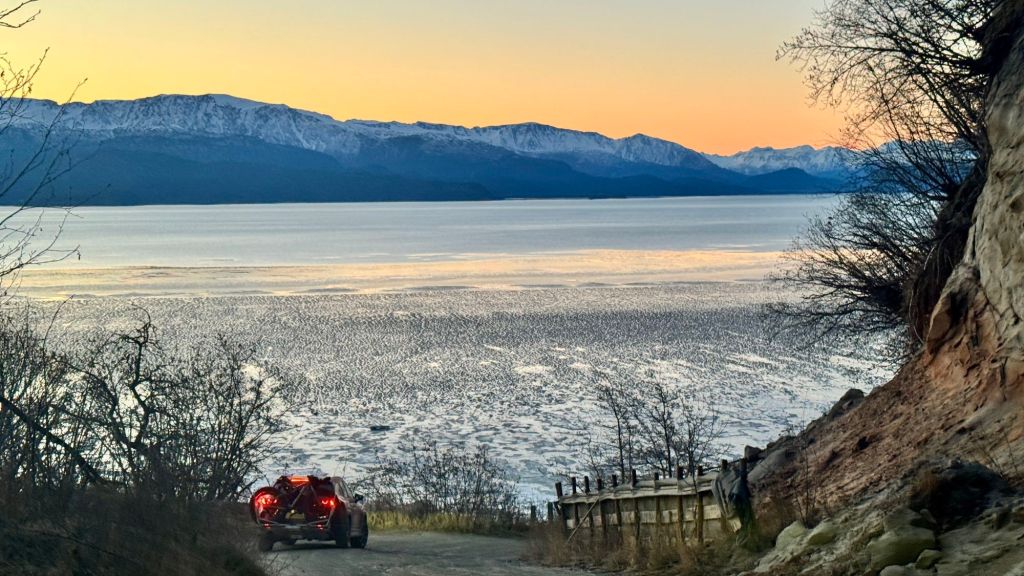
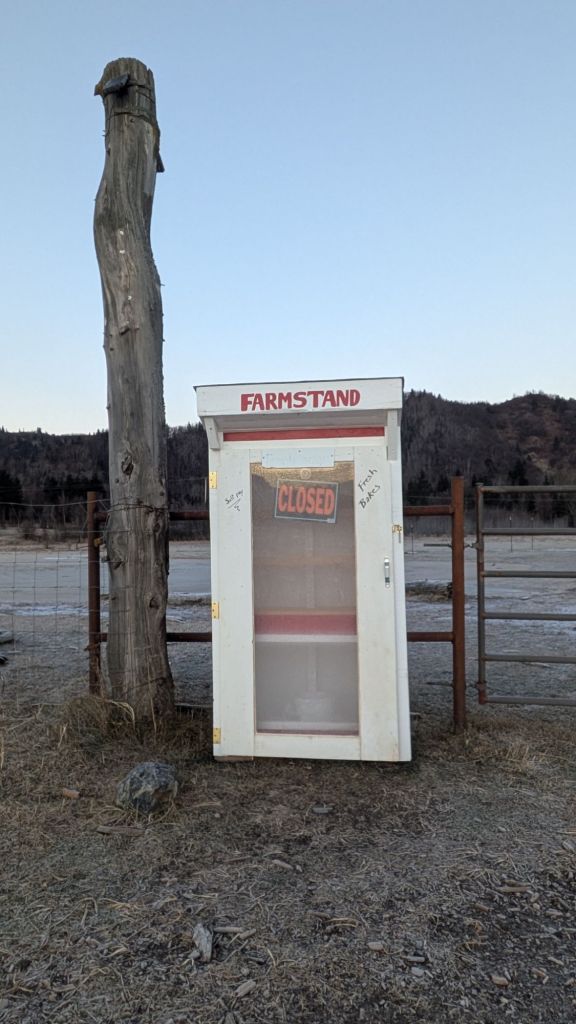
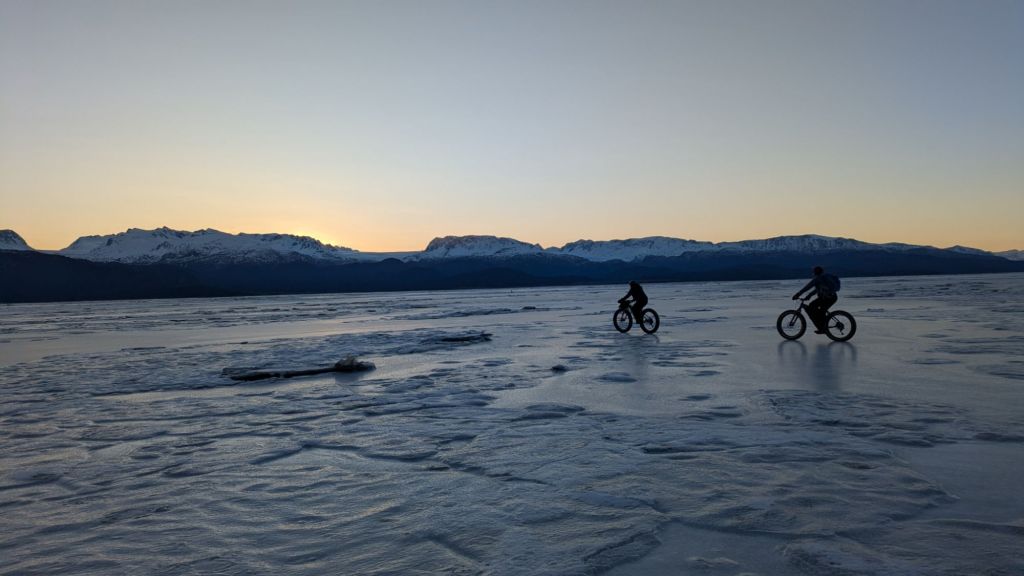
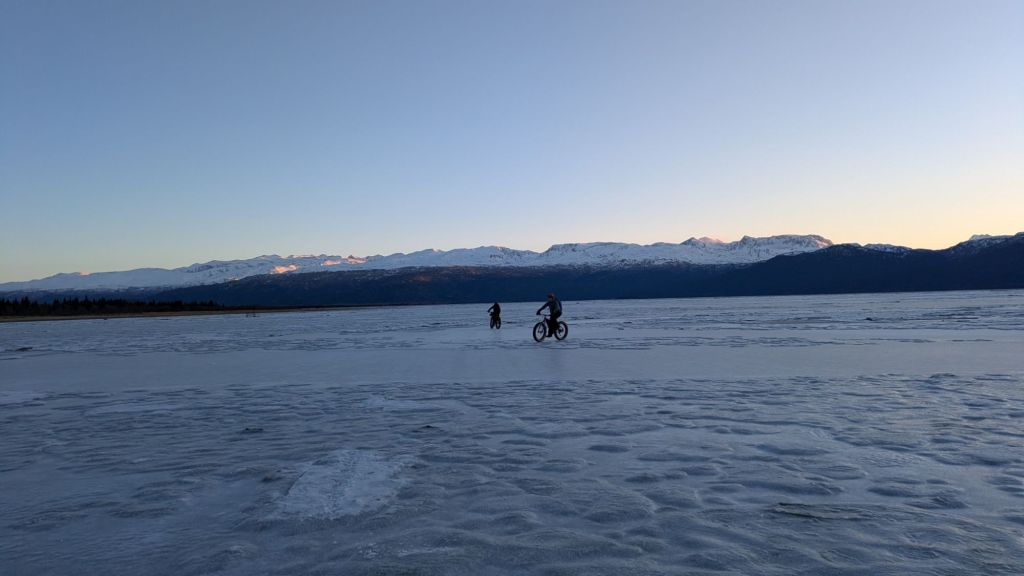
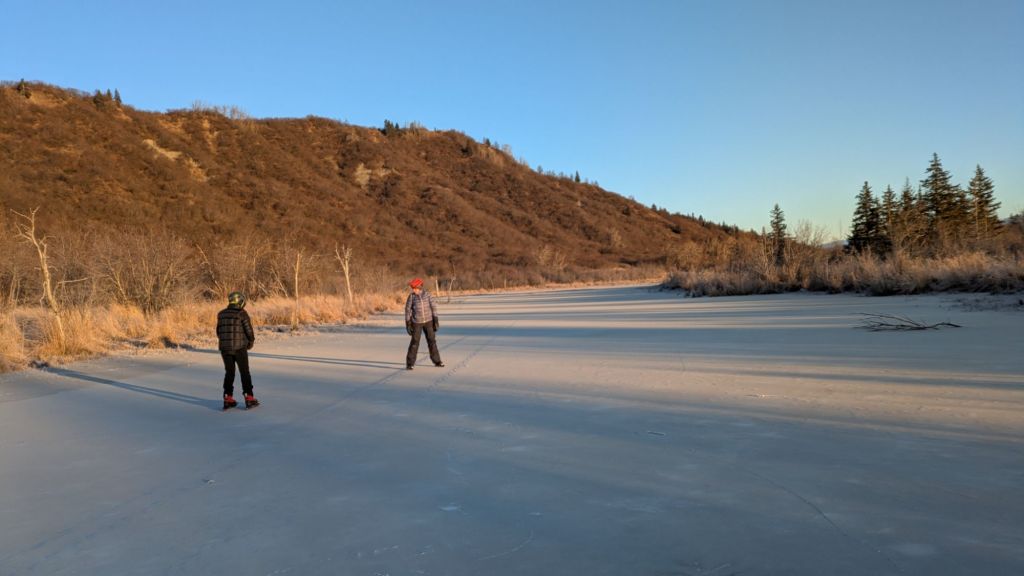
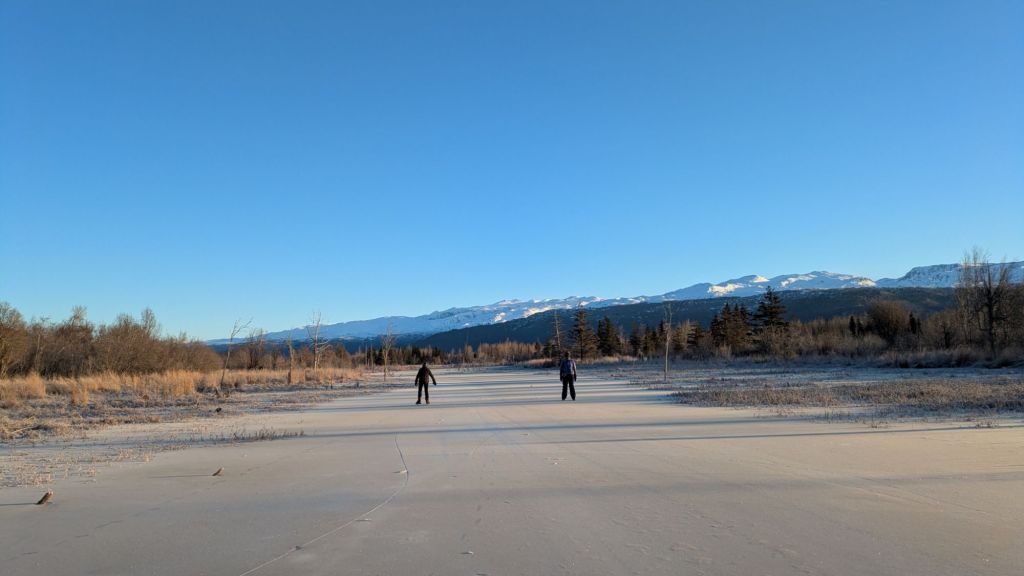
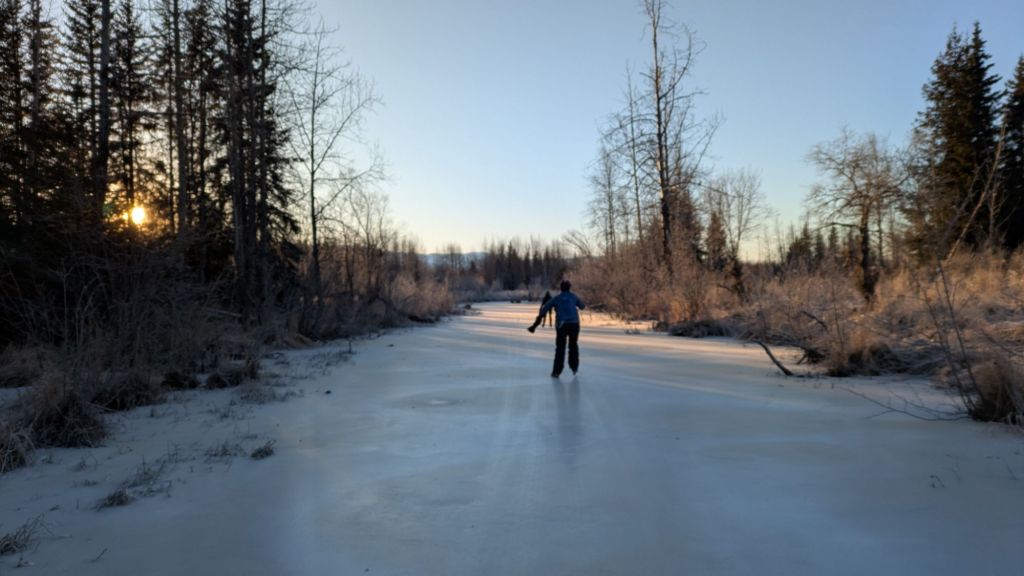
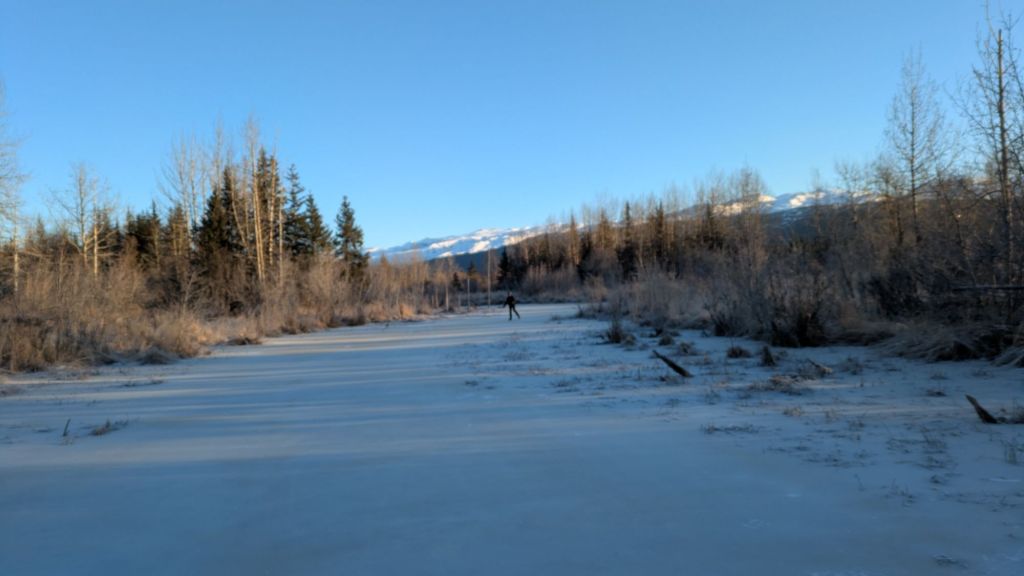
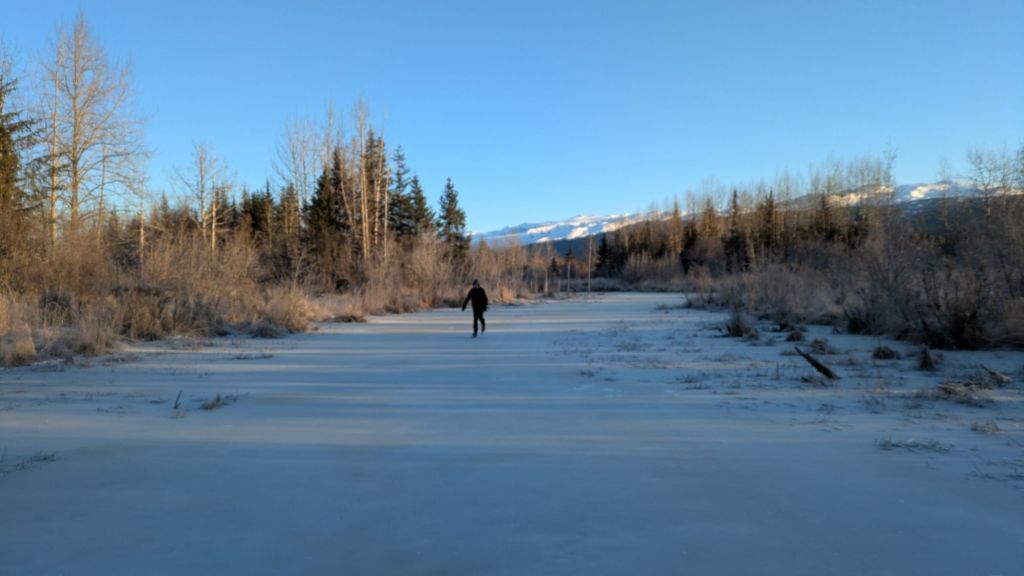
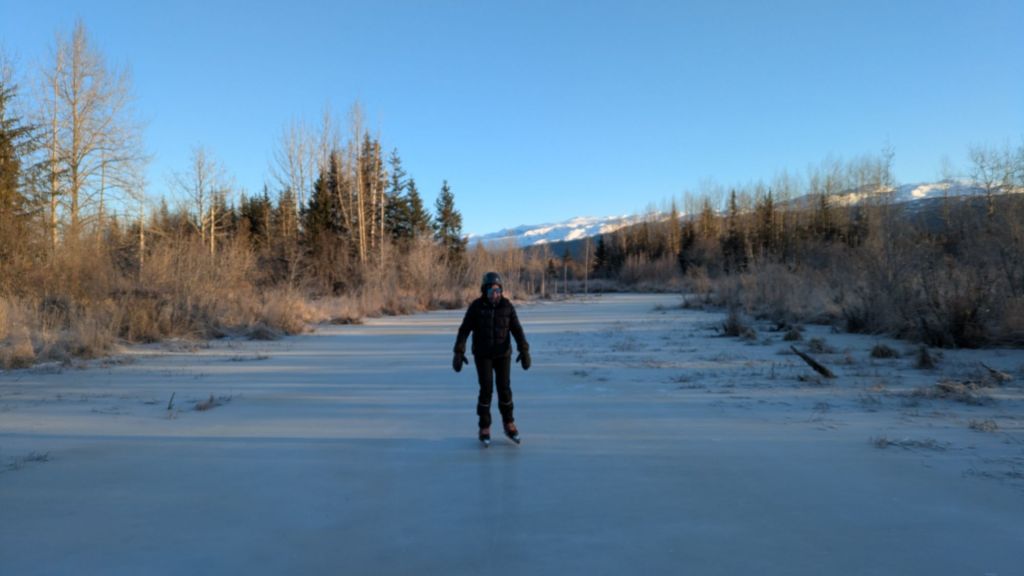
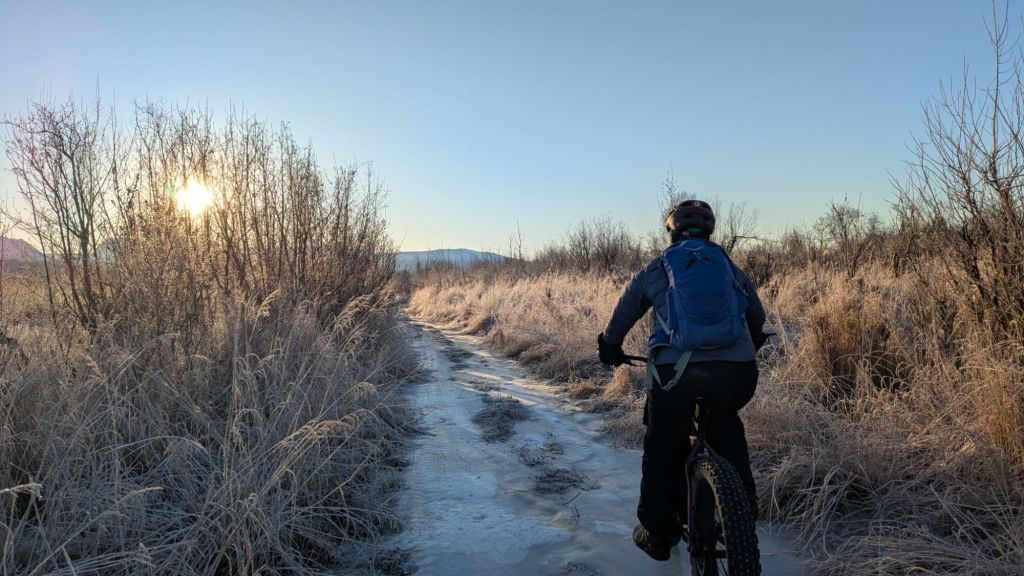
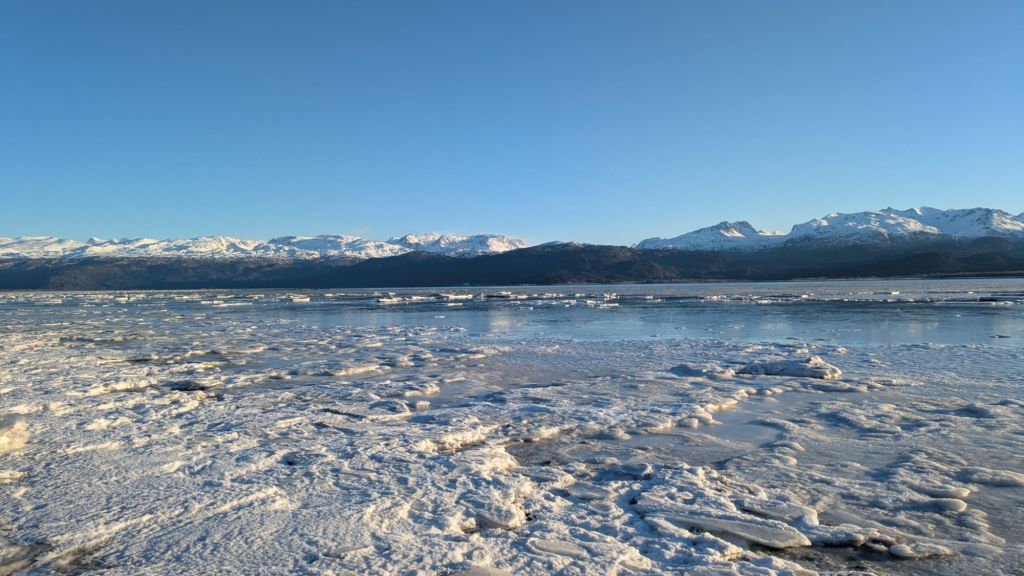
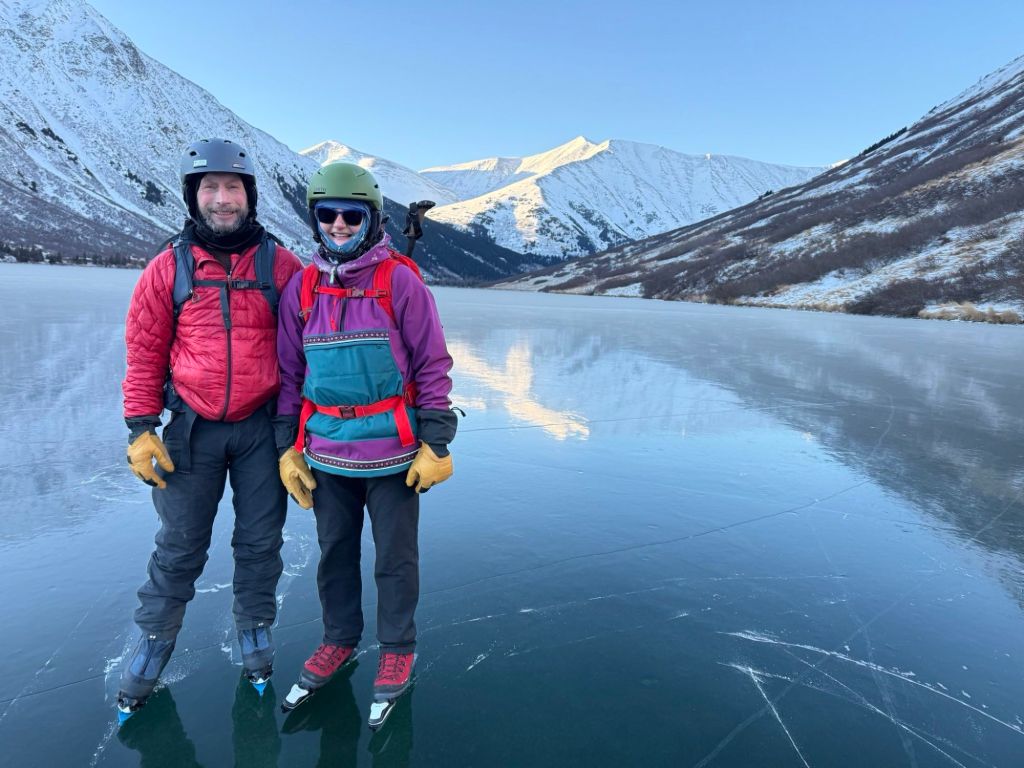
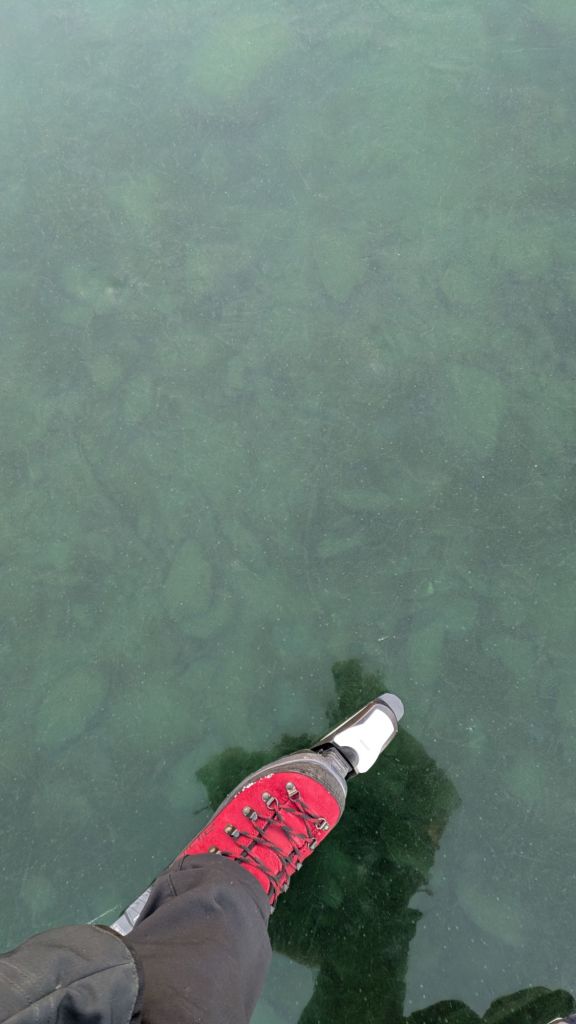
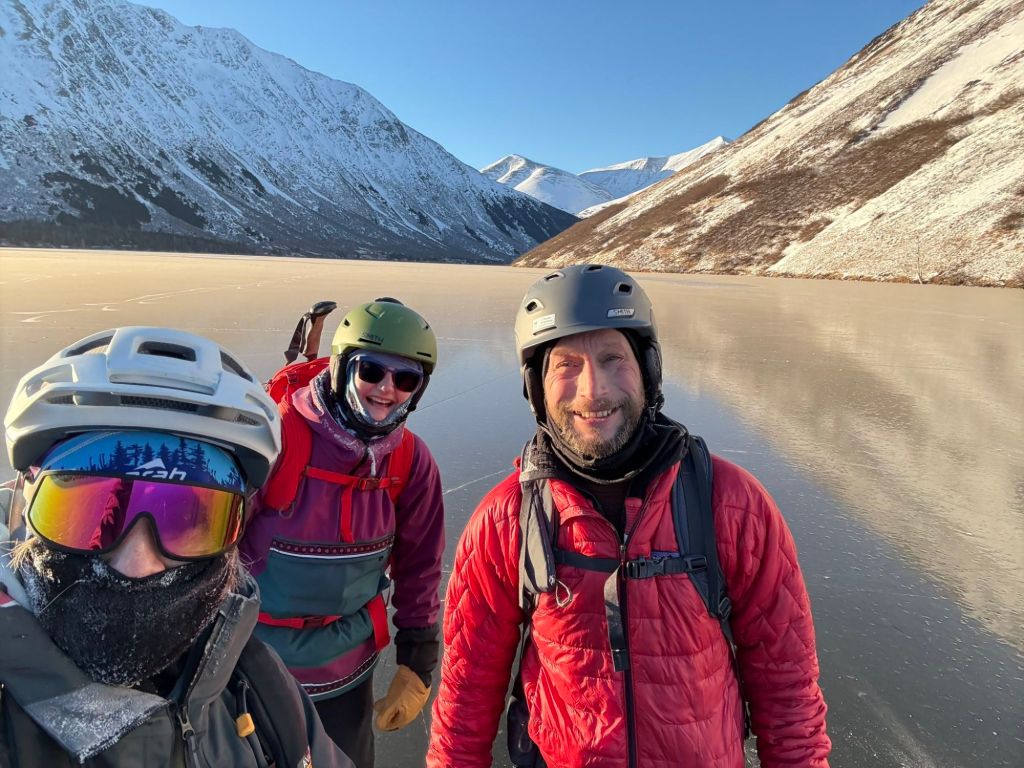
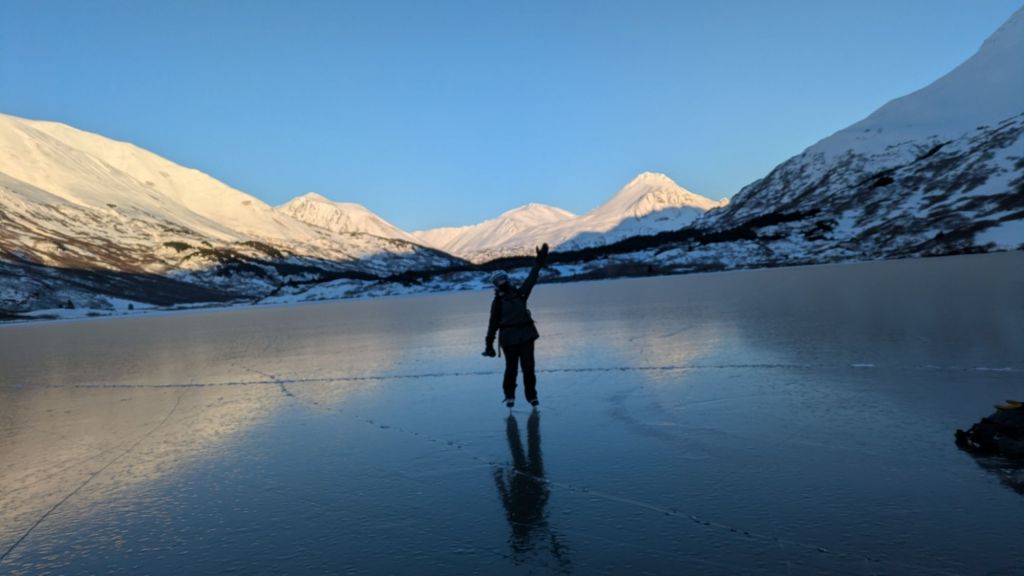
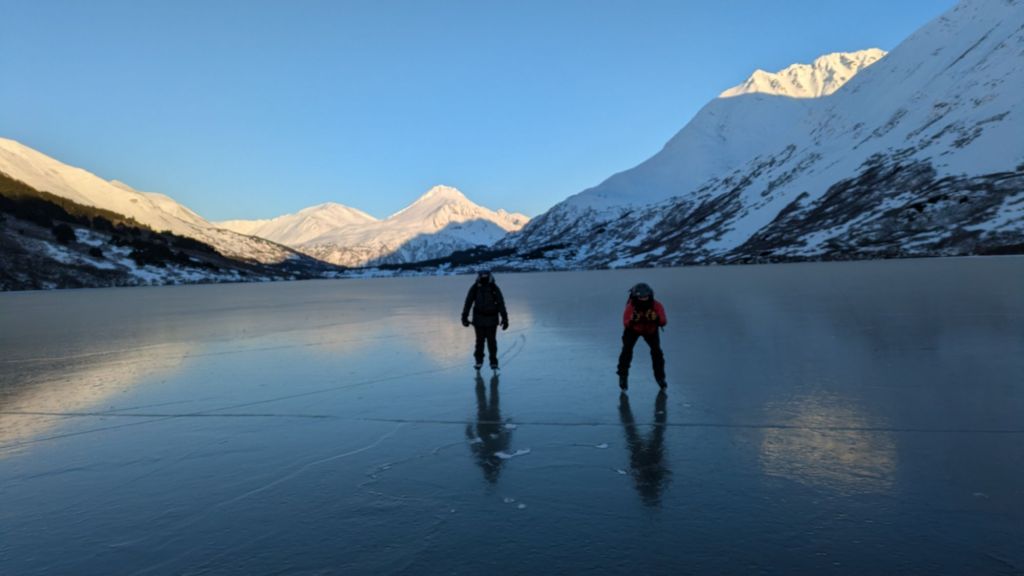
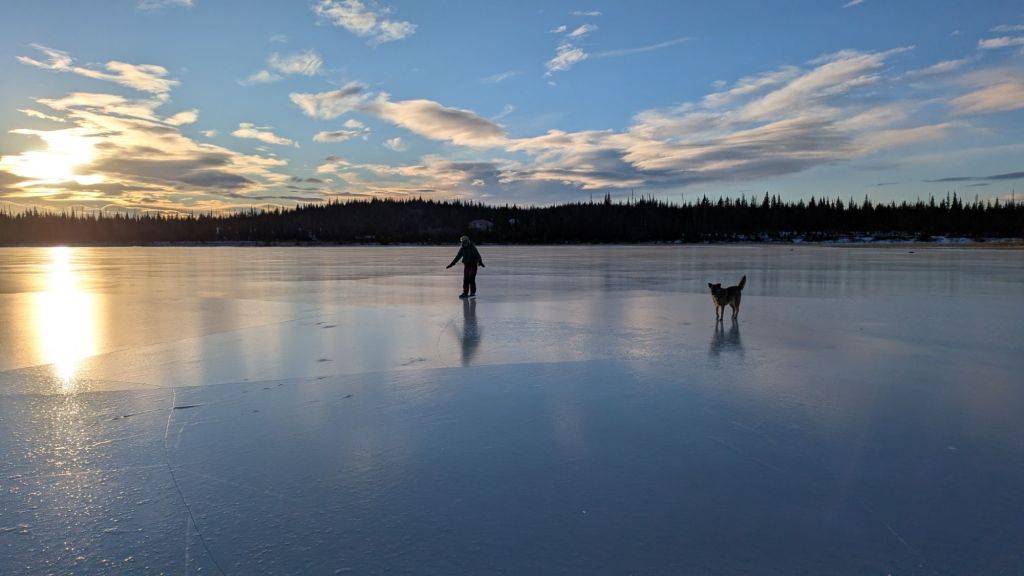
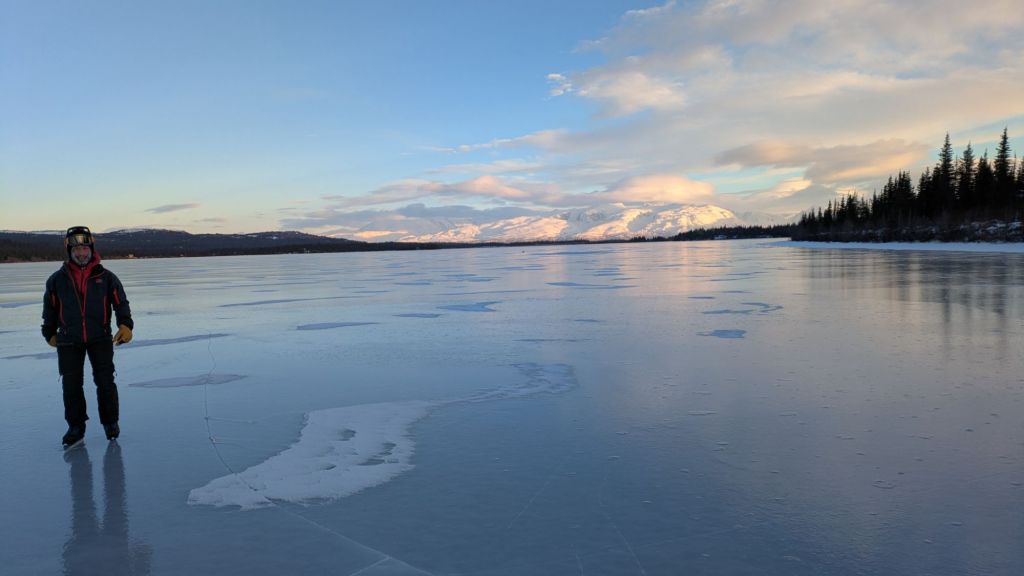
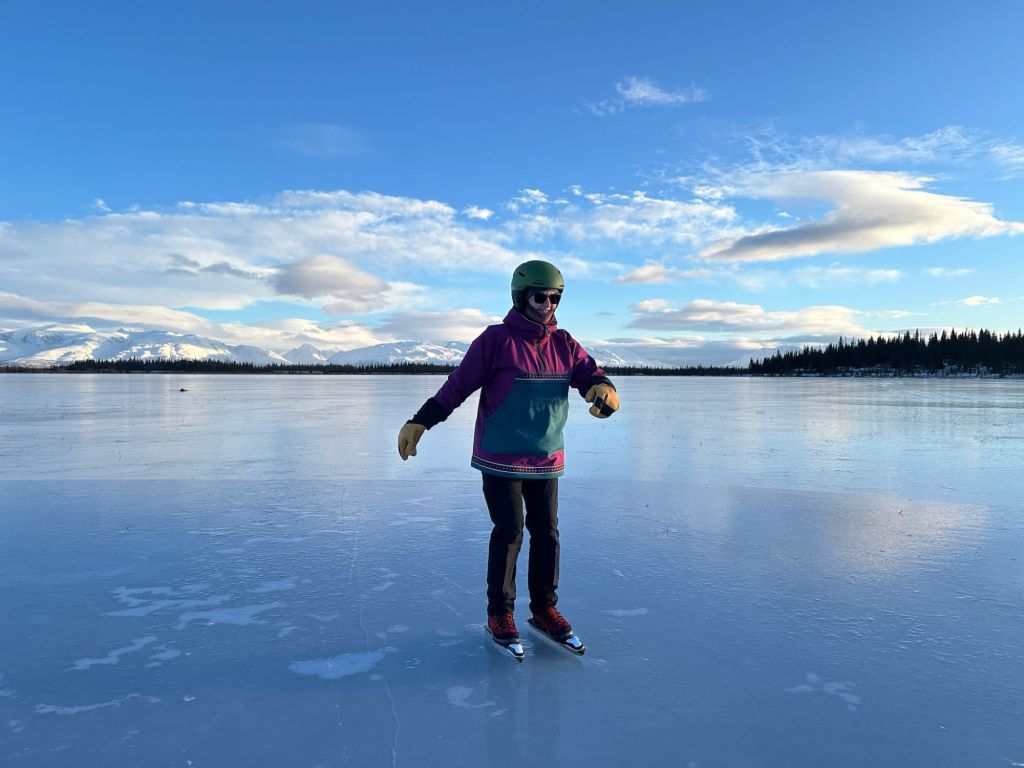
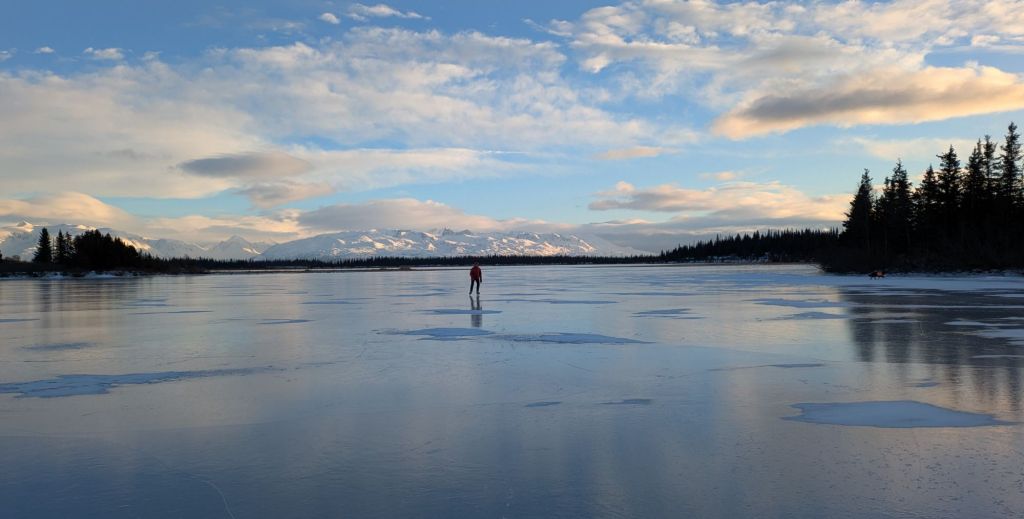
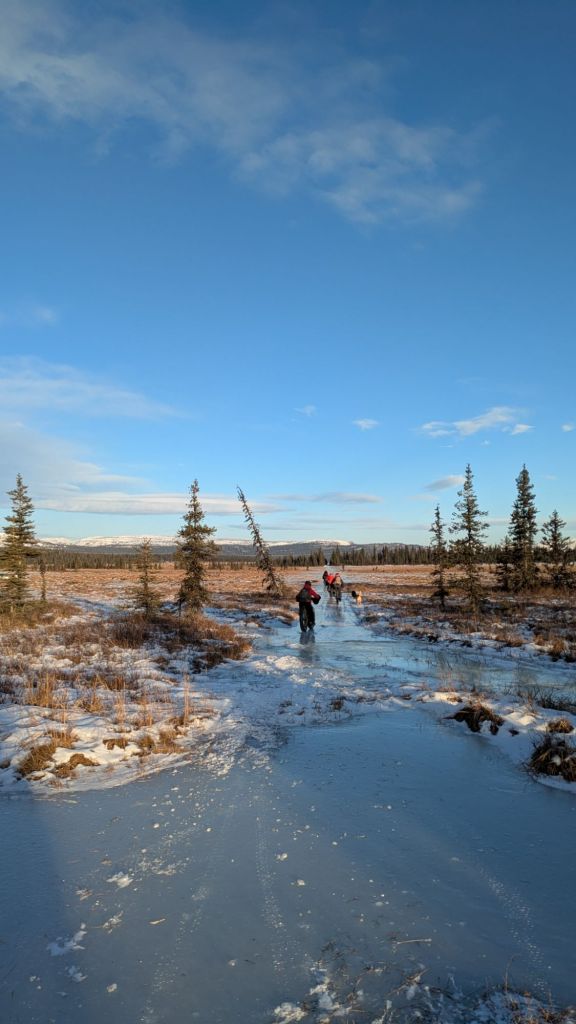
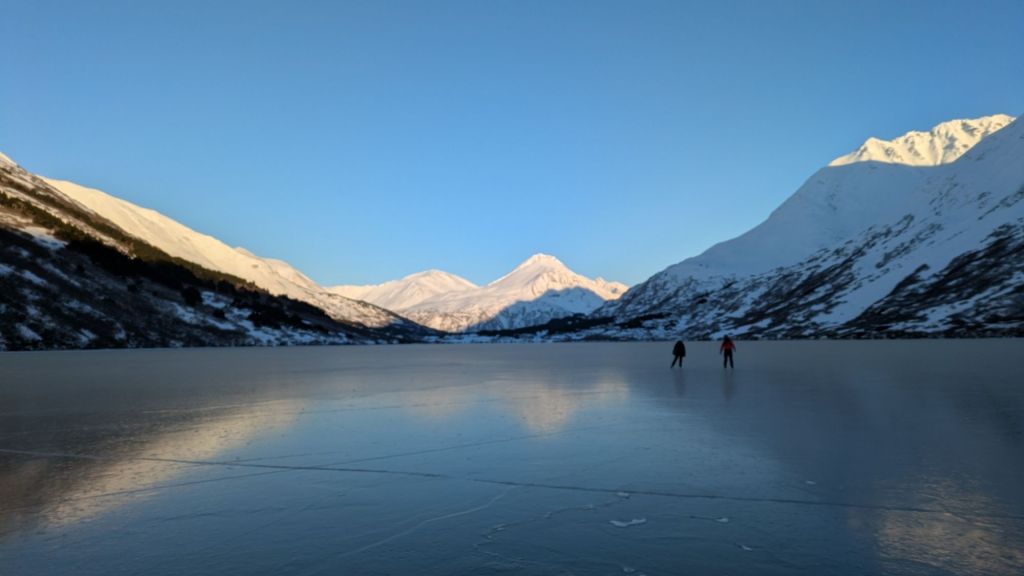
The skate season started off with a spectacular session on Caribou Lake. If you have skates I suggest braving the trek out there because the ice is phenomenal.

It was a good first outing for Derek’s drone, too!


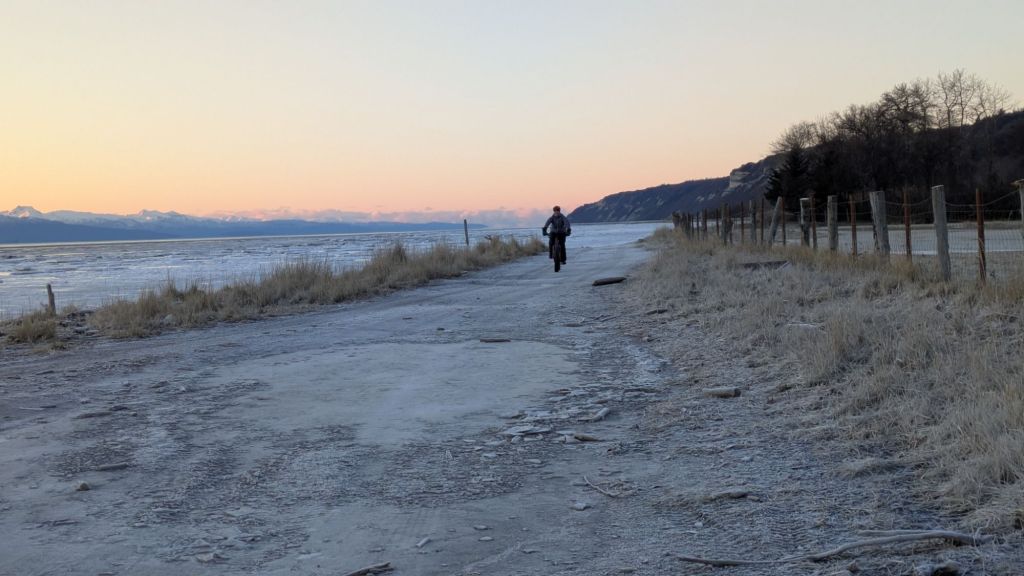
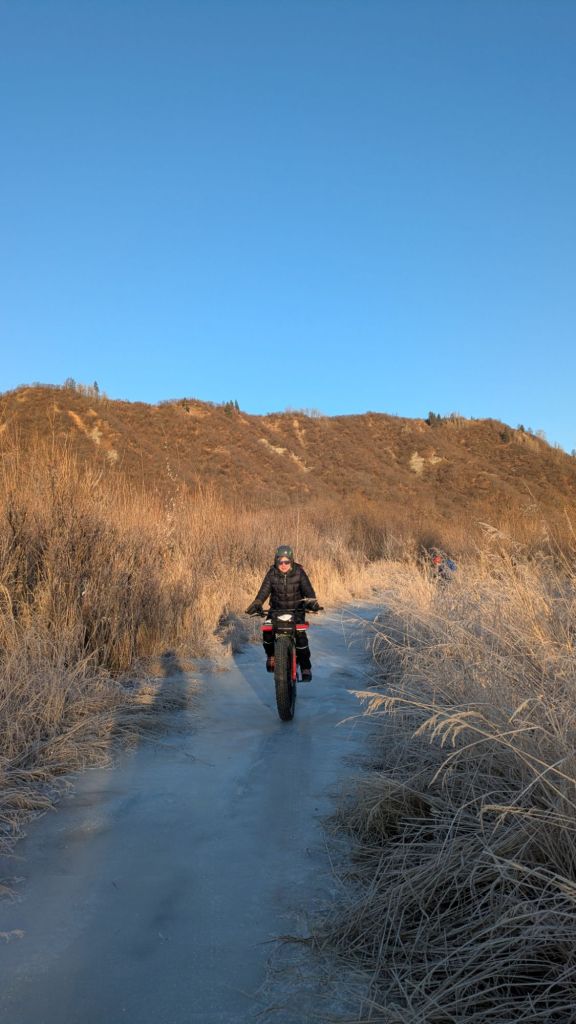
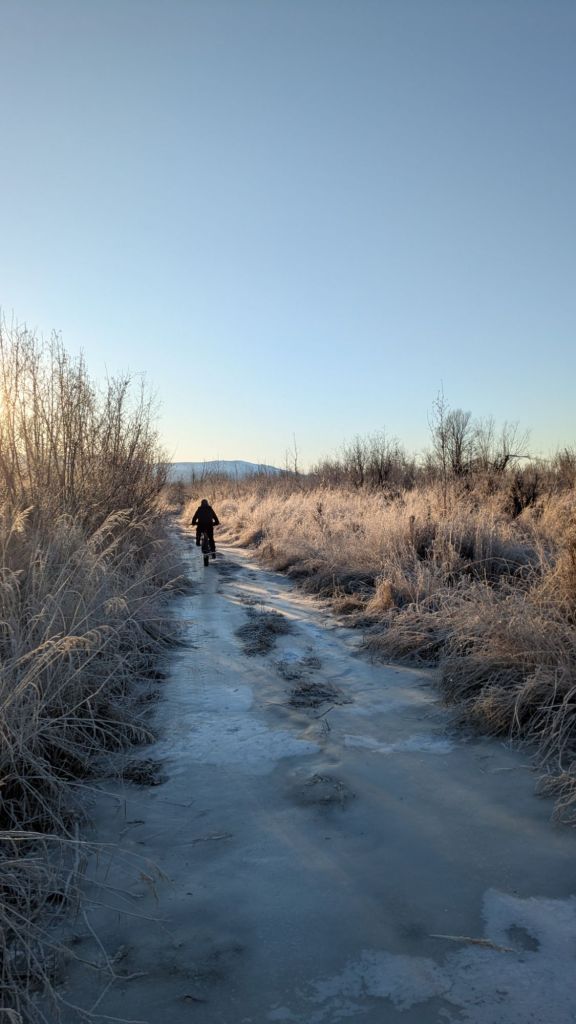
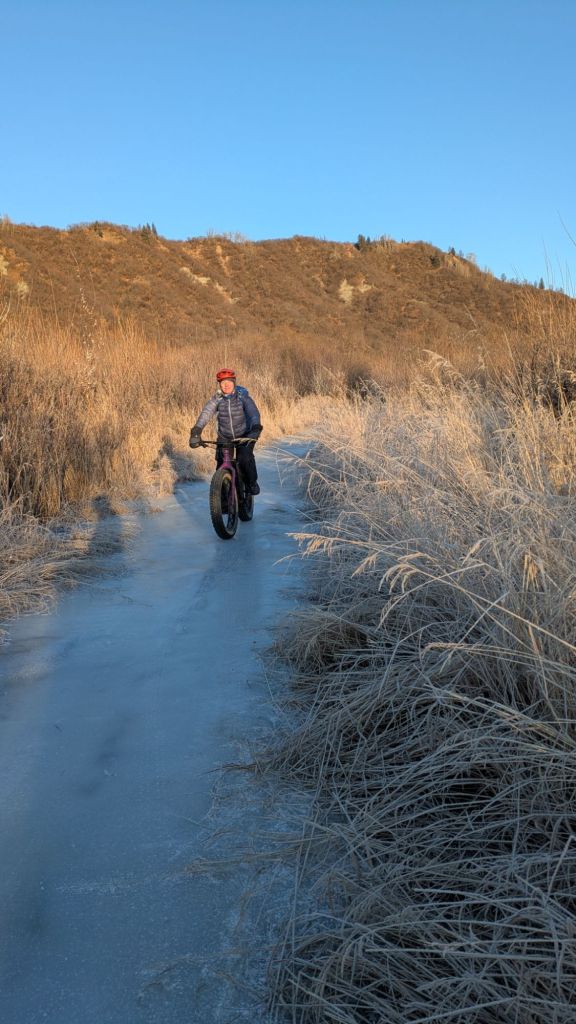
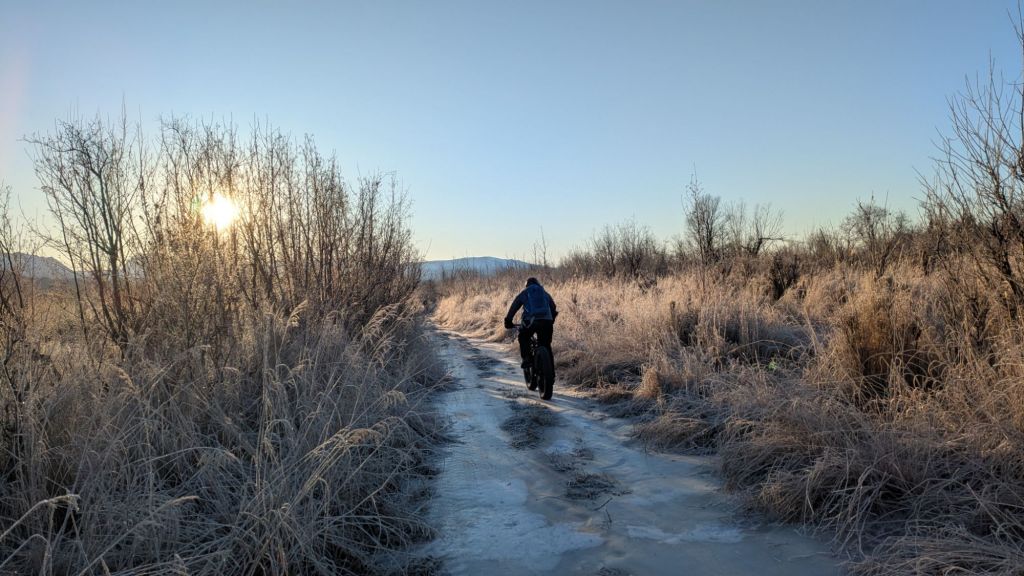
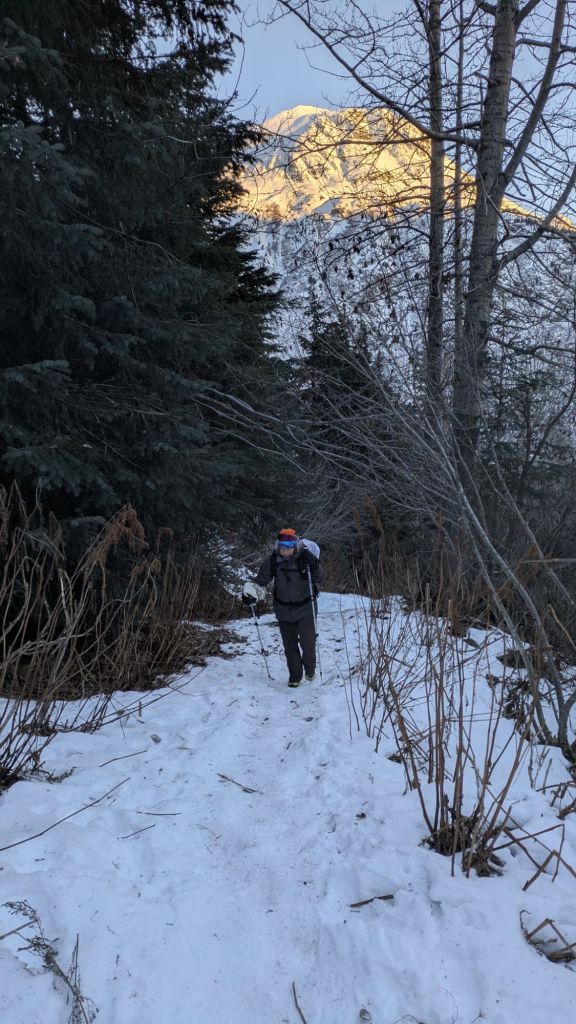
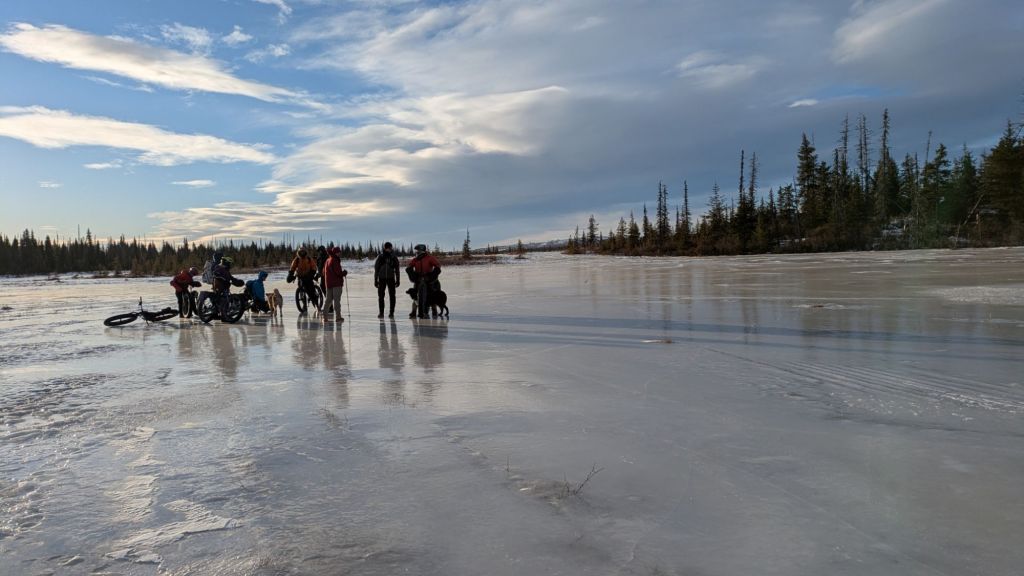
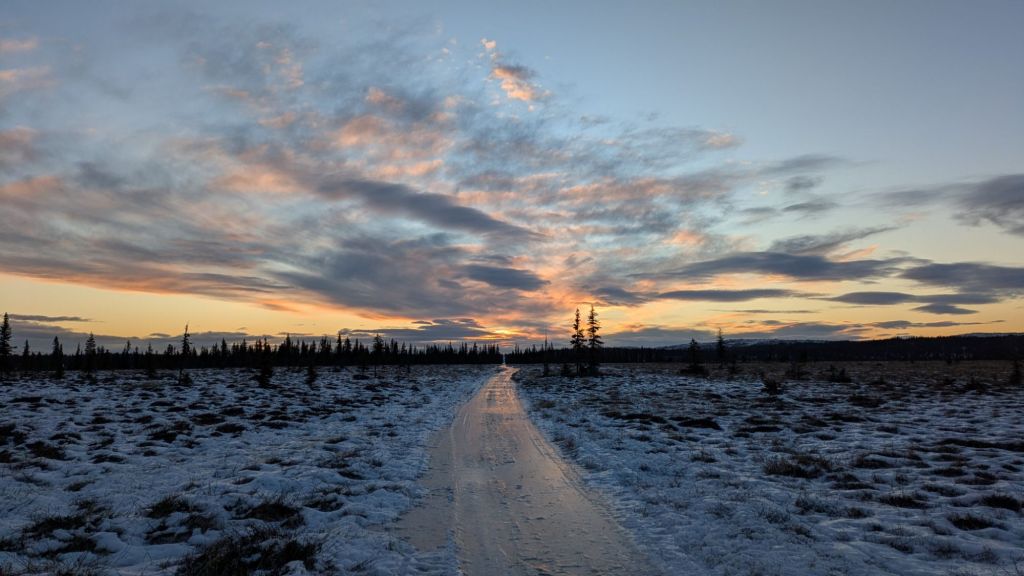
We biked out there. The two people without studded tires ended up bailing. The entire route was ice, some smooth and fairly easy traveling; much with side camber and lumpy, chunkiness that were very challenging. The spicy ride was worth it for the smooth, smooth ice on the lake.

The friends on foot (studded running shoes) were having a bit easier time of it.

Some people were driving trucks and four wheelers out, so that’s also a possibility.


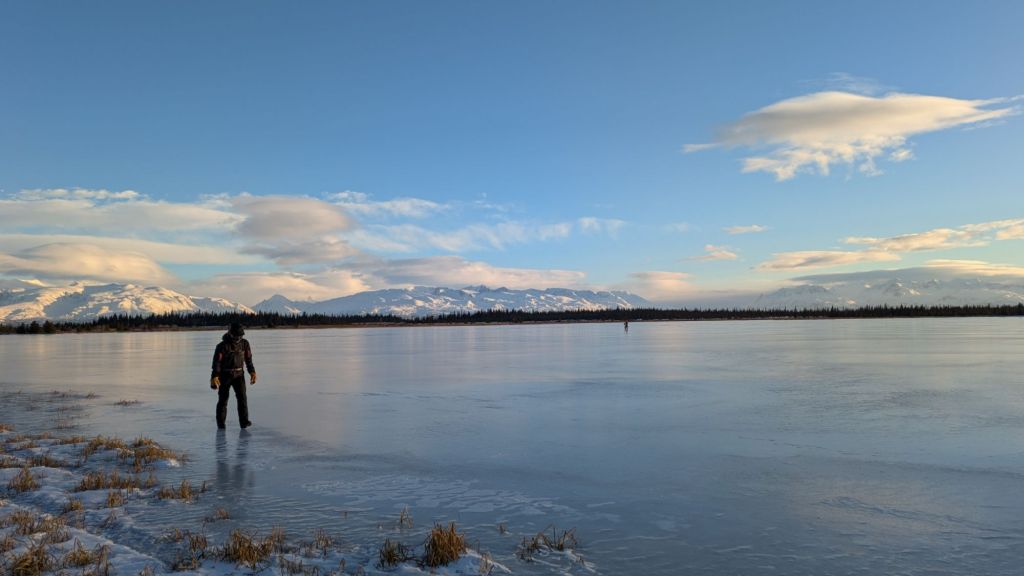
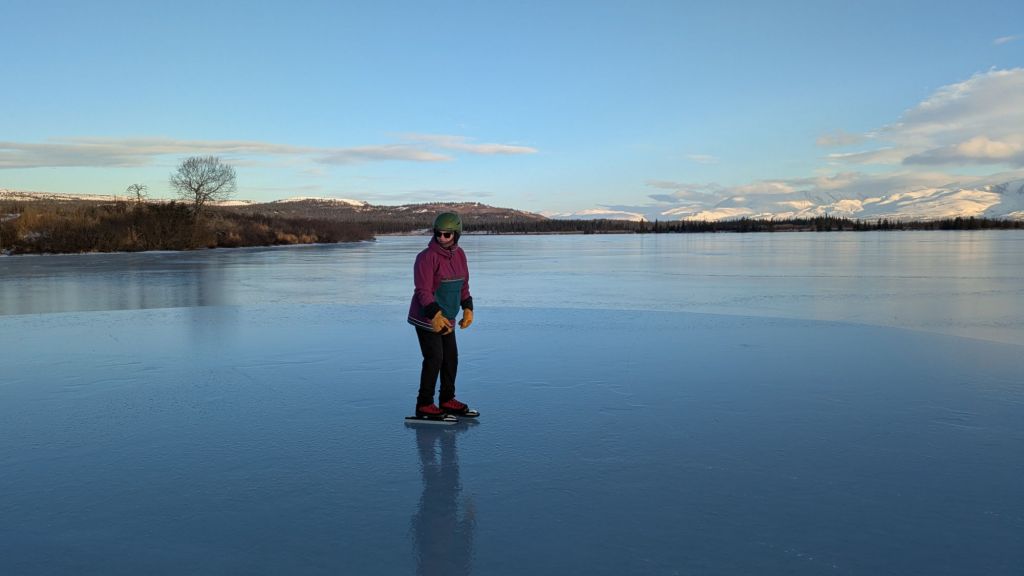
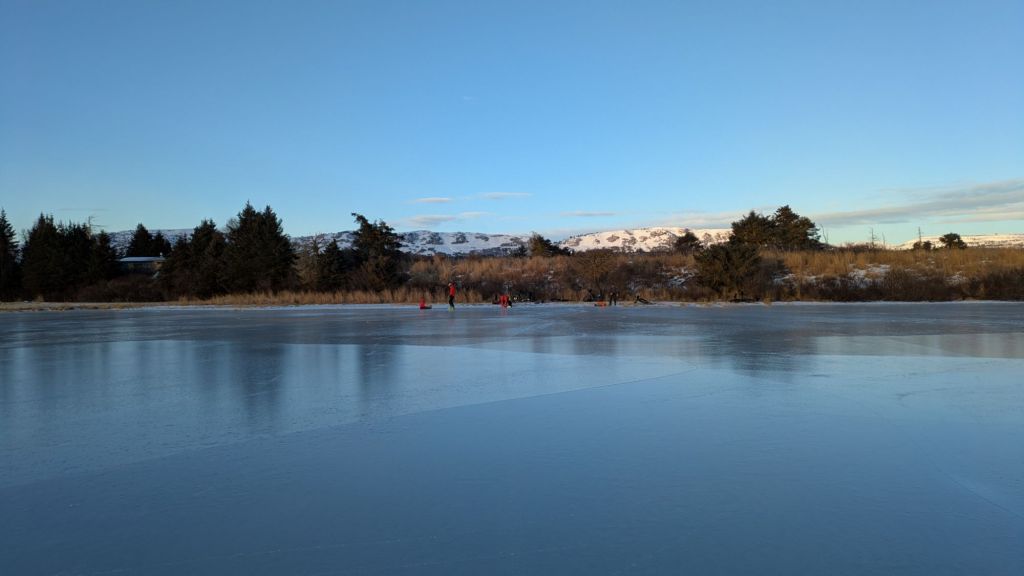
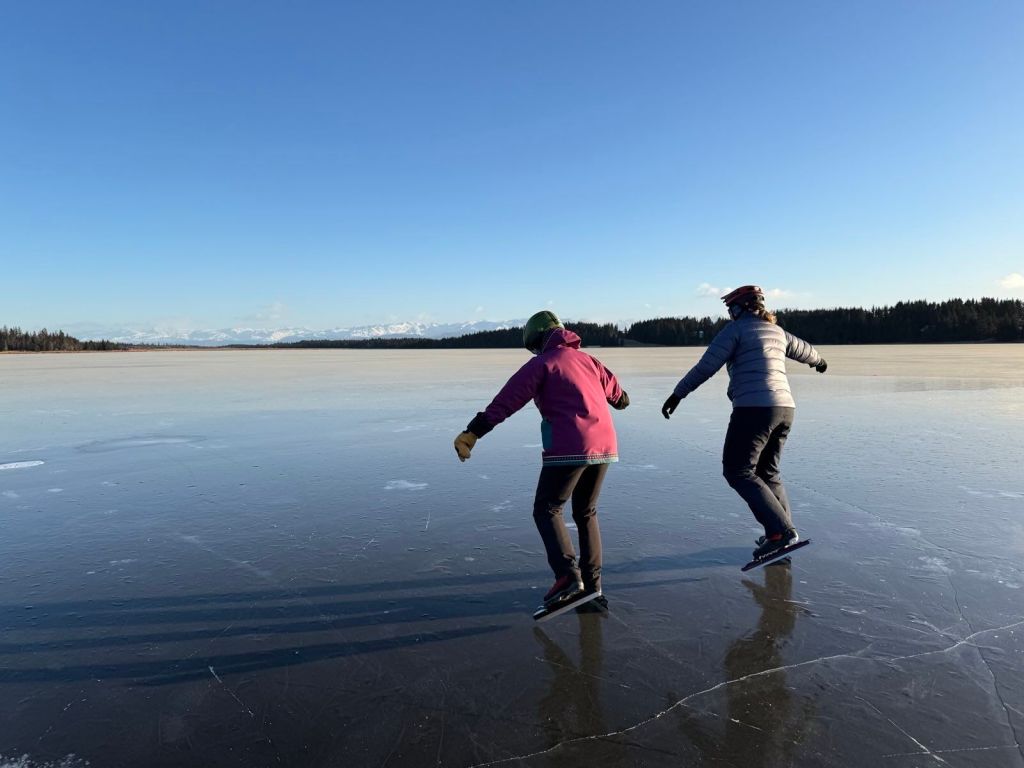
Meanwhile, Beluga Lake is offering much more accessible skating. The ice isn’t quite as delightful, but is still very skateable.

I’ve had three skating lunch breaks this week. This is a true mid-day treat!

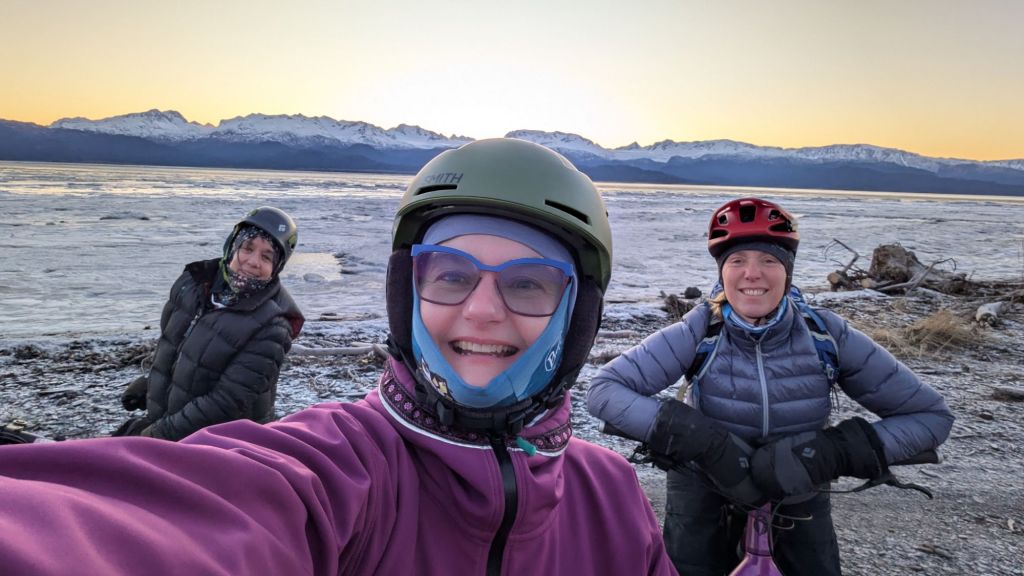
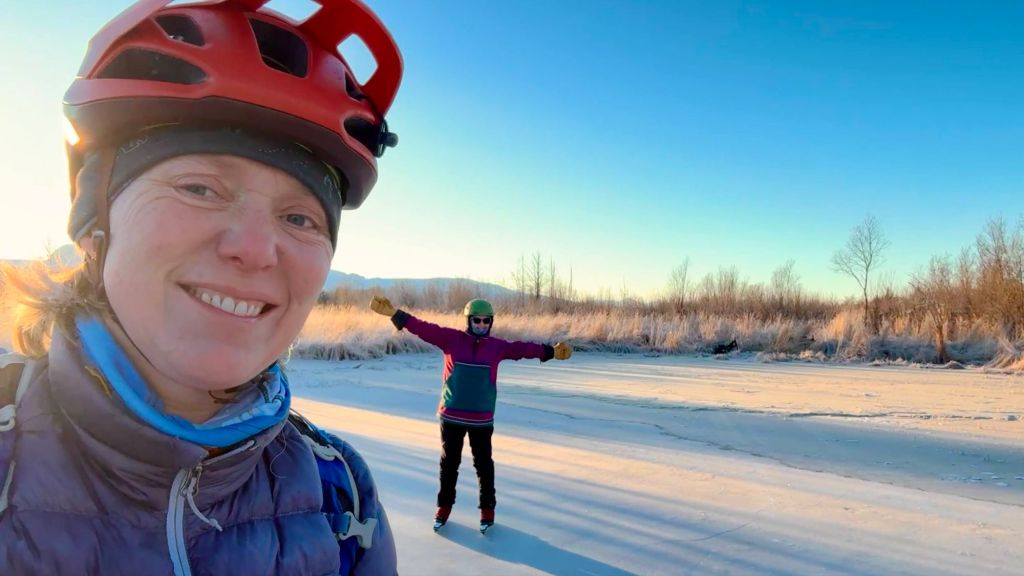
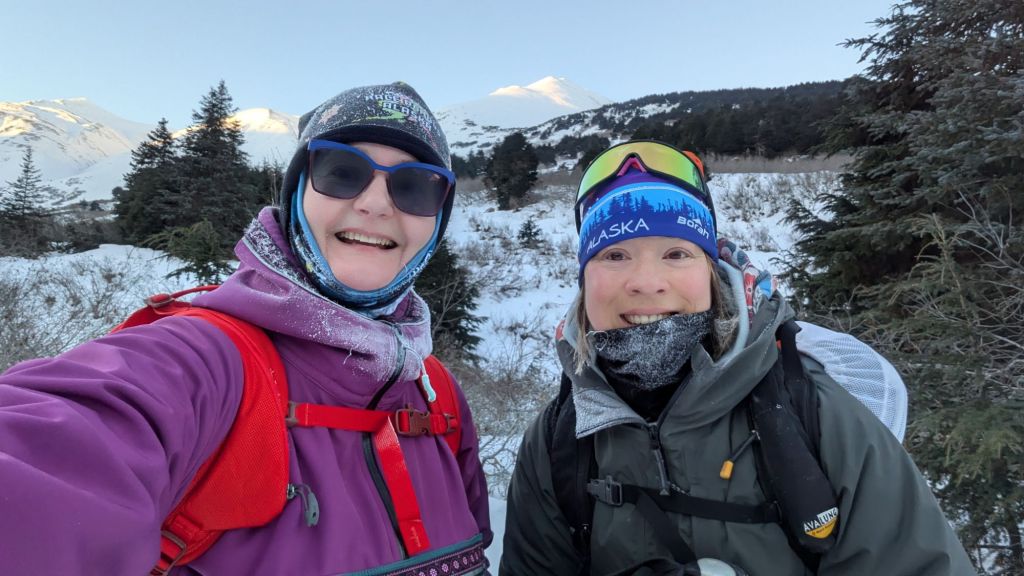
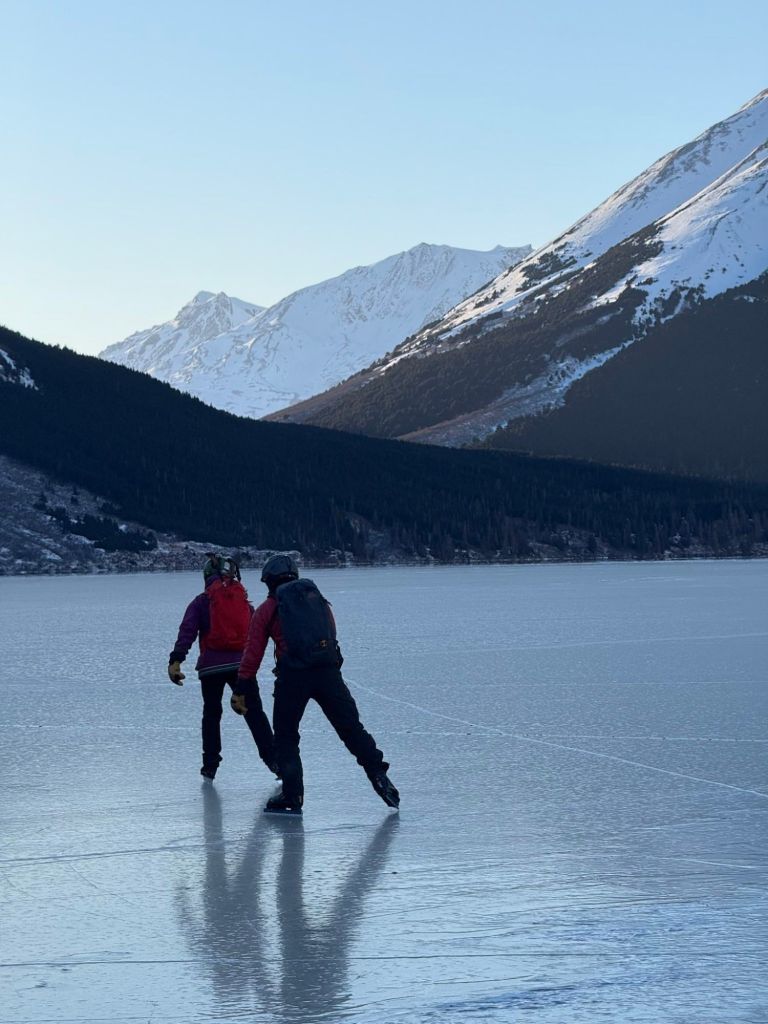
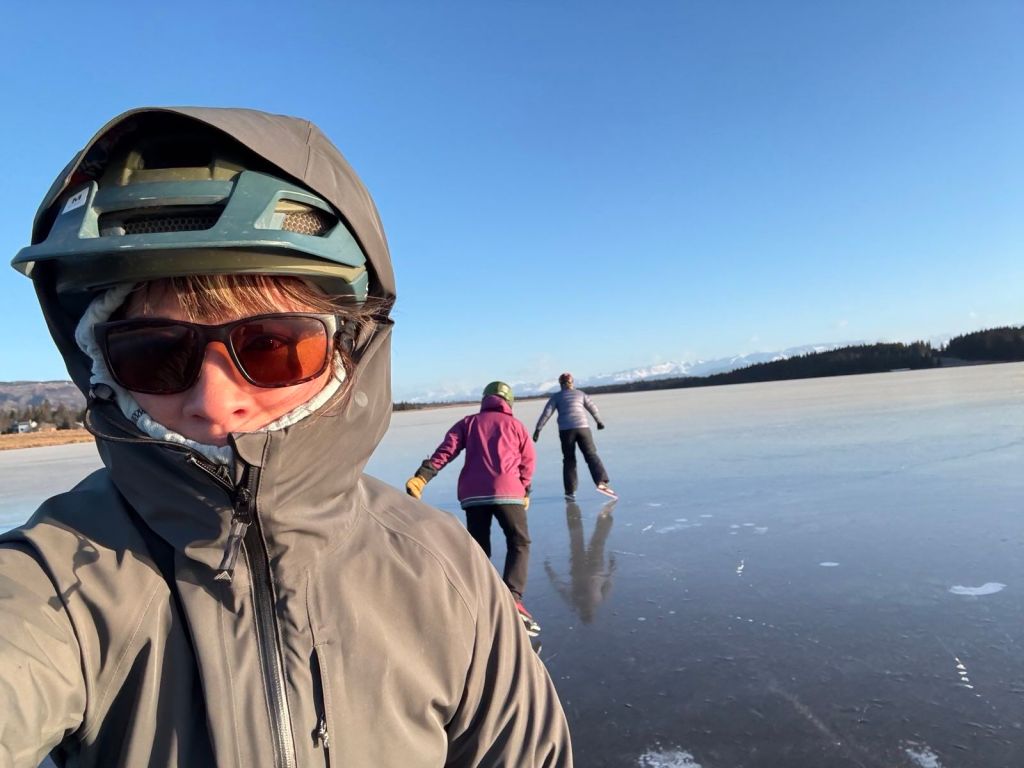
Then, today, Mary, Erica and I went out… With 20+ mile an hour winds it was a different beast altogether. Battling a head wind east on the lake was brutal.

The tailwind on the way back created the opposite problem. It was easy to be terrified by the speed, even when not skating at all. Basically with the low friction of the skates we were moving at the wind speed – and, again, that was around 20mph.

We tacked back and forth a lot. It was exhilarating, and more than a tad terrifying.


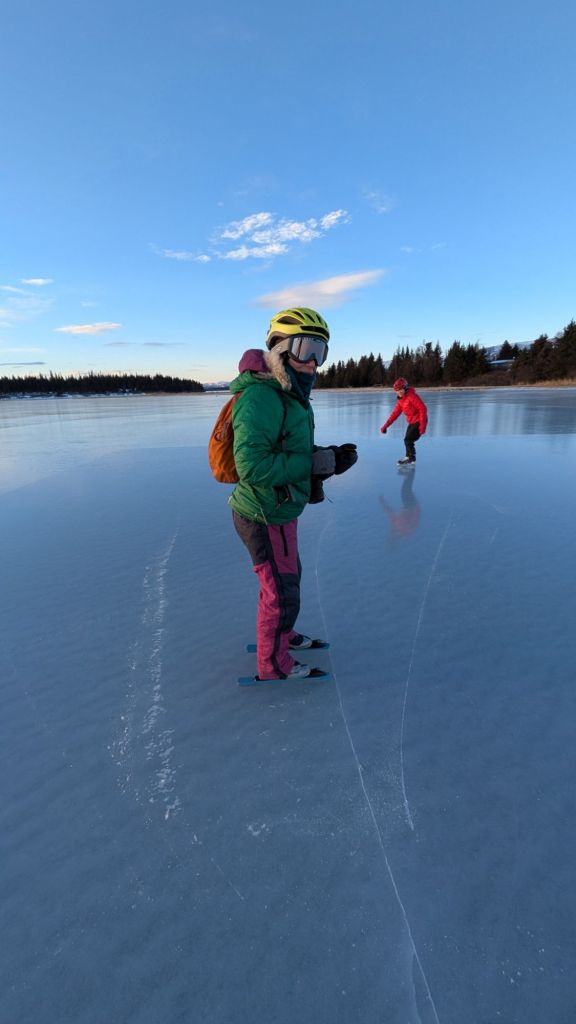
Of course any skates you can get a hold of will work. But, this is my plug for Nordic Skates. These blades have a Nordic ski binding – so you can just choose whatever binding works with your ski boots.

I have mine compatible with my back country classic boots. I love that I can bike or hike in my boots and don’t have to fumble around switching footwear at the lake. There are several advantages: feet and fingers stay cozy, the blades are much less bulky than a whole pair of hockey/figure skate boots, the blades are longer, so somewhat more forgiving on occasionally lumpy wild ice, and IMO ski boots are warmer and more comfortable than ice skates.

Shameless plug, if you need Nordic Skates there’s a good selection at Cycle Logical!


Overnight Train and the Final Day in Tashkent -UZ13

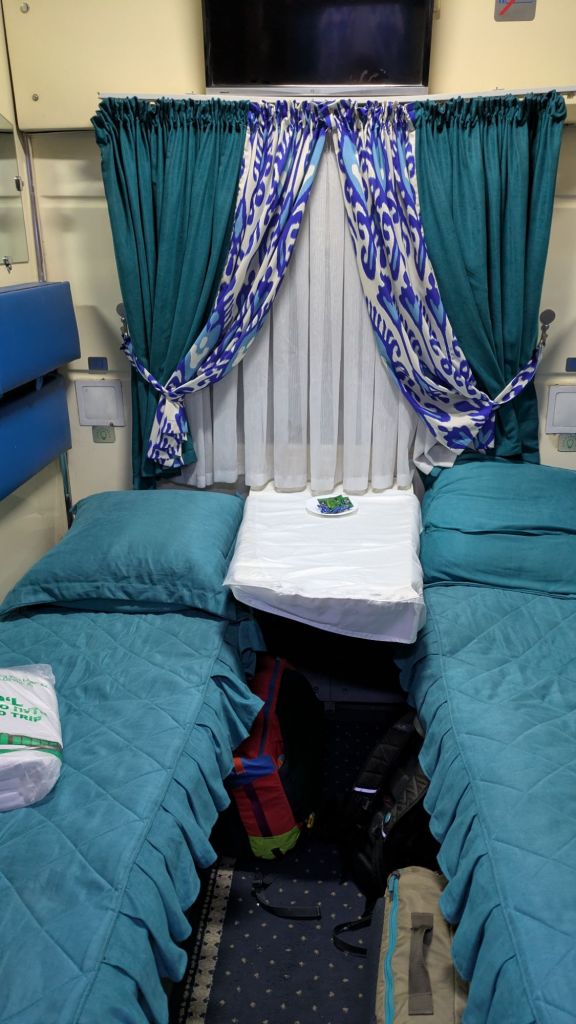
The romance of trains was prominent in my childhood, and the notion of a private sleeping car has long appealed to me. So, I finagled an overnight train ride from Bukhara to Tashkent into our trip.

We boarded at 11pm and reached Tashkent shortly before 7am. Perhaps a longer trip would have been better, in that it was a later bedtime than typical for the vacation. Then, the awareness of needing to get off at 7am meant that every time the train slowed we were alert and wondering whether we needed to get up. A longer journey might have meant we could settle in and relax more.

But, look how lovely our cabin was! Not pictured: the fact that there was no opening window, it was super hot. Options were stuffy and overheated OR leaving the door open: slightly cooler air, bright lights, and people walking by the cabin. It was one of the worst nights of sleep ever. LOL, so much for romance.


We dropped luggage at the guesthouse and set off on foot to find breakfast. Tashkent is a delightfully walkable city; there are broad, treed boulevards with pedestrian and bike paths on the wide center parkstrip in addition to sidewalks. Underpasses provide an option at major junctions, but there are also many pedestrian crossings.

We ended up at a street side cafe eating somsa and drinking coffee amongst business men and university students. Our ultimate destination was Chorsu Bazaar to purchase some gifts and souvenirs.


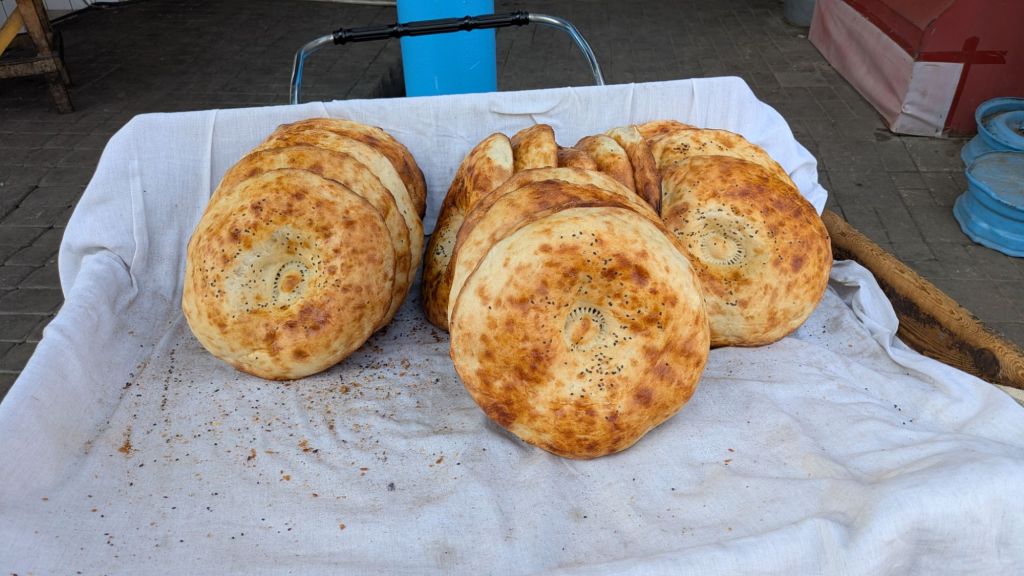
On our first day in Tashkent at the beginning of the trip I identified that I wanted to bring bread stamps home, and spotted a hardware vendor that had a great selection. During our travels I saw many bread stamps on sale for tourists… But I wanted the legit item that locals buy and use (and the local’s price!).

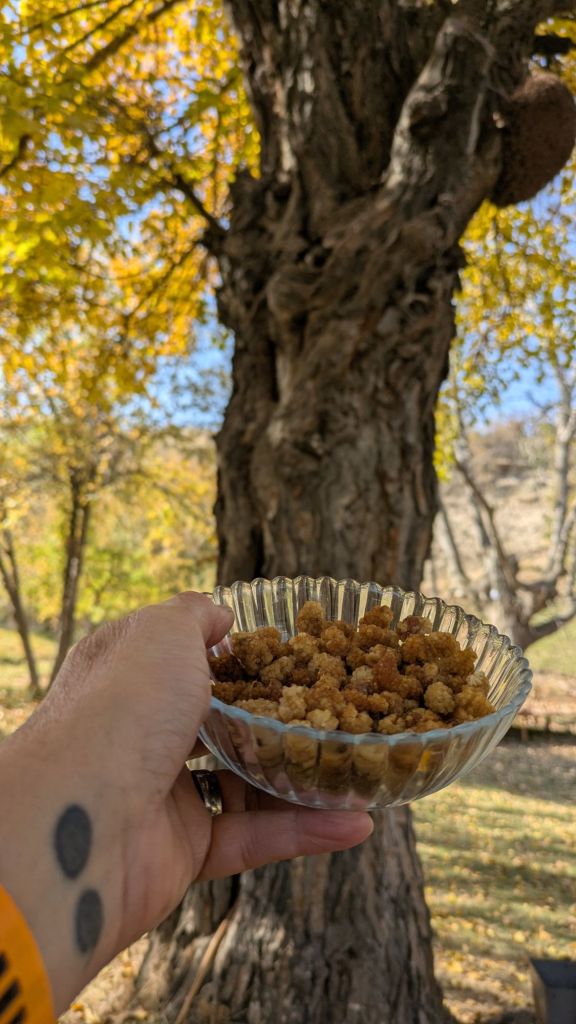
We also tracked down some dried mulberries – they are delicious in oatmeal when backpacking, and way cheaper closer to the source. I also wanted to bring some salty, fatty kurt home, as I enjoyed snacking on it during the trip.


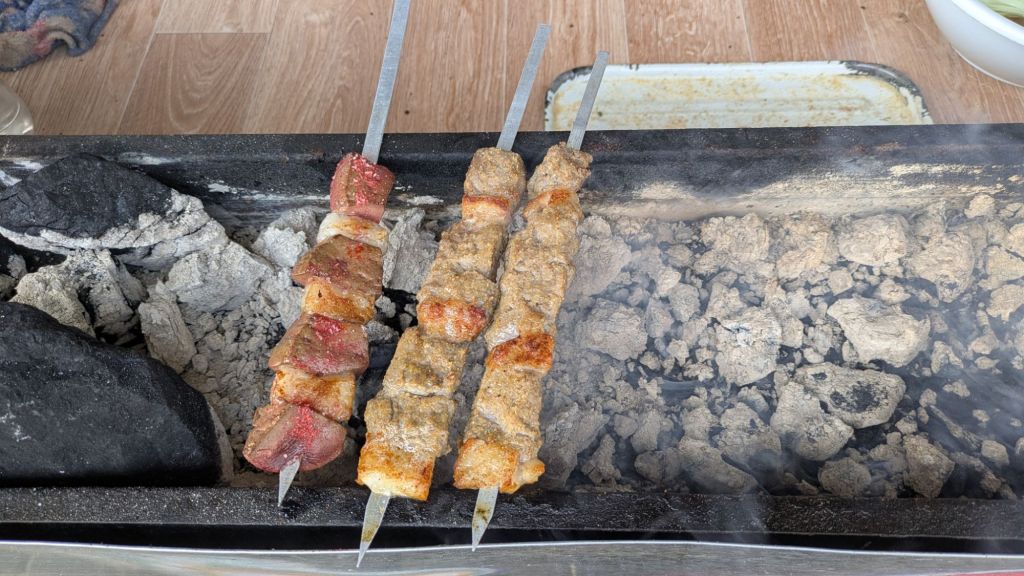
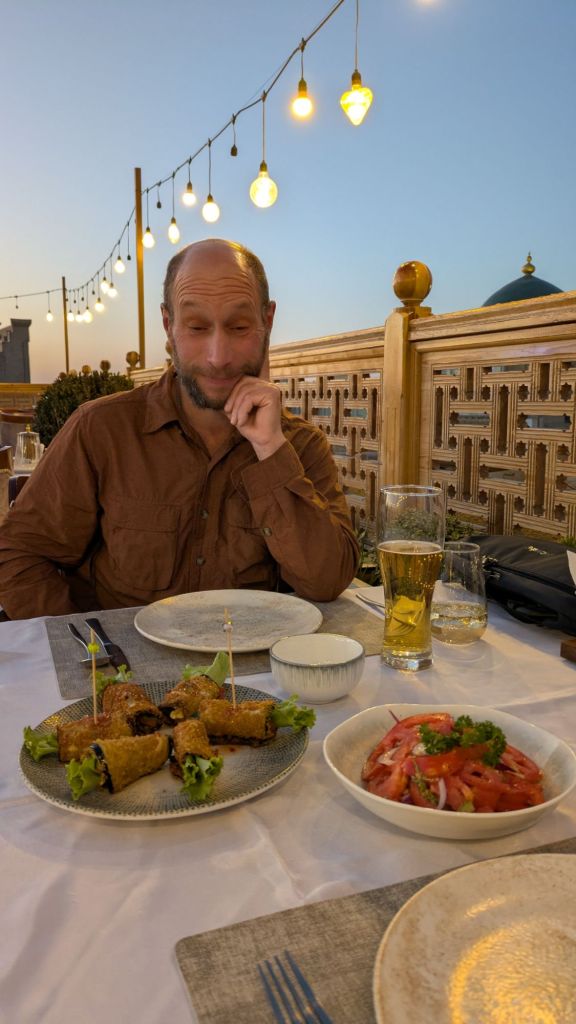
Foods we wanted to savor on the last day were plov, lamb fat shaslik, and tomato-cucumber salad. While tomato-cucumber salad may sound pretty pedestrian and easy to make at home – the tomatoes in Uzbekistan were SO amazing.

Back on that first visit to the bazaar we walked through a barbecue pit area. So, we knew just where to go to get shashlik!

You select what you want cooked and then go sit down. Servers bring you beverages and bread, and then the food is delivered once it is ready. Delicious and fun.


Shopping in Uzbekistan is much more chill than other places we have visited. It’s  a haggling culture, so there’s still that… But, the continuous badgering to purchase is not there. So refreshing! It means you can actually browse the bazaar and full on, actually look at items. Perhaps the pressure will intensify as tourism increases, but for now it’s a very pleasant shopping experience.


We enjoyed some delicious plov for an early dinner, before an early bedtime as our breakfast was scheduled at 4:30am! A final Yandex taxi got us to the airport in time for our 7am flight.

Somehow we dodged all the shut-down related delays at all three of our US airports.

Then the worst ever jet lagged dragged us through the first week back home.


Thanks for following along with the blow-by-blow of our vacation! I may have one or two more posts with Uzbek followup thoughts.

But, for now we are truly back in the Homer flow. I plan/hope to keep the blog going, once or twice a month.

Nuratau Mountains — UZ12

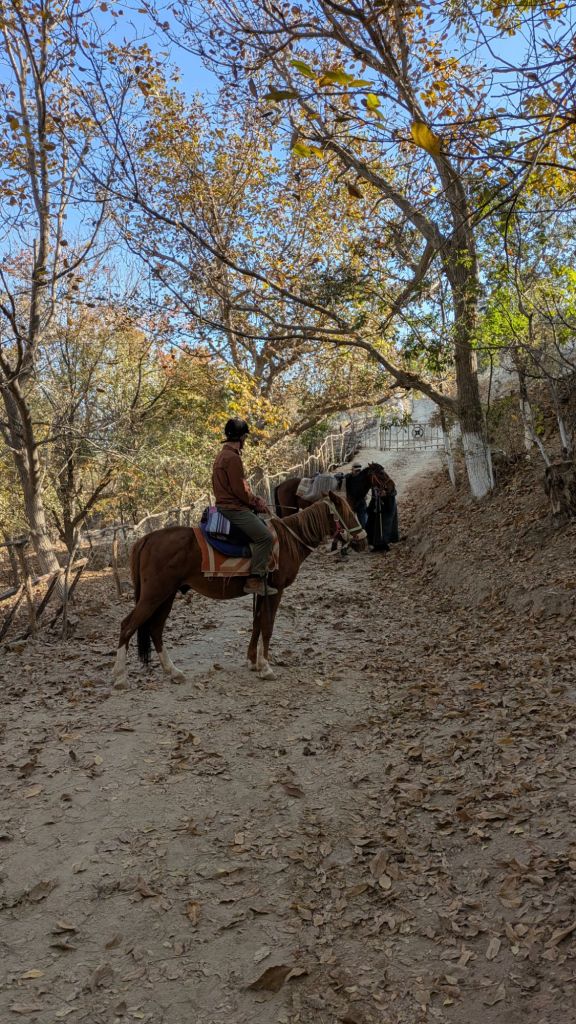
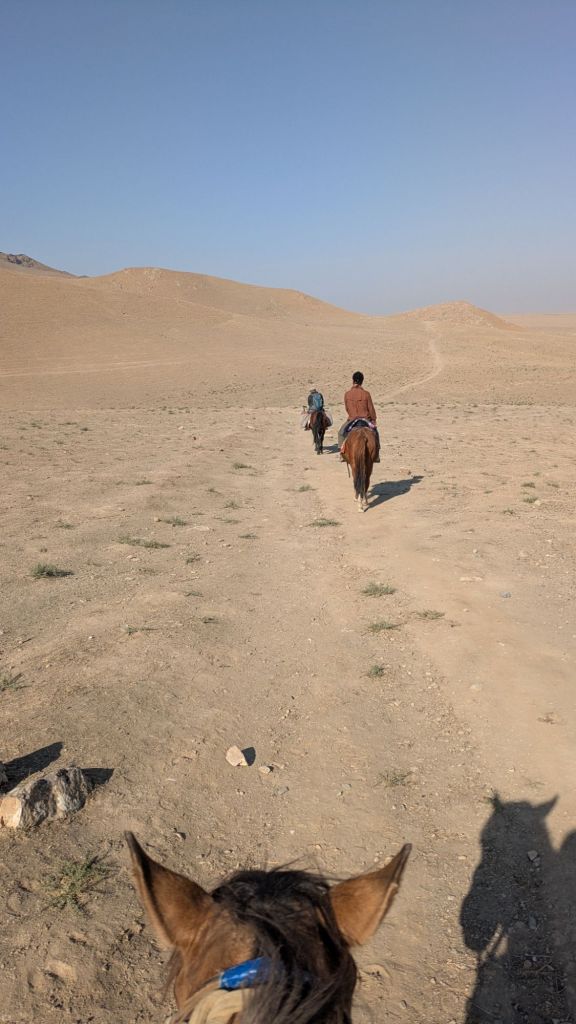
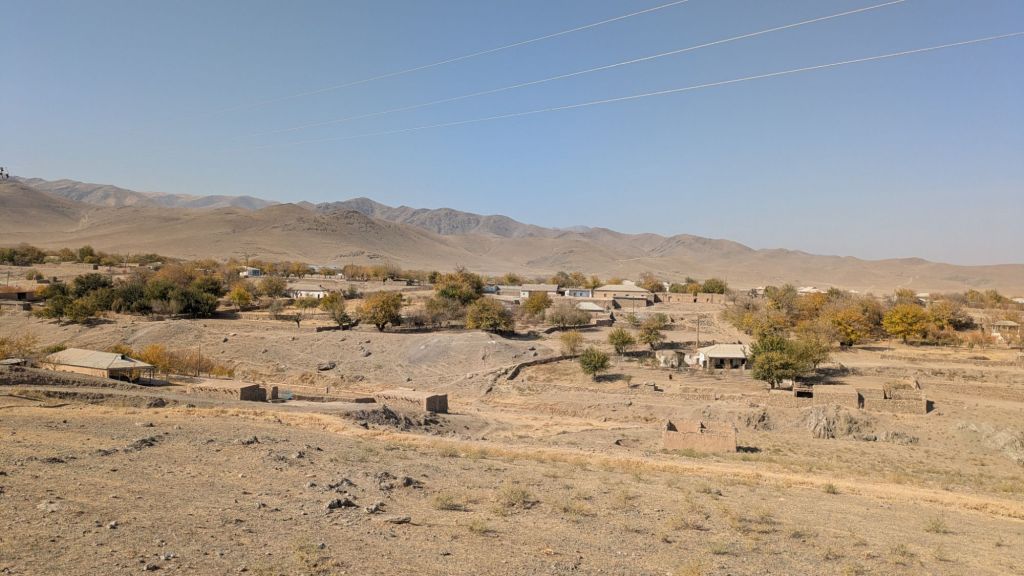
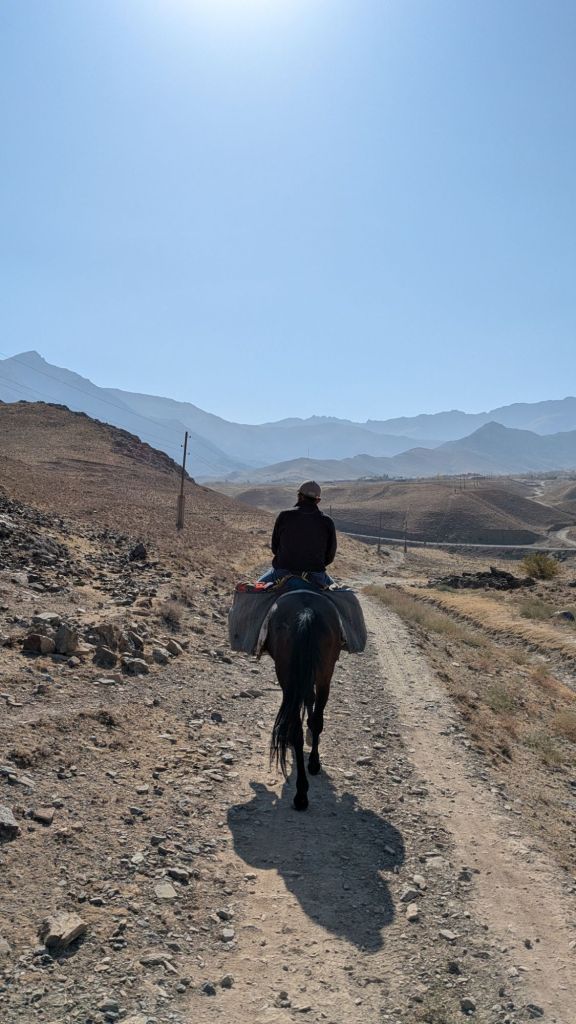
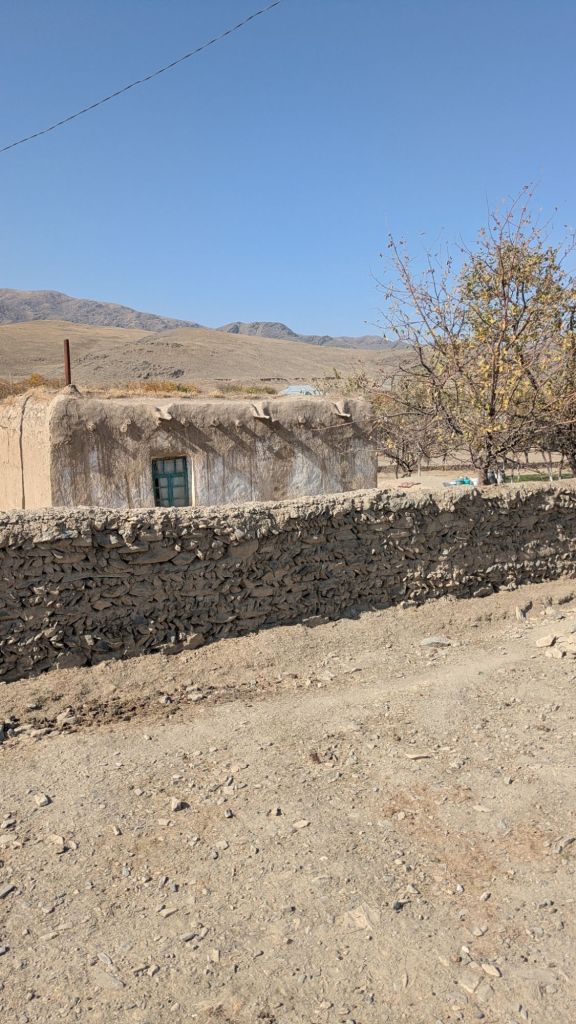
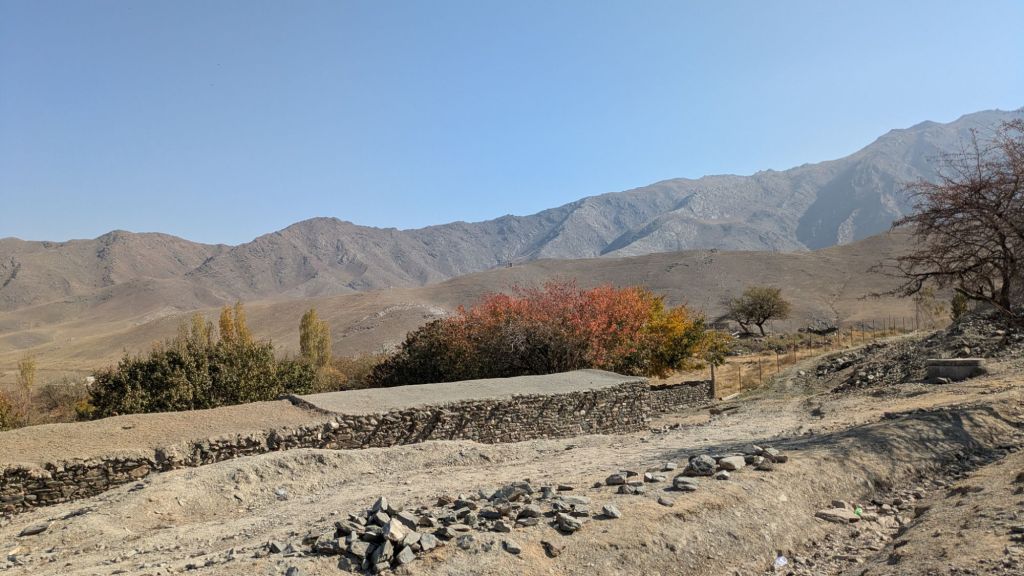
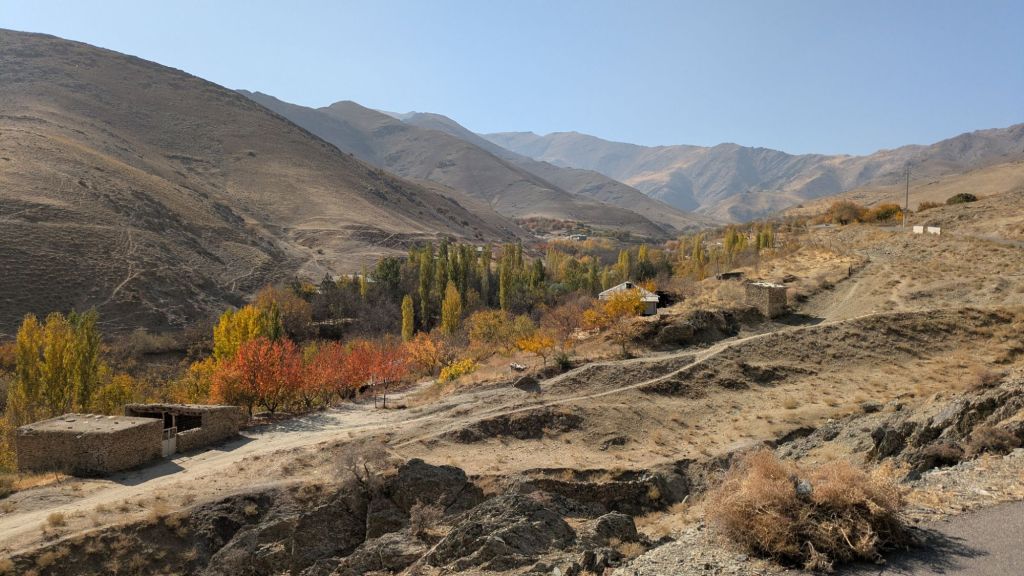
Ostensibly a three day horse ride from village-to-village homestays, this ended up being so much more than that.


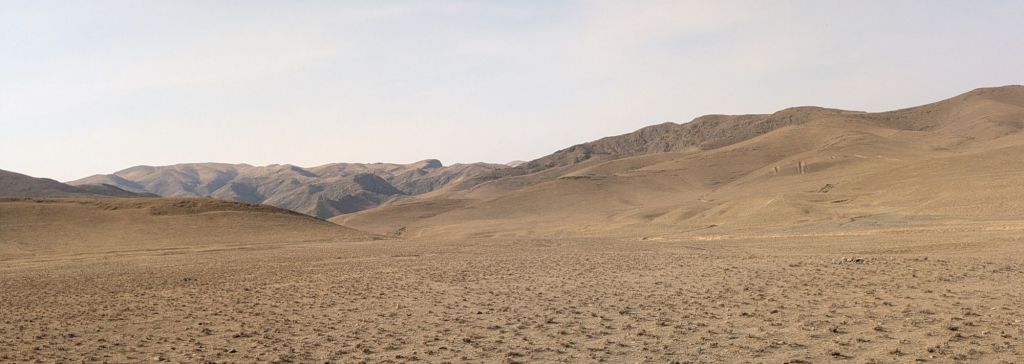
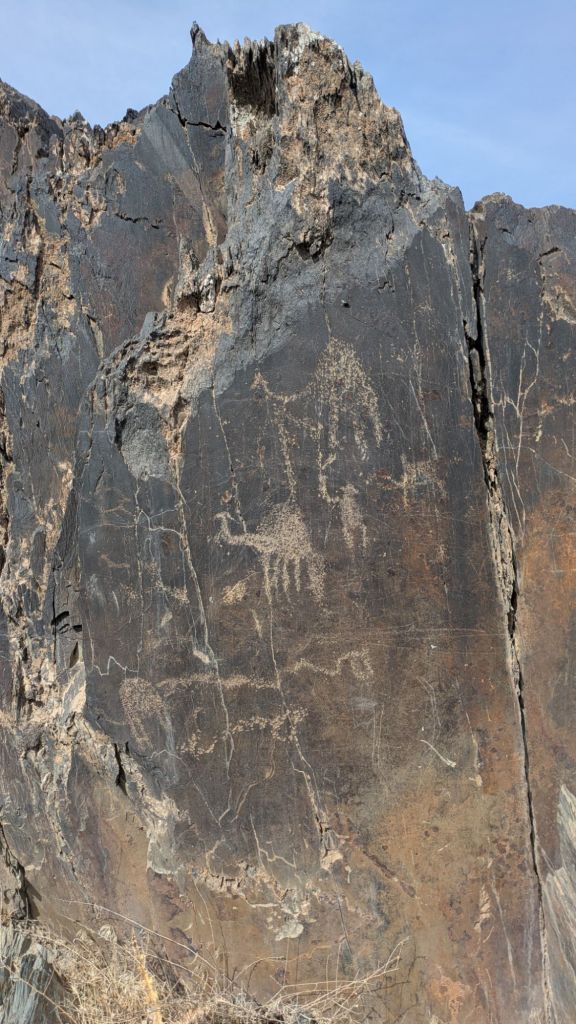
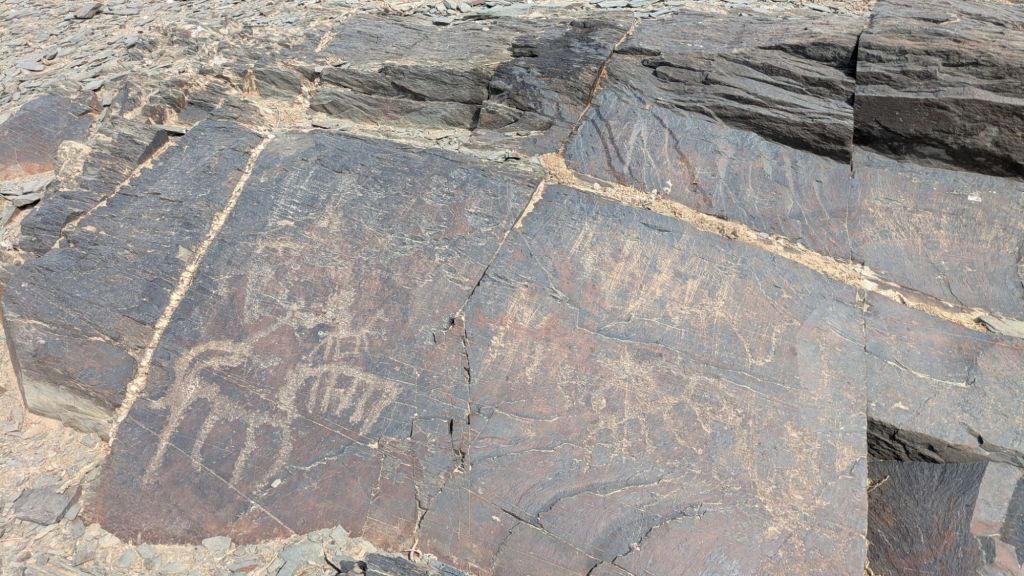
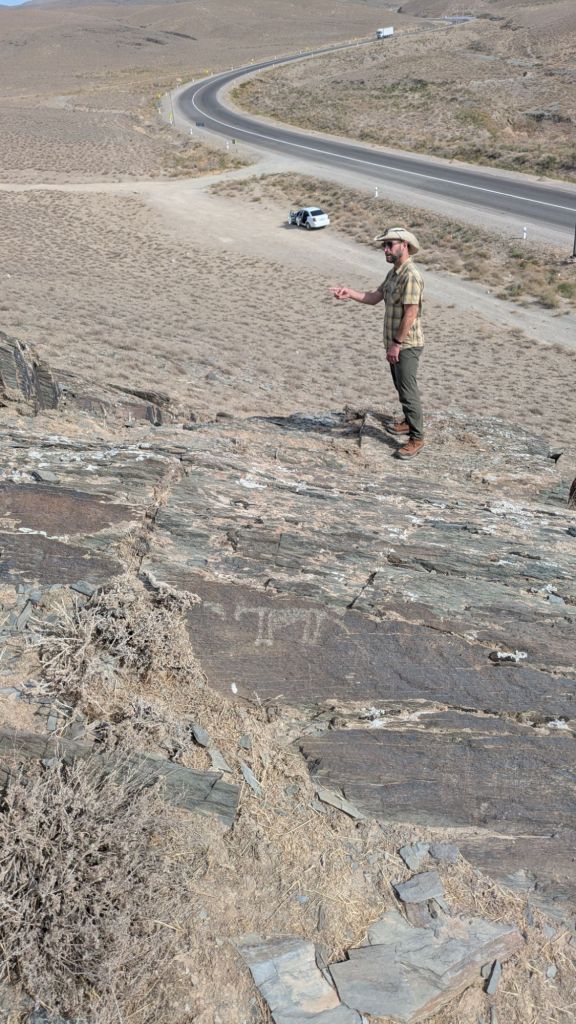
We stopped mid-way on the drive from Bukhara to Asraf to scramble around to see some roadside petroglyphs.

Approximately 4,000 years old!


Ride One

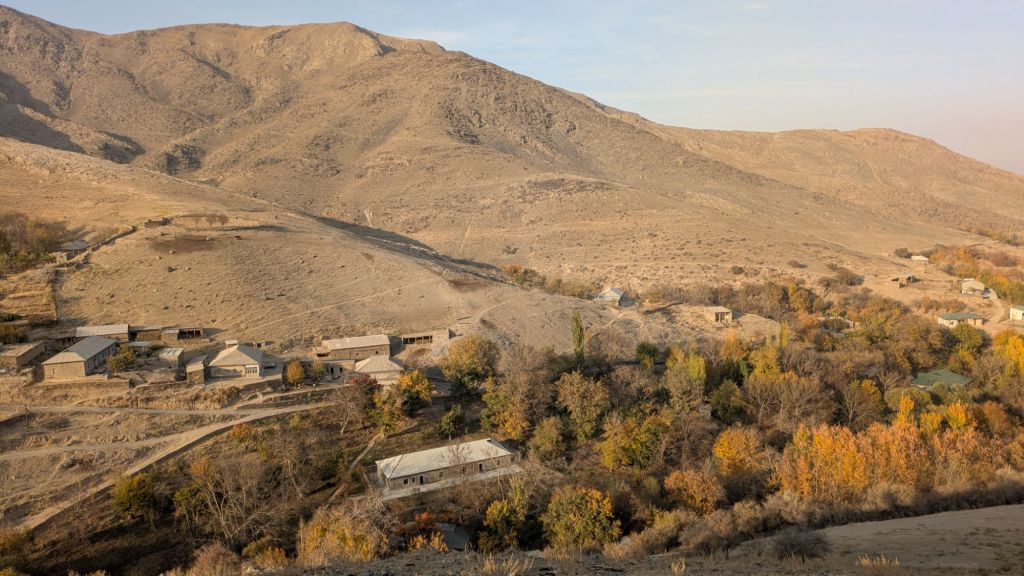
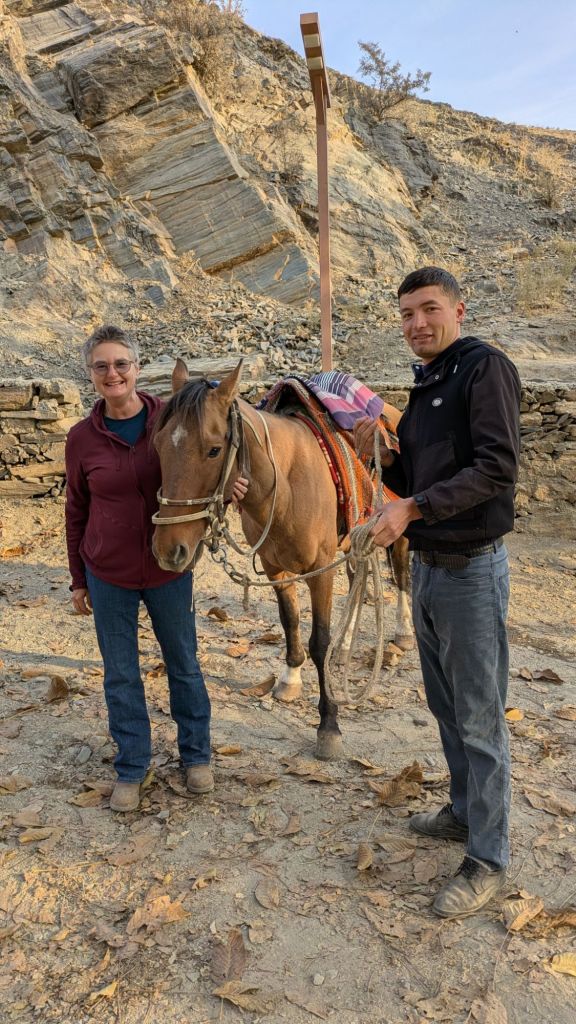
A 6.7 mile loop from Aslon’s Homestay in the tiny village of Asraf, nestled in a valley in the Nuratau Mountains. This was a shakedown ride to cover the basics and get to know the horses. I was assigned the laziest, least motivated old horse ever. I had to chide him to keep up for, literally, the entire ride. Other than that it was a nice afternoon.

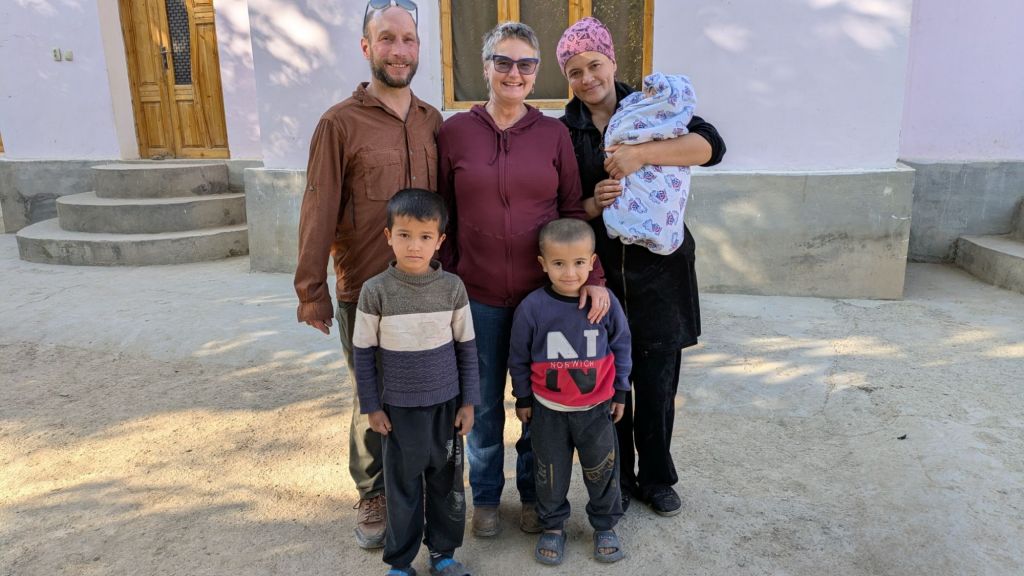
The homestay was cozy and the family was sweet.

Check out these power lines!

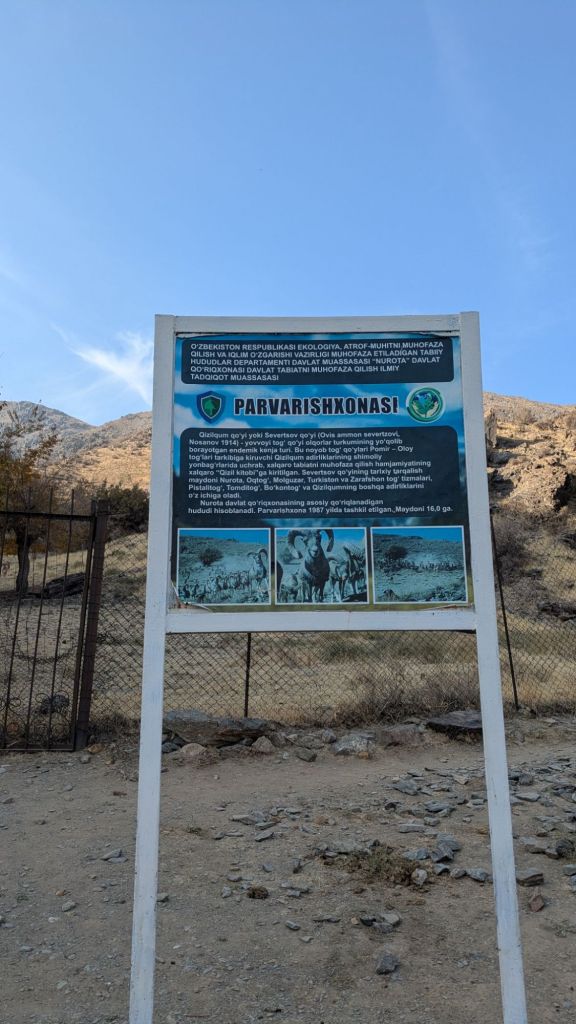
After the ride we hiked for a few miles; we were lucky to see some wild sheep. Our guide shared lots about life in the mountains. He is an enthusiastic subsistence farmer and while he thinks growing your own is pretty much a cure all for the world’s ills he is also pretty pessimistic about climate change. He pointed out many differences and how they are increasing recently.


Ride Two

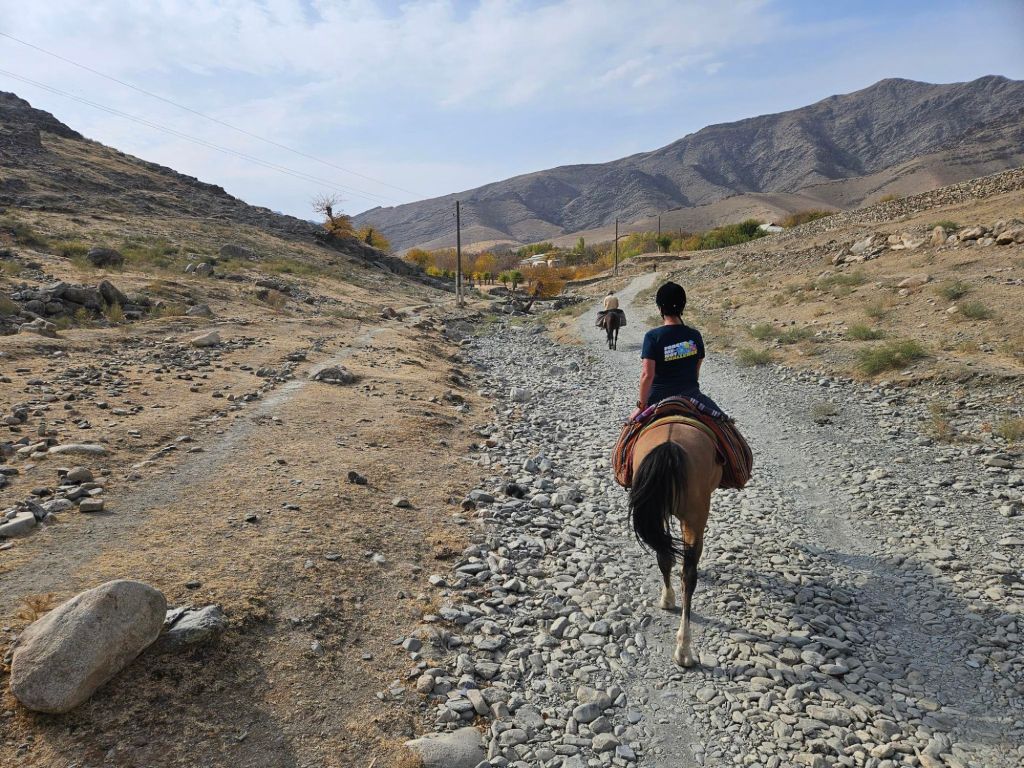
Asraf to Hayat – 9 miles

The Nuratau Mountain Guesthouse and eating meals under a mulberry tree was a highlight. Especially as the meal included mulberries from the tree!

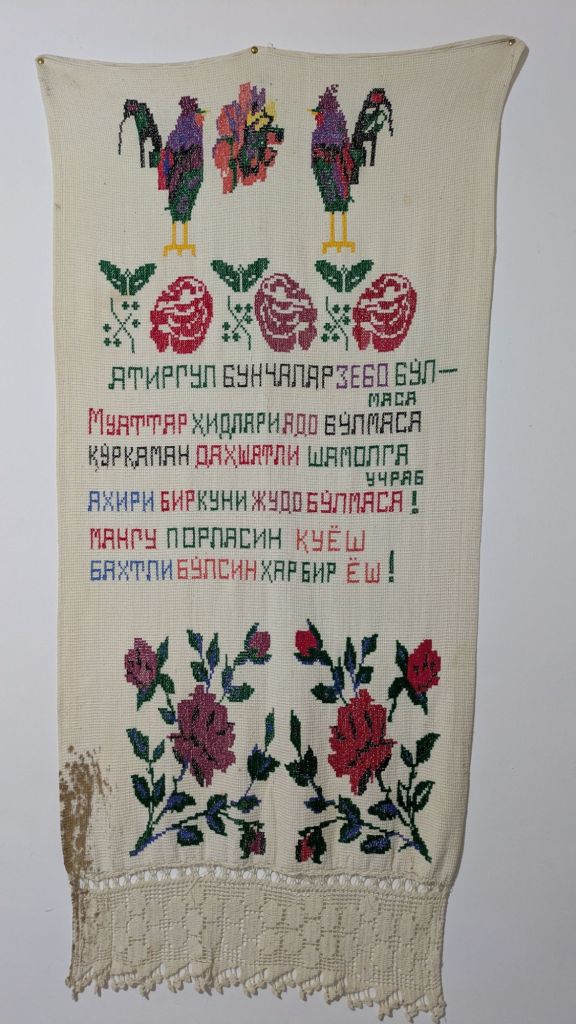
Decorations in our room were embroidered by the hosts grandmother. He had his little sister translate the poem for us via a phone call.


Ride Three

Hayat – Majerum – 9.3 miles

Kupkari is an ancient, traditional and contemporary, popular sport – the “ball” is a dead goat. Our host at the guest house plays, and showed us a bunch of reels and tiktoks of recent games. We missed seeing one in the local field by just a few days.

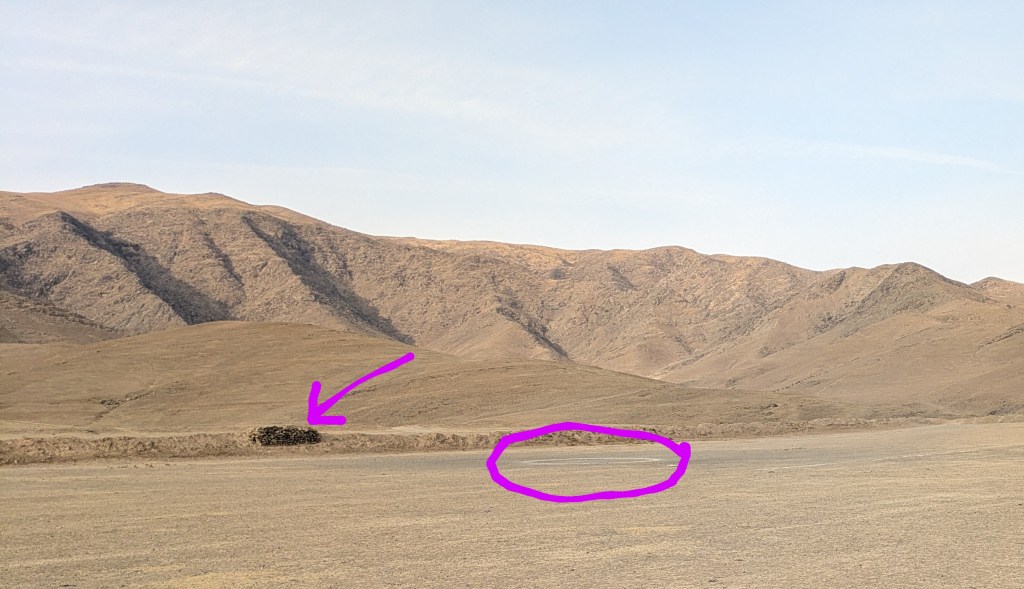
He described it as essentially an individual game, but if you successfully have the goat and are heading to the goal your friends help fend off any challengers. We rode across the kupkari field soon after leaving the village. Here’s the goal:

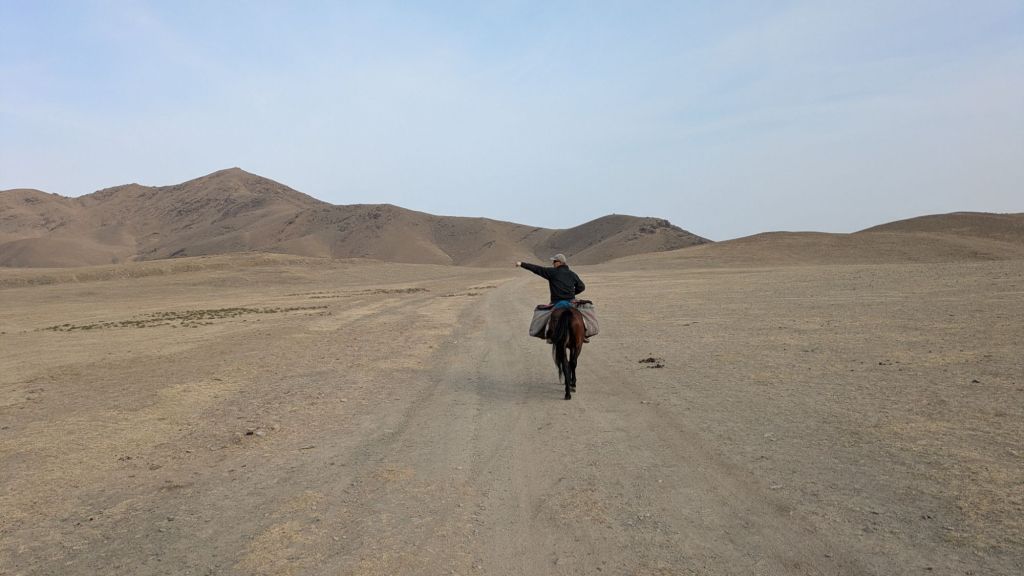
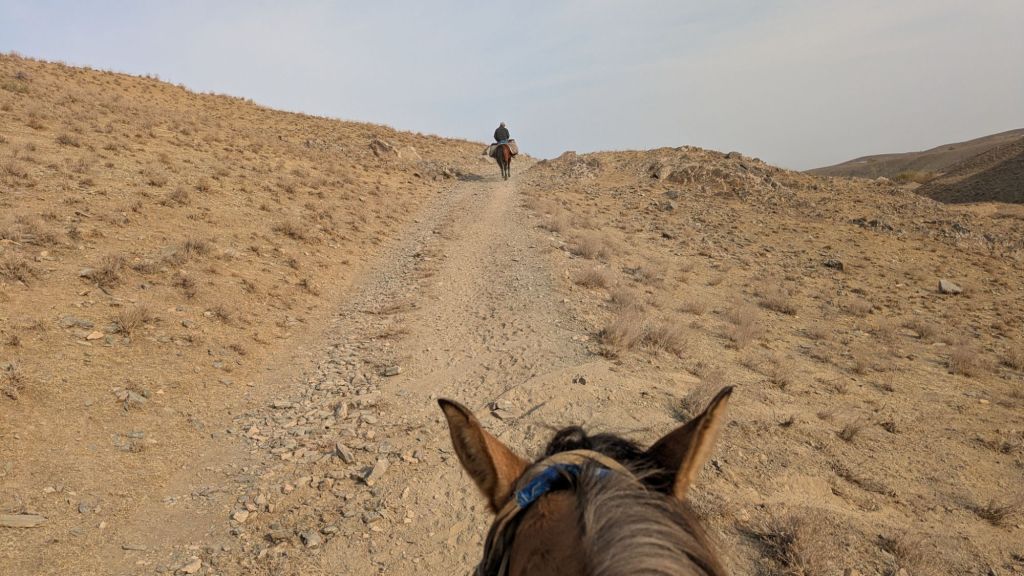
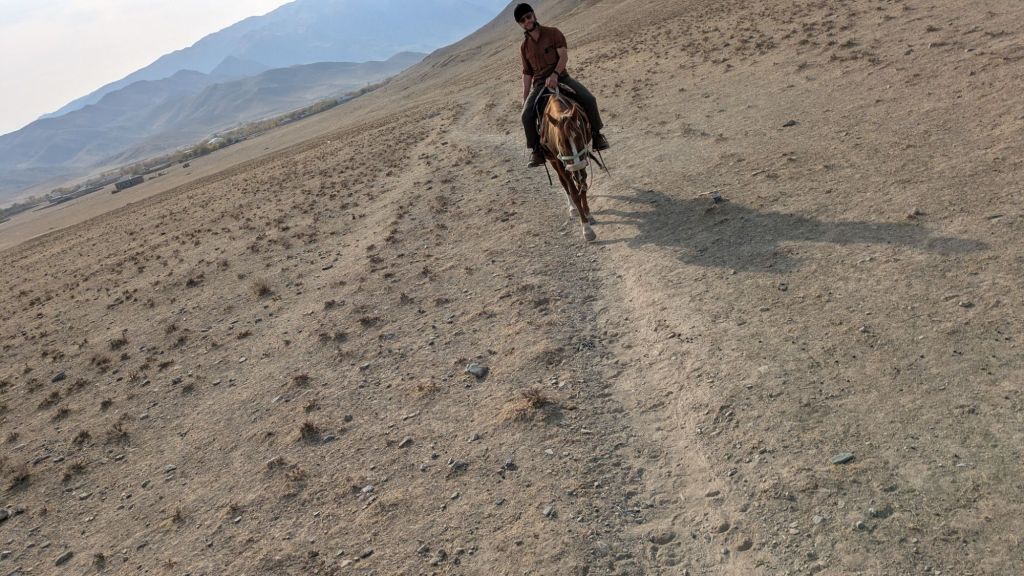
We definitely leveled up on this ride, with mostly single track and some steep hills on loose rocks.


Alexander the Great’s Tree?

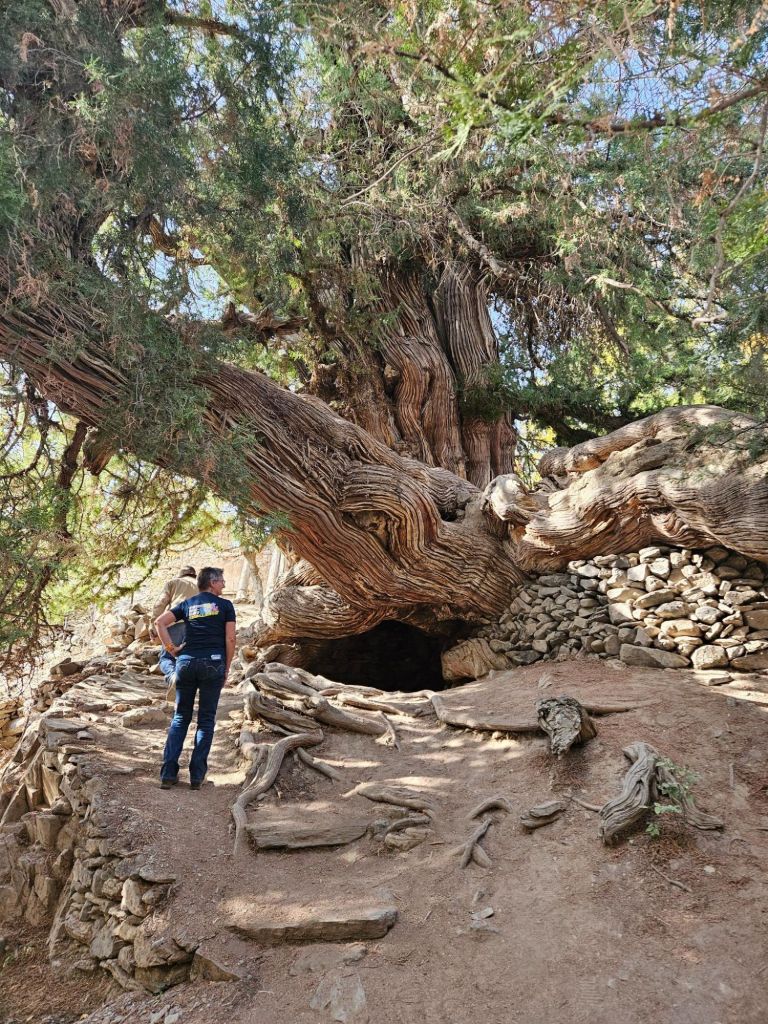
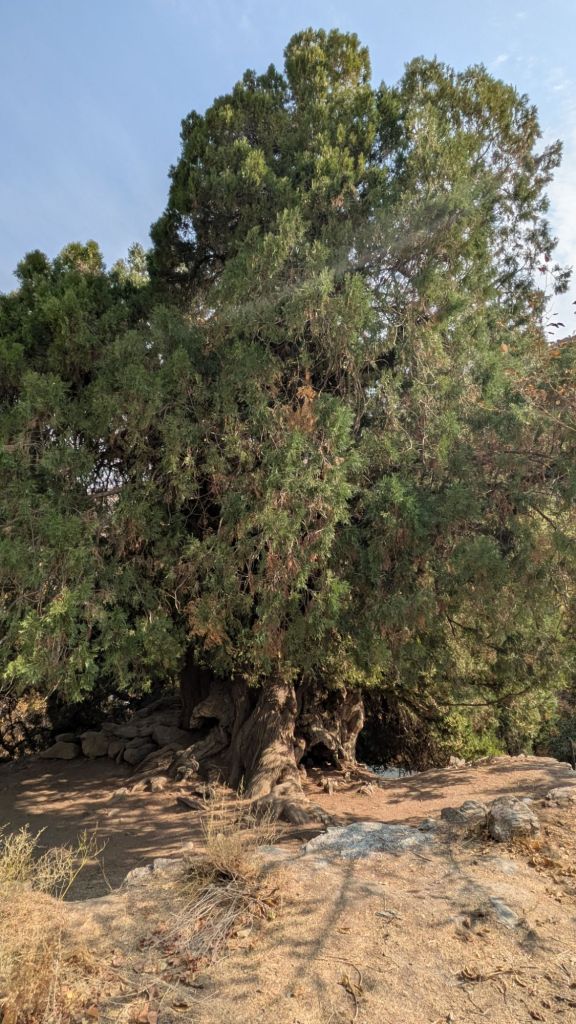
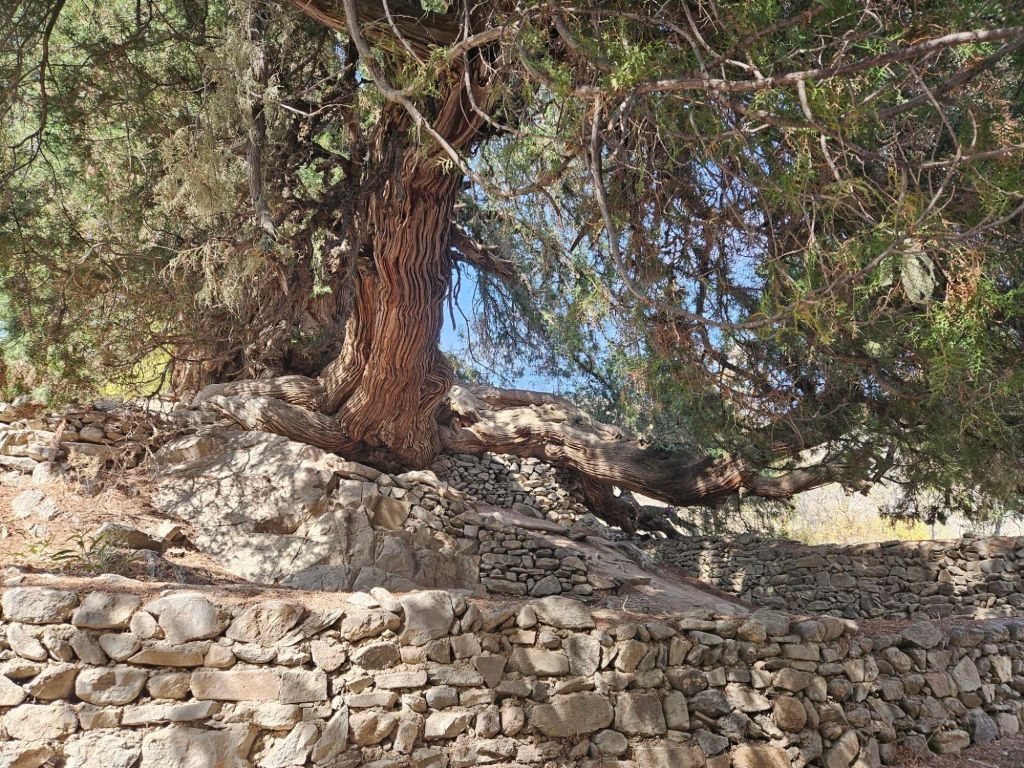
We did a short walk to view an ancient juniper tree that is a sacred pilgrimage site for locals. Based on the legend that it was planted on the grave of one of Alexander the Great’s commanders it is about 2,300 years old. Its trunk girth is ~75 feet! It is a sprawling tree and is hard to really capture in photos.

There are various ruins and old buildings around the area.


Next up was heading back to Bukhara for an overnight train, but as our train wasn’t until 11pm and our driver had the rest of the day open, he offered to make some additional stops along the way.


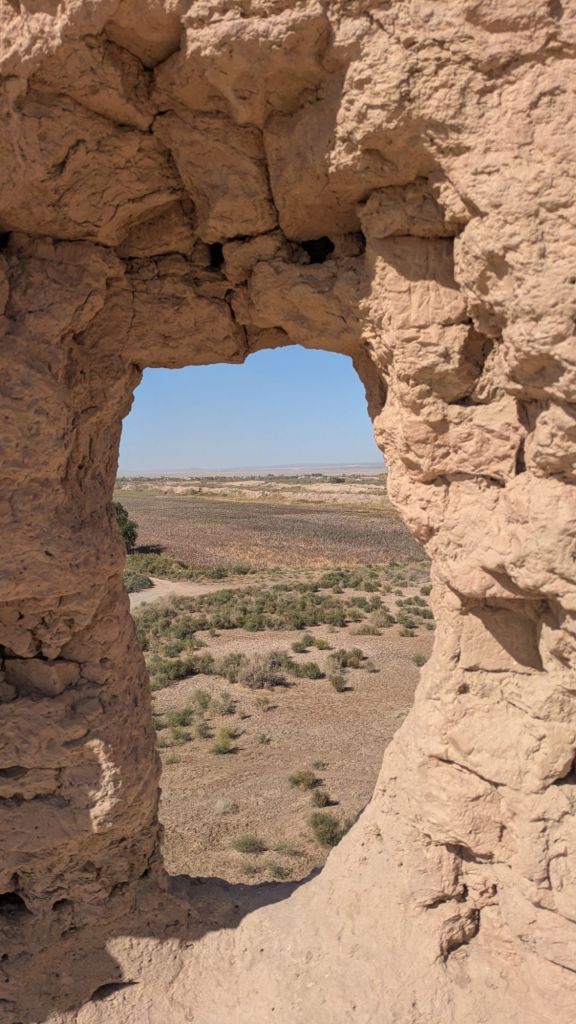
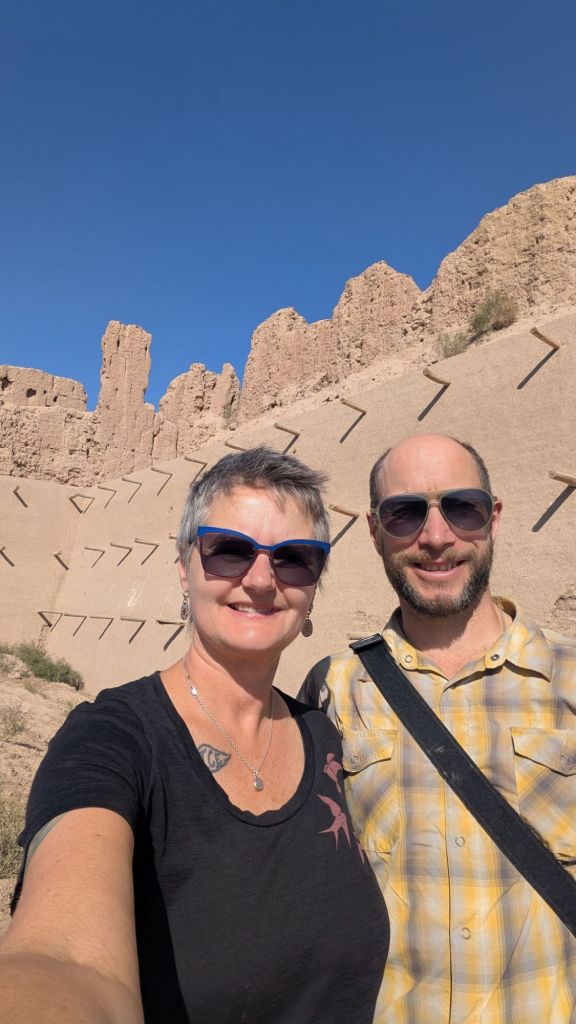
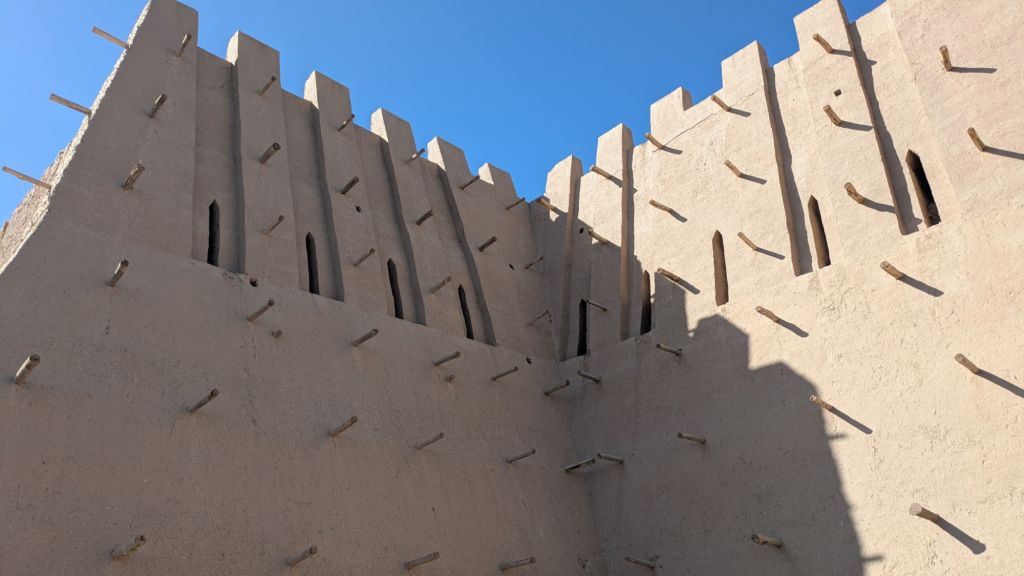
Nur Fortress

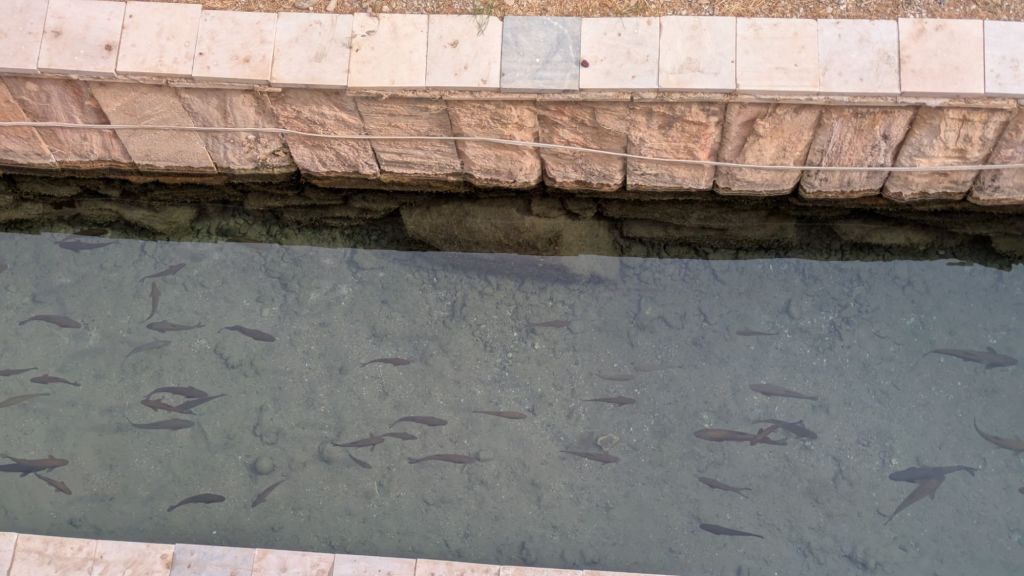
Nur was founded in 327BC by Alexander the Great. The name of the city is now Nurota. The spring is likely why it was selected as an excellent town site.

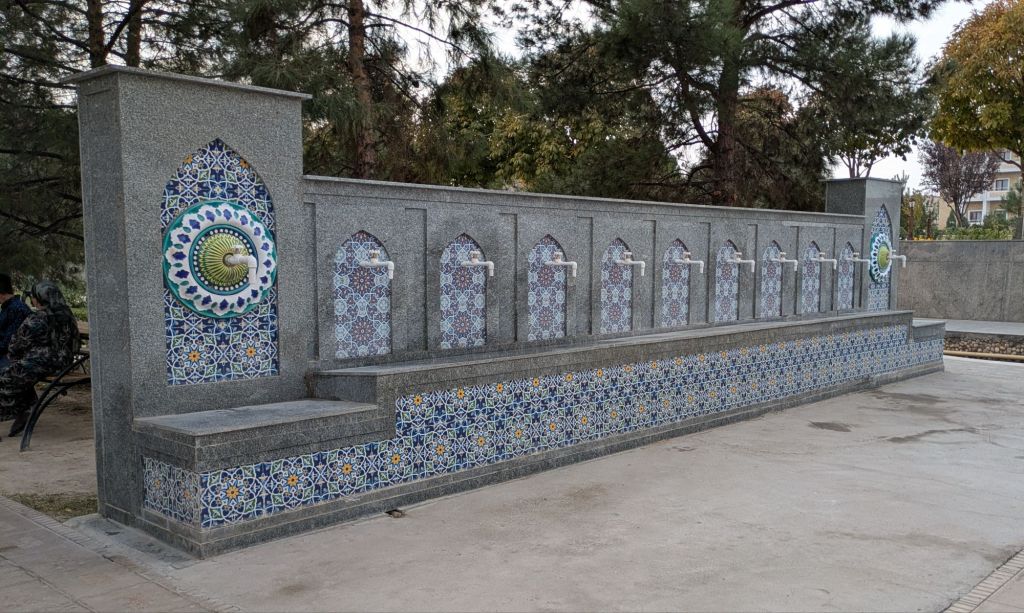
Both the water and the fish are considered sacred. There is a unique, ancient water supply system “karez” still in place.


Sardoba Malik

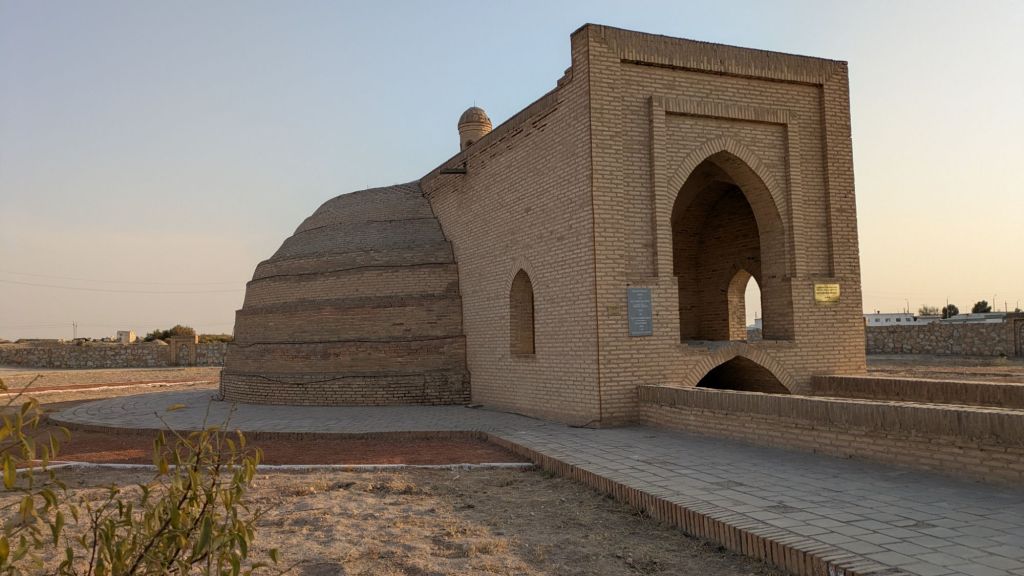
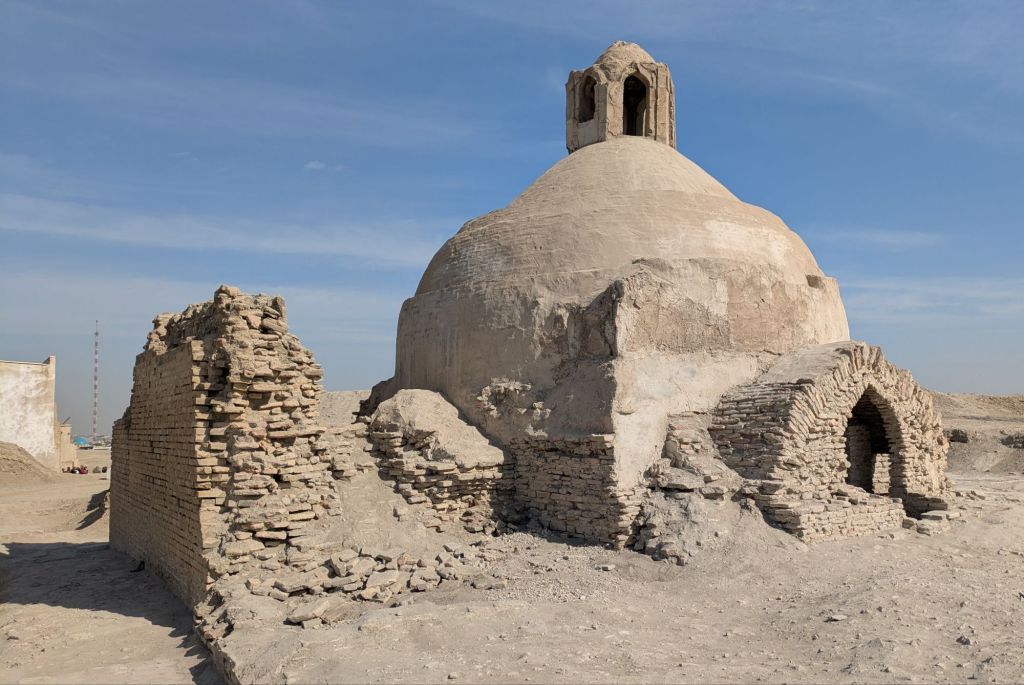
An ancient water cistern, circa 12th century, an underground reservoir to serve the caravanserai and the settlements around what became Navoiy.


We had dinner together in Bukhara before being dropped off at the station.

Next up last day shopping and eating in Tashkent. And then likely another post about general sights, sounds, experiences, and the food.

Jet lag was REAL this week, but reentry has mostly been smooth…

Bukhara — UZ11

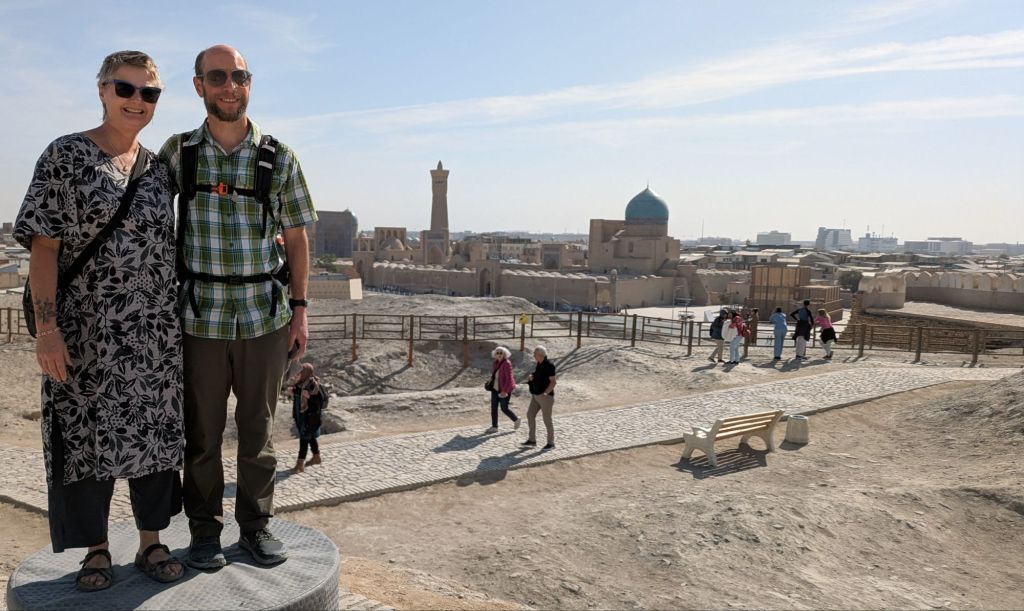
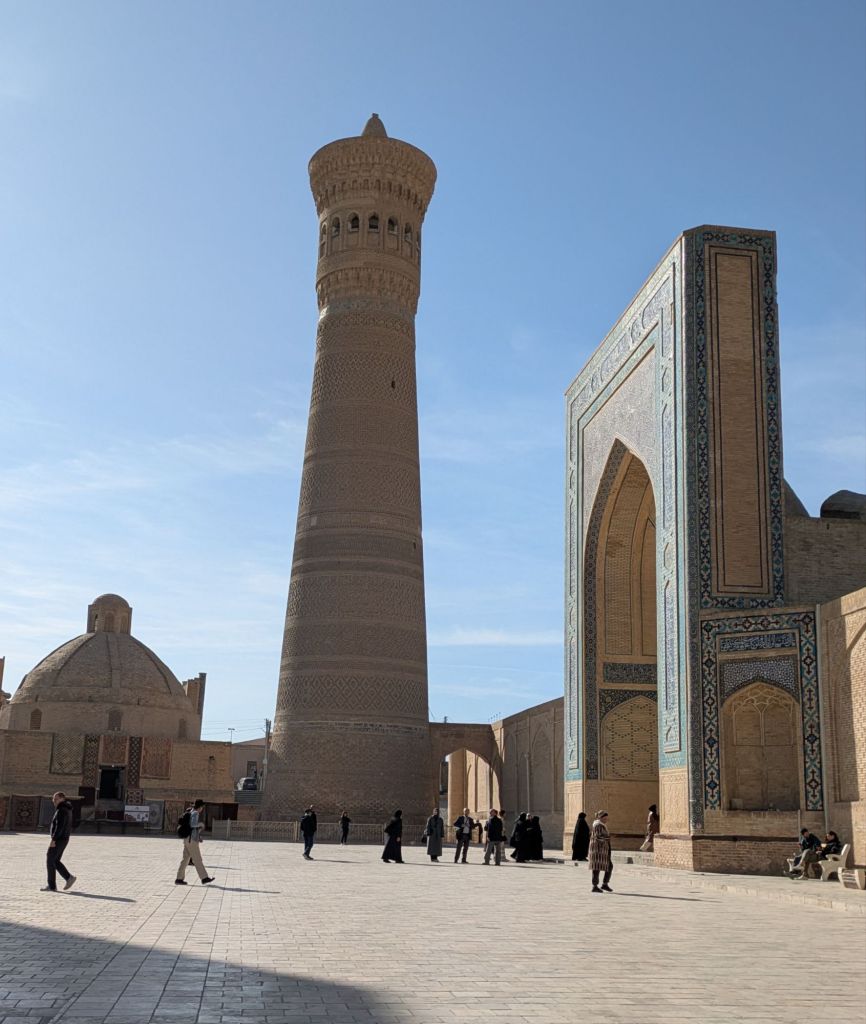
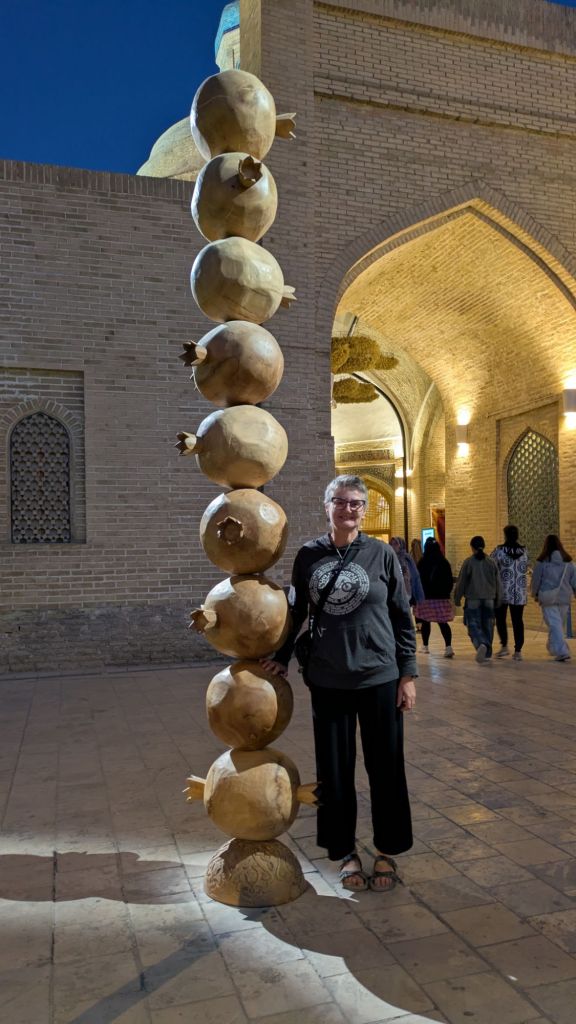
Bukhara is charming.

~ Heather


We walked 9 miles and mostly randomly explored spaces on a whim. We also enjoyed some cribbage time at cafes. A city, in a day, in pictures.

We bought a puppet set from this artist at the puppet museum

I’m feeling pretty satiated by museums, beautiful architecture, and associated sights and sounds…

The final leg of the trip is a 3 day horse trek and a day in Tashkent….

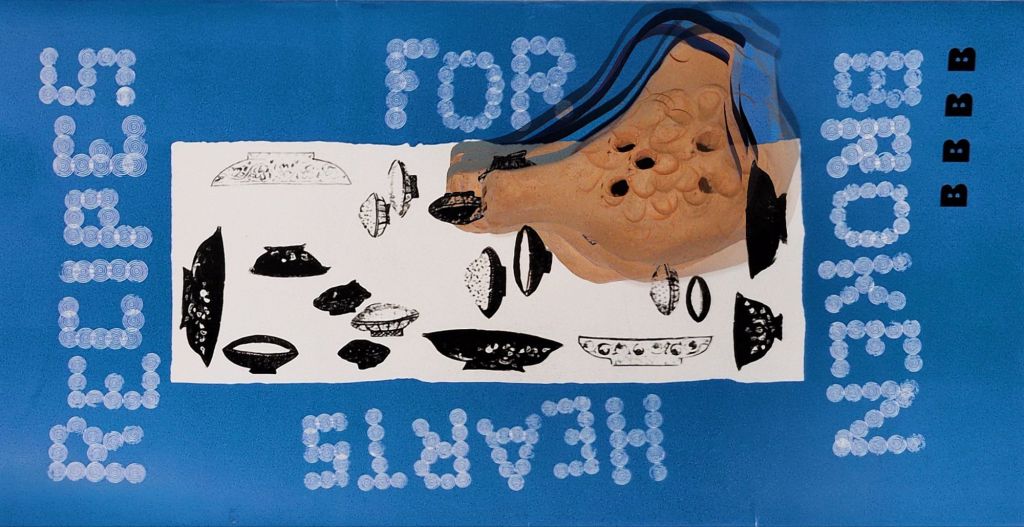
Recipes for Broken Hearts — UZ10

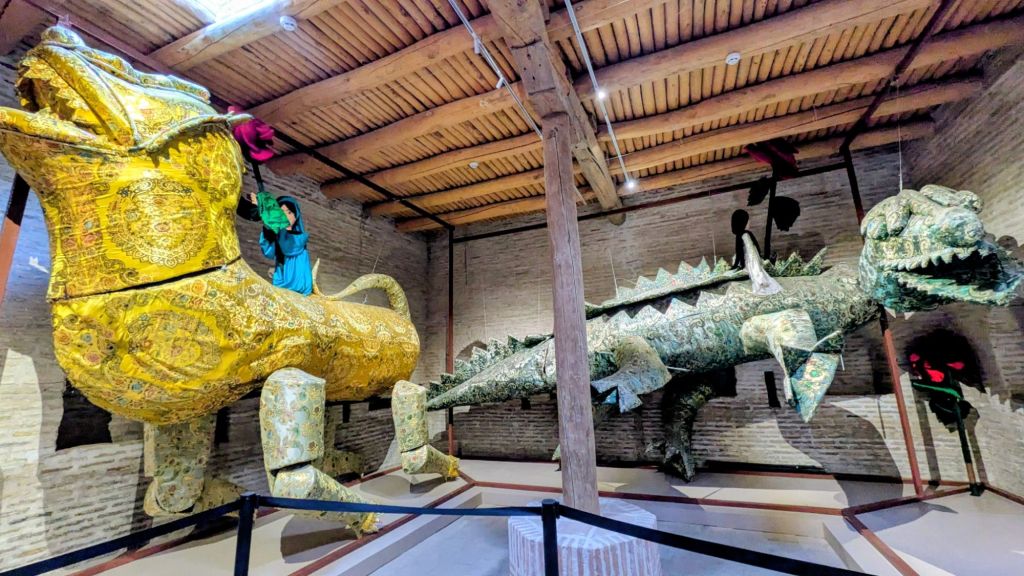
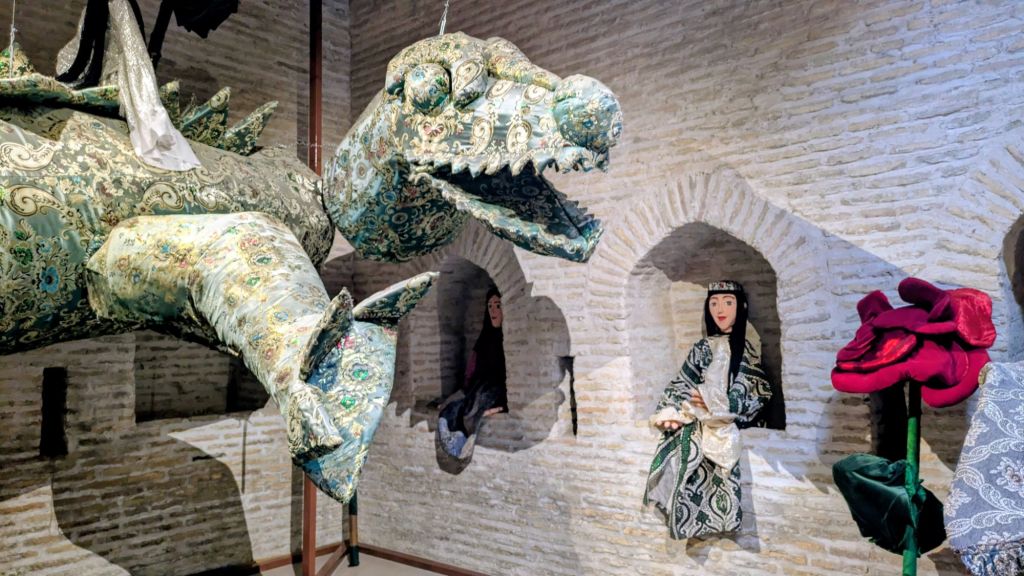
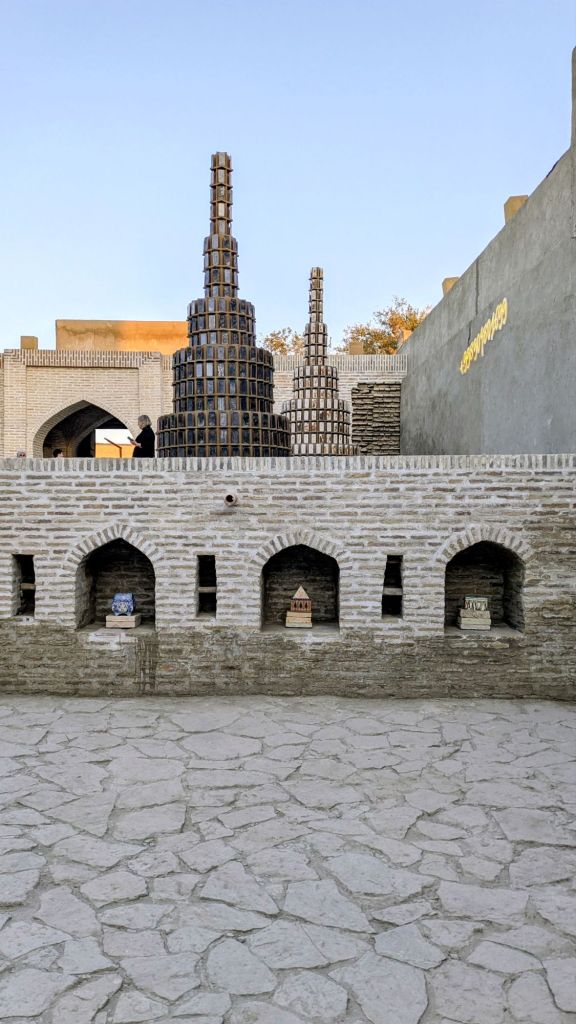
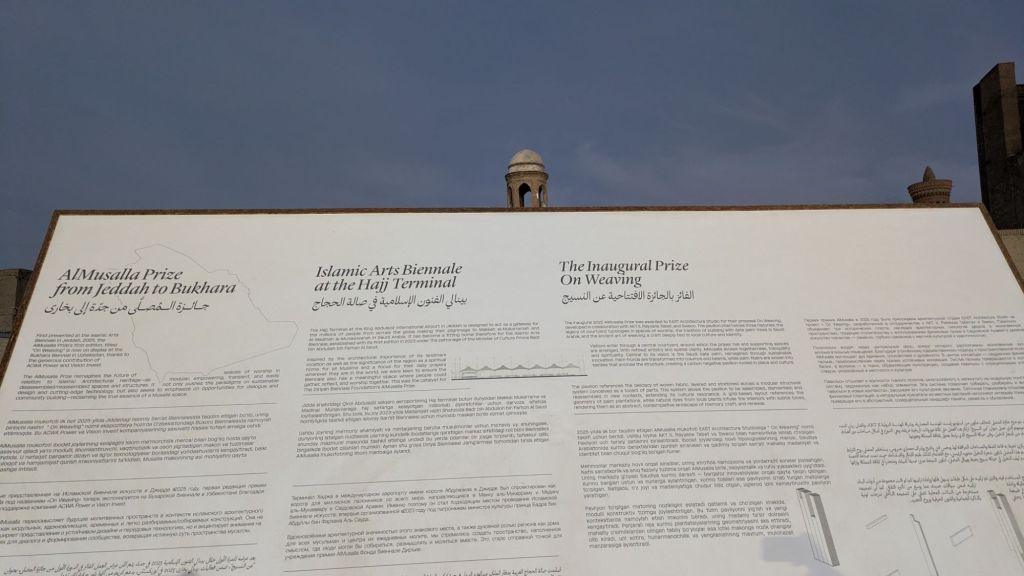
Bukhara Biennial

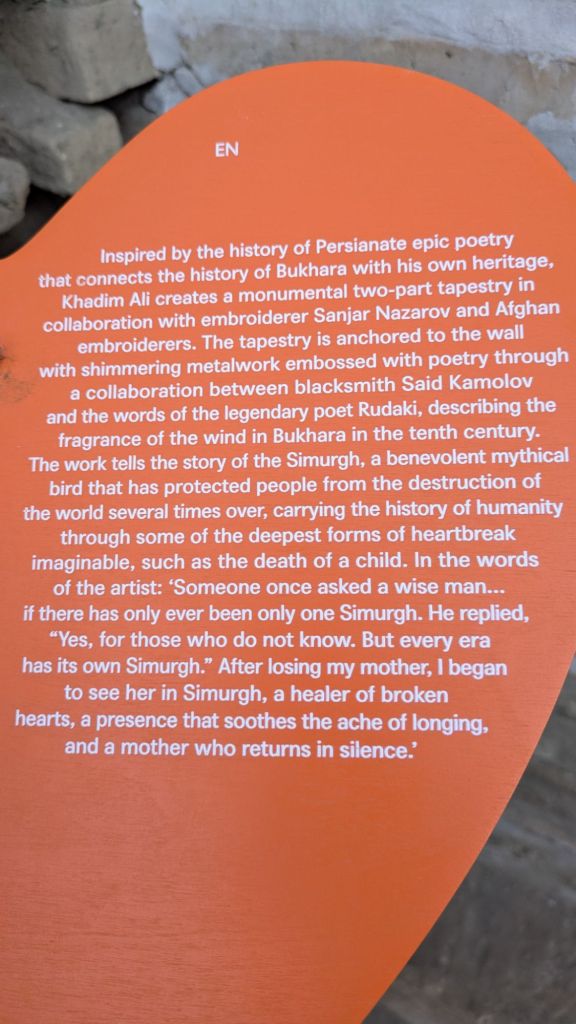
This biennial is not about broken hearts; it’s about the recipes to mend them. Cures, like recipes, are not static. Inspired by the wonder we knew as children that can spark the wildest sense of imagination, we might invent new recipes to heal one another. This is not an exhibition meant to be experienced alone, but one that celebrates what is possible when we show up for each other.

~Bukhara Biennial


We were fortunate to arrive in Bukhara early enough on Sunday afternoon to spend the rest of the day exploring the Bukhara Biennial. Like many things here Mondays are the one day that the Biennial is closed.

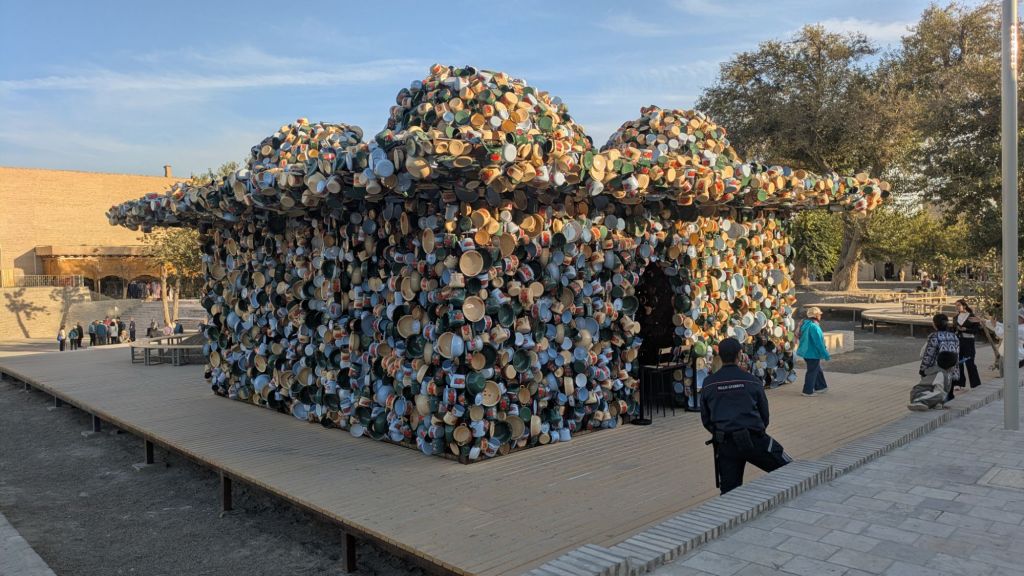
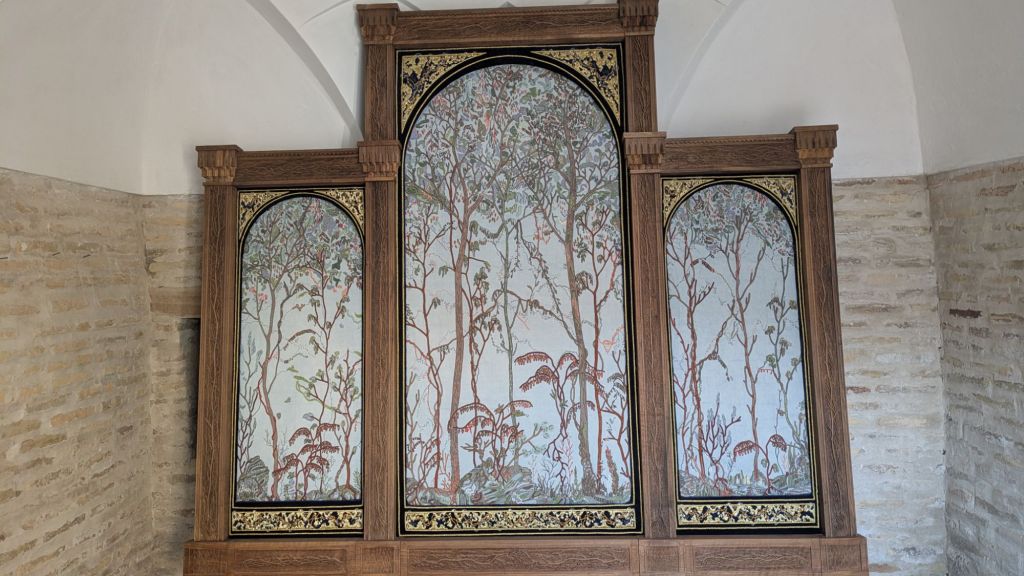
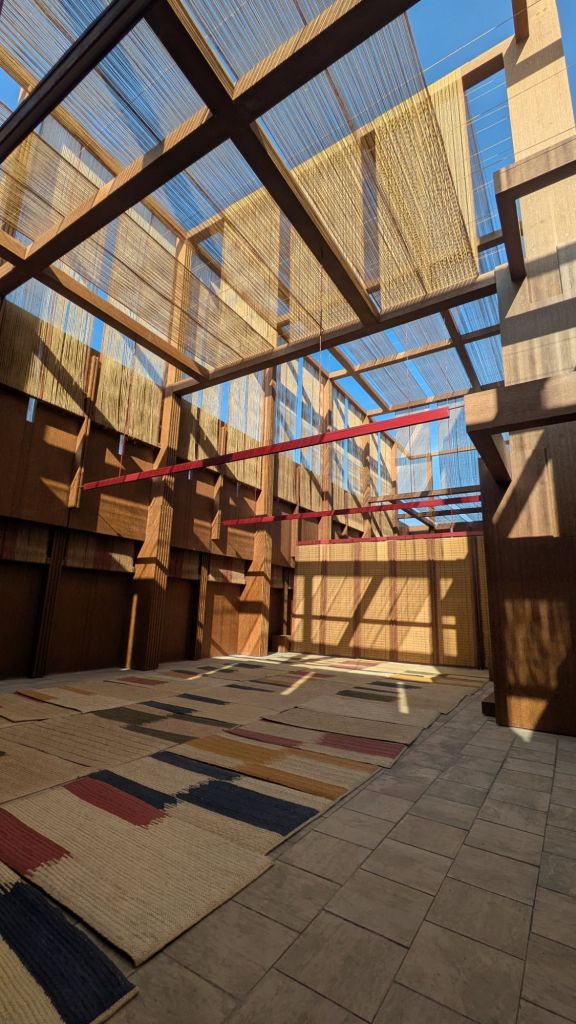
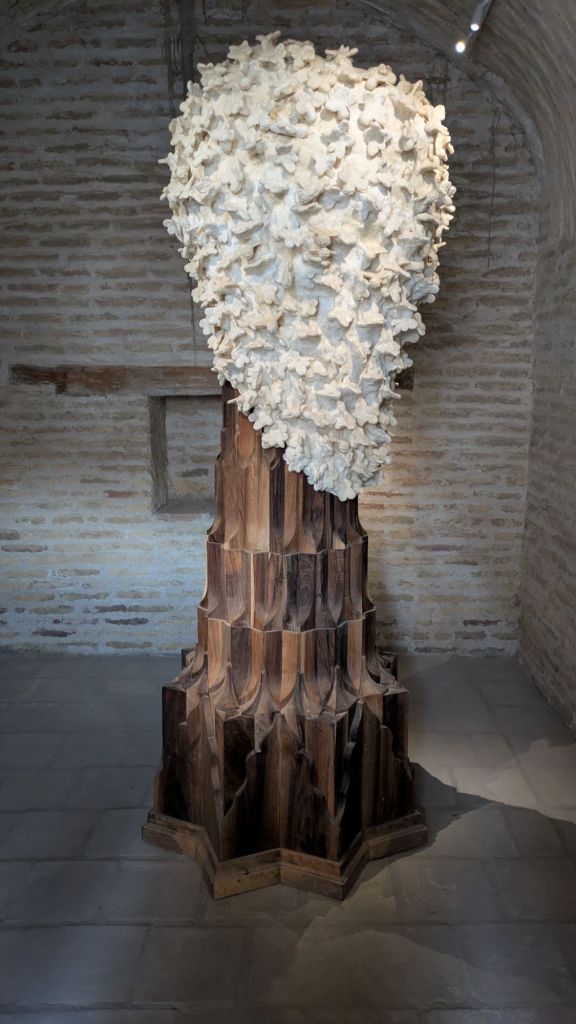
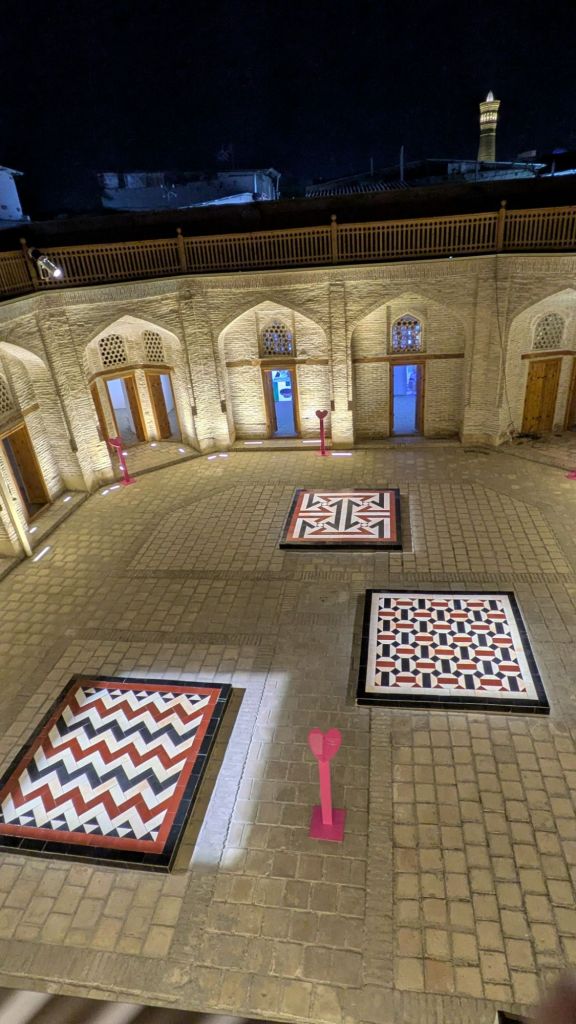
Artists from around the world were partnered with local artists from the Bukhara area. The art pieces were all created locally, some in situ.

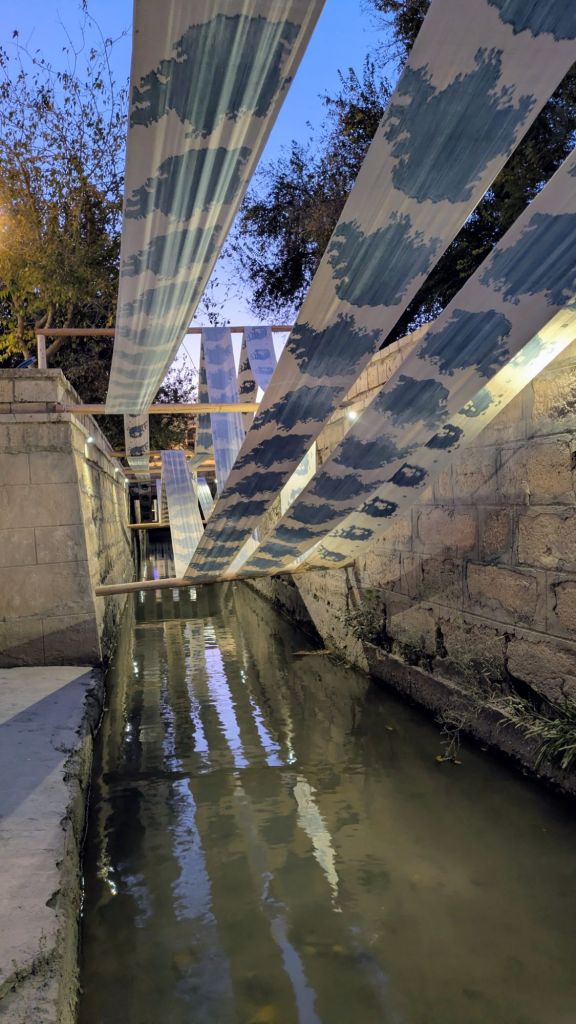
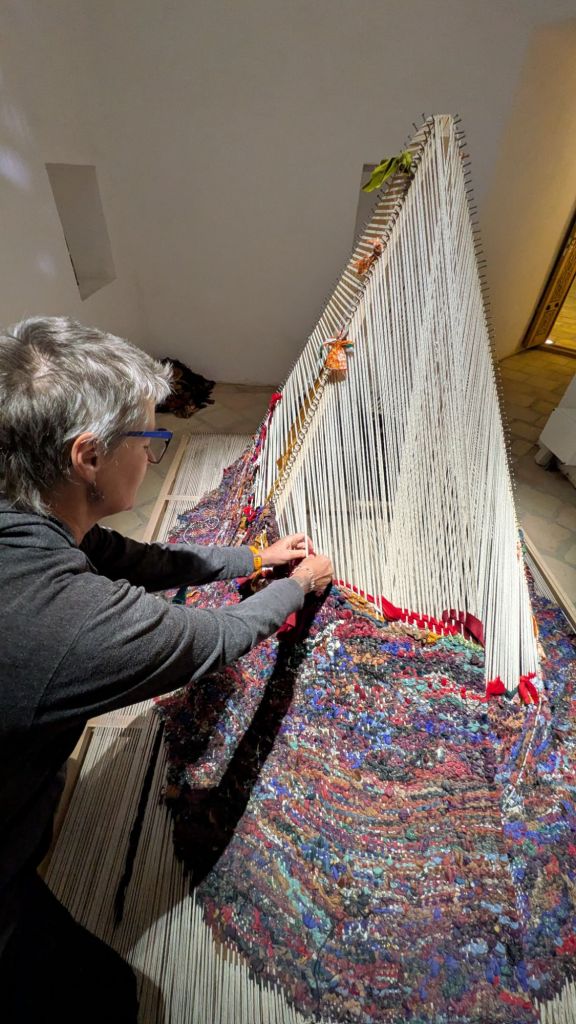
It was fun to scavenger hunt around this city we didn’t know to locate the art. It’s hard to imagine this show being close to as effective in any other setting… In particular the nooks and crannies of the caravanserai were perfect for the intimate, interactive pieces. And the ikat weaving along the canal was, literally, made for this place.

A favorite experience, not pictured, was a small room in the caravanserai. We entered through the blackout curtain and found ourselves in a room with five or six local women, one of them a tween. There was a film of four women dancing projected on the wall. As we arrived it was obvious the tween had just started dancing along, but she noticed us and stopped, one of the other women hadn’t seen us and she tried to encourage the tween by starting to dance herself. Then she noticed us, and stopped. I then stepped into the group and started to mimic the dancers in the film, then the tween and the encouraging woman joined me. The three of us danced along with the dreamy, slow dancing being projected for several minutes. It was so delightful to interact with both the art and women this way. And, while we didn’t get photos, the other women in the group did. I kind of like the idea of being the mystery woman in their movie and photos.


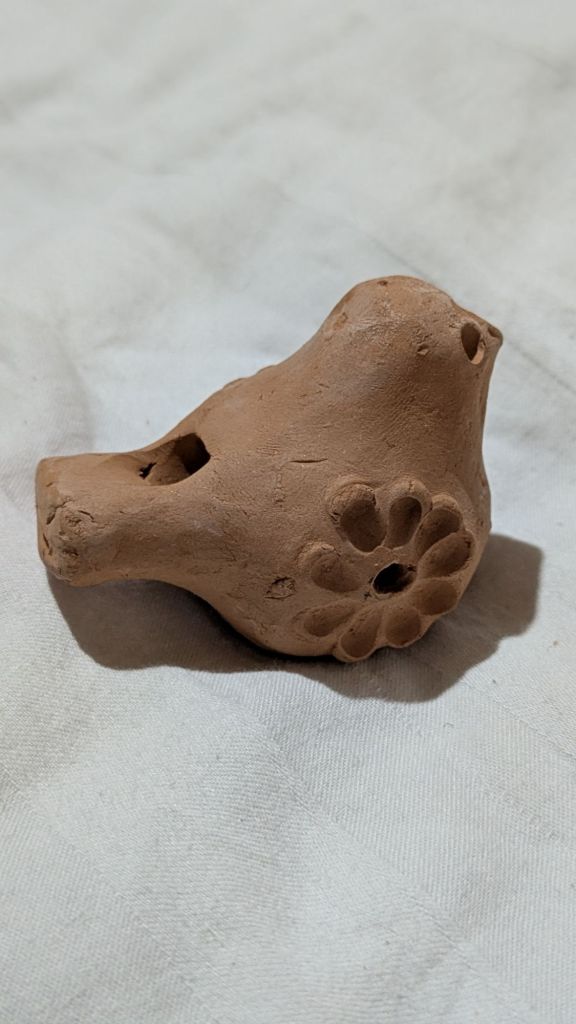
In one room I was invited to choose a hushtak and then use it to create a unique song. The song was then merged with others playing in a larger courtyard.


Heart shaped placards described the artists and had artist statements.


It was an unplanned joy and very much a privilege to be able to interact with and enjoy this exhibition/event. Definitely a highlight of the trip.


All this already, and the “everyday” delights of Bukhara to explore as well…

Khiva — UZ9

This place is gorgeous.

~ Derek


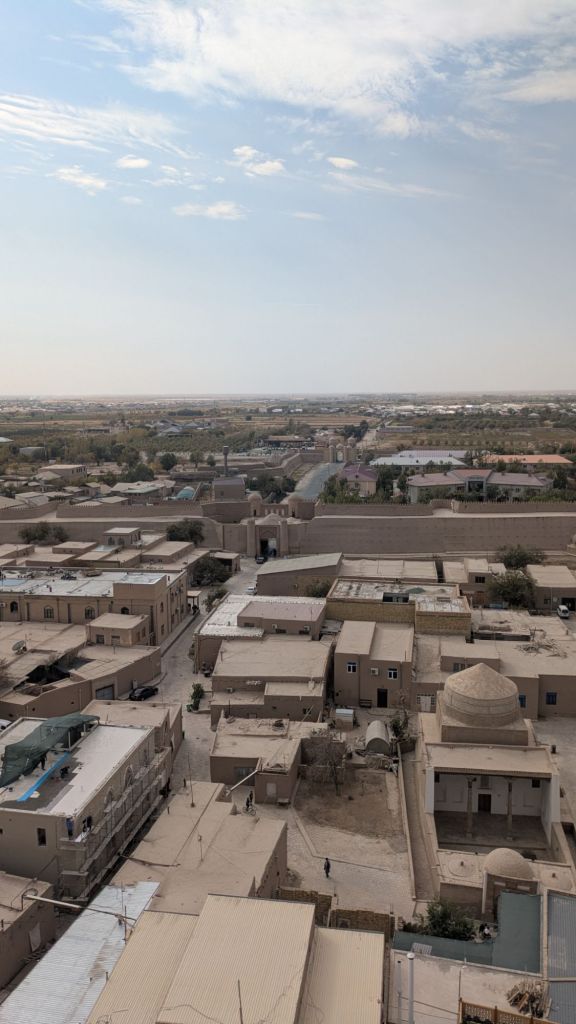
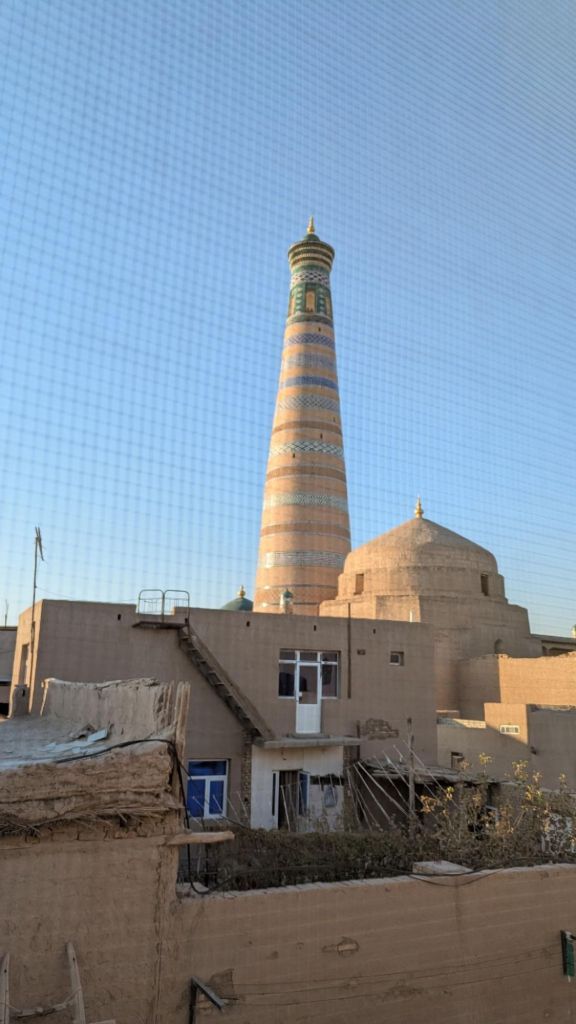
We stayed at the Islam Khodja Guest House which is inside the Itchan Kala, the old walled city, of Khiva. It’s run by a sweet family and there couldn’t be a better location to enjoy and explore Khiva. Check out the view from our room and while playing cribbage in the courtyard!
We made a list of nine “must sees” based on reading several blogs and websites and set off on a walking exploration.

Khiva is a tour bus city for sure, but we still managed to find many quieter spots and moments. There is something new to see around every corner, and some of the buildings not on our list held delightful surprises, equally gorgeous architectural elements, and less people.

Here are some highlights, mostly in photographs.


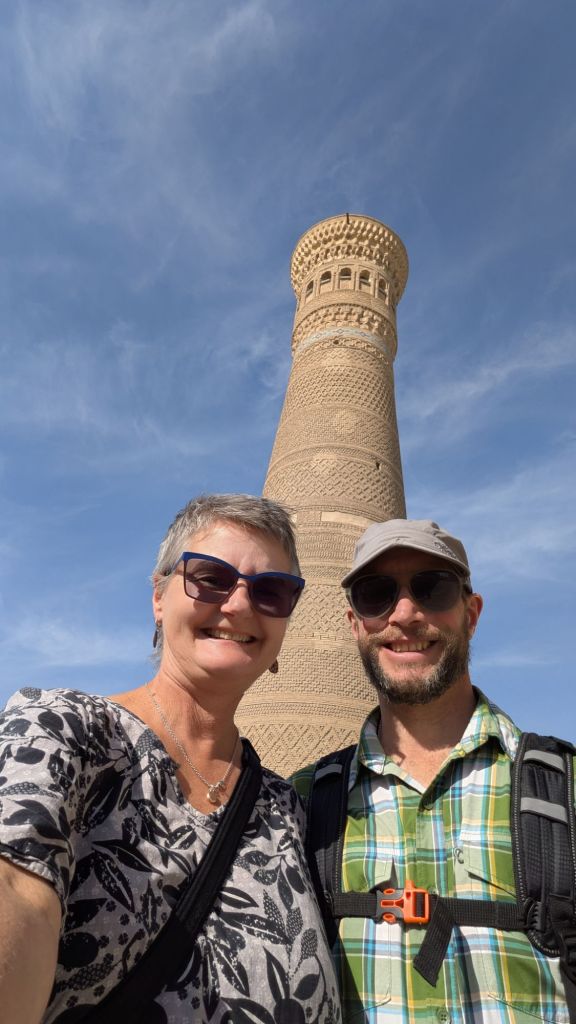
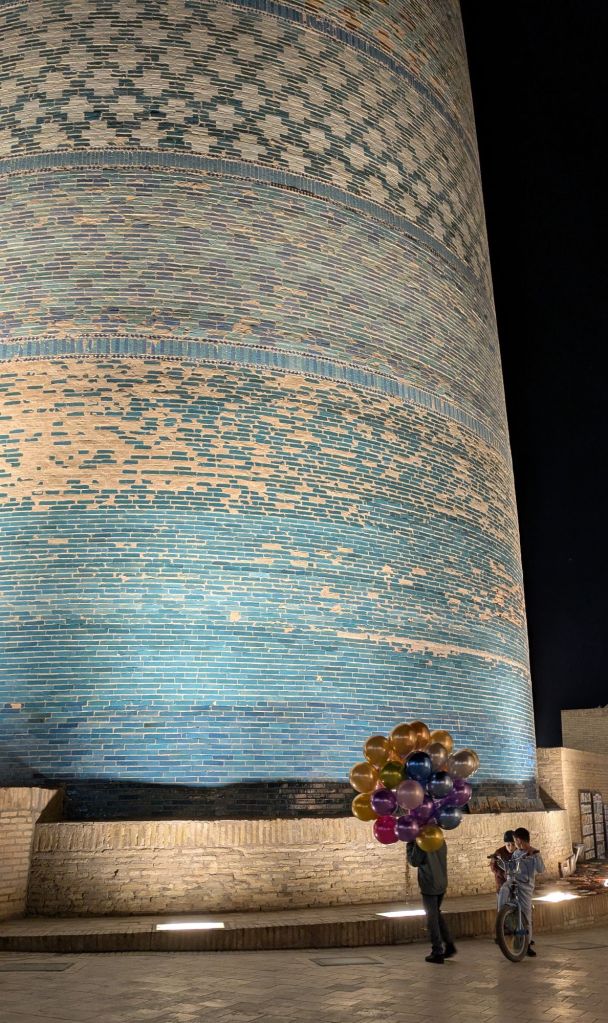
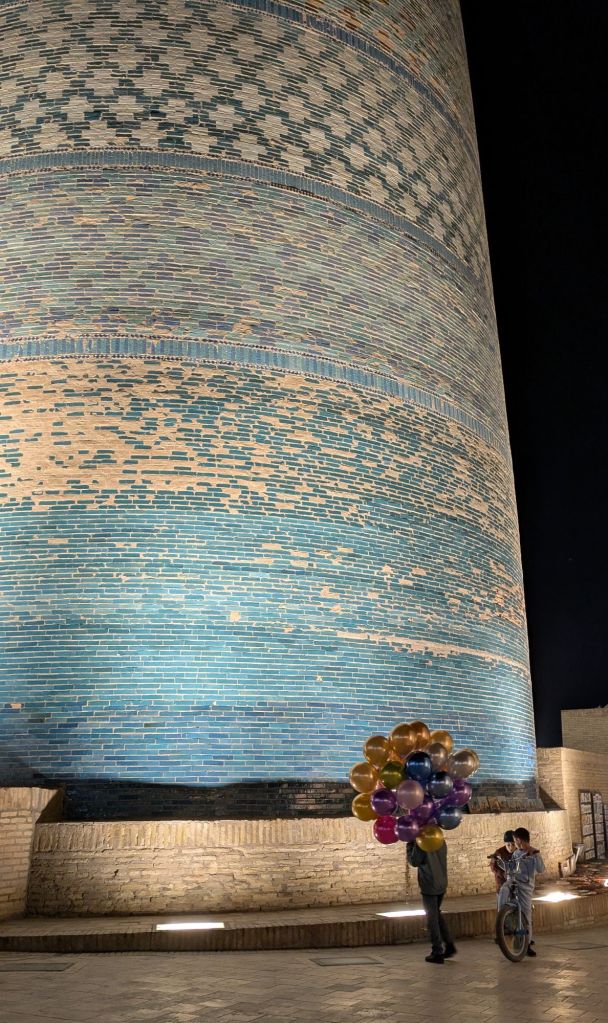
Kalta Minor Minaret

This was planned to be the tallest minaret in Uzbekistan, but Muhammad Amin Khan the ruler of Khiva having it built died, and construction ended in 1855. It is one of the most distinctive landmarks of Khiva.


Mohammed Amin Kahn Madrassa


Kuhna Ark and Watchtower

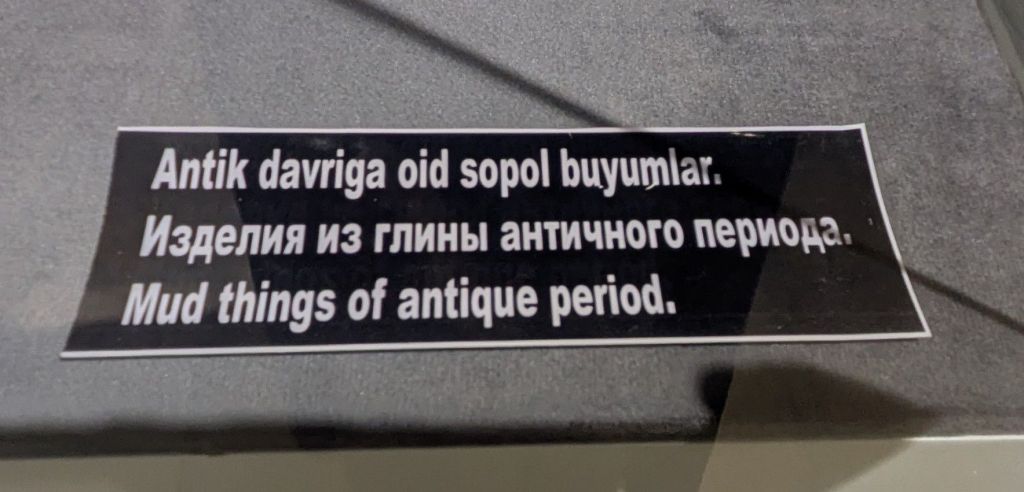
I particularly enjoyed the translation on this sign, “mud things of antique period”


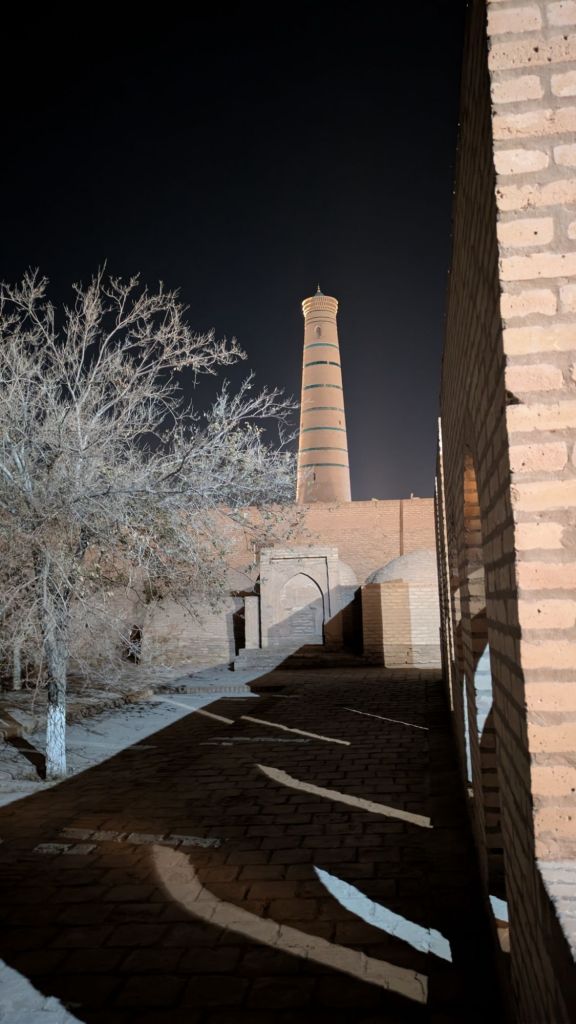
Islam Khodja Minaret

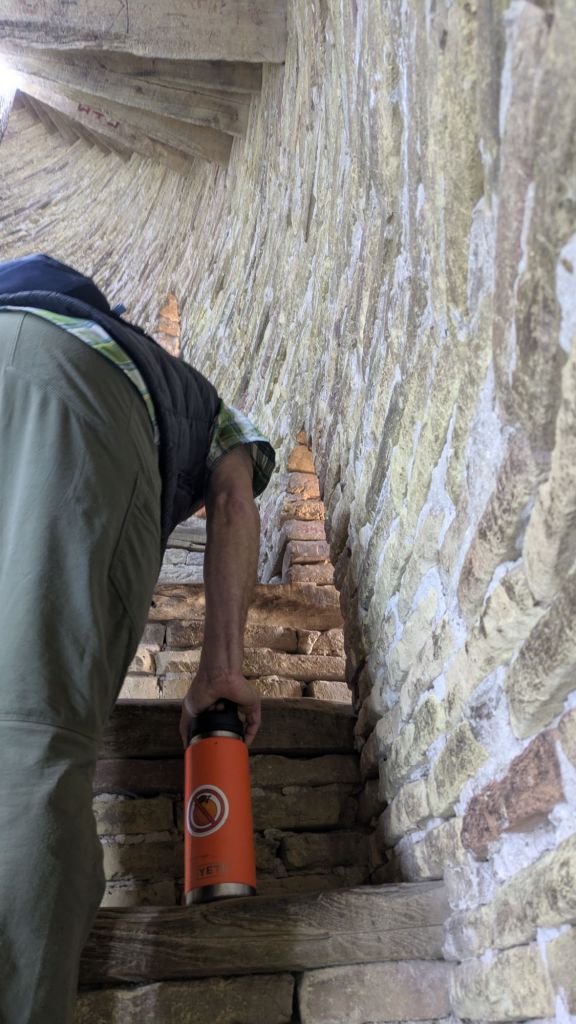
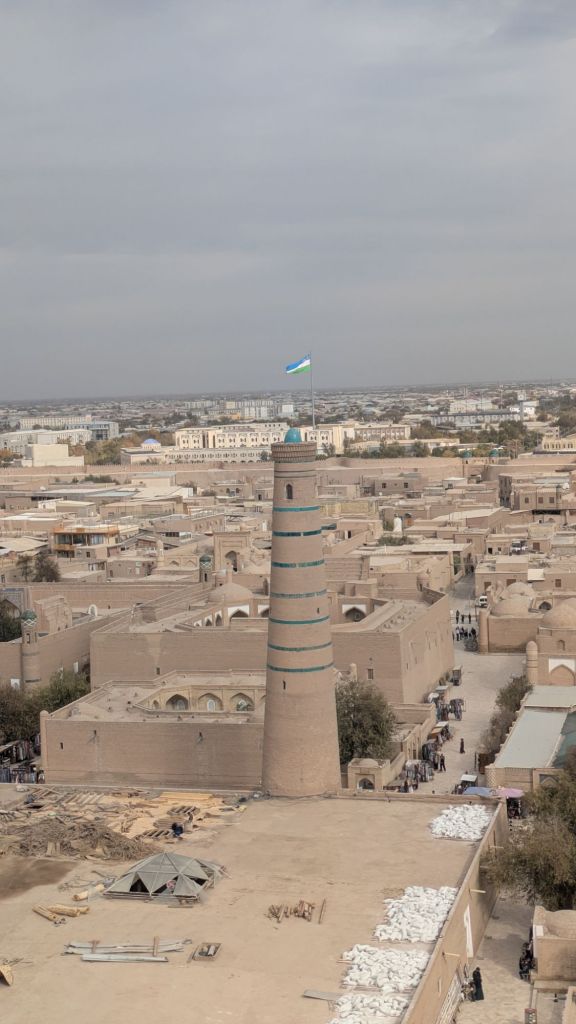
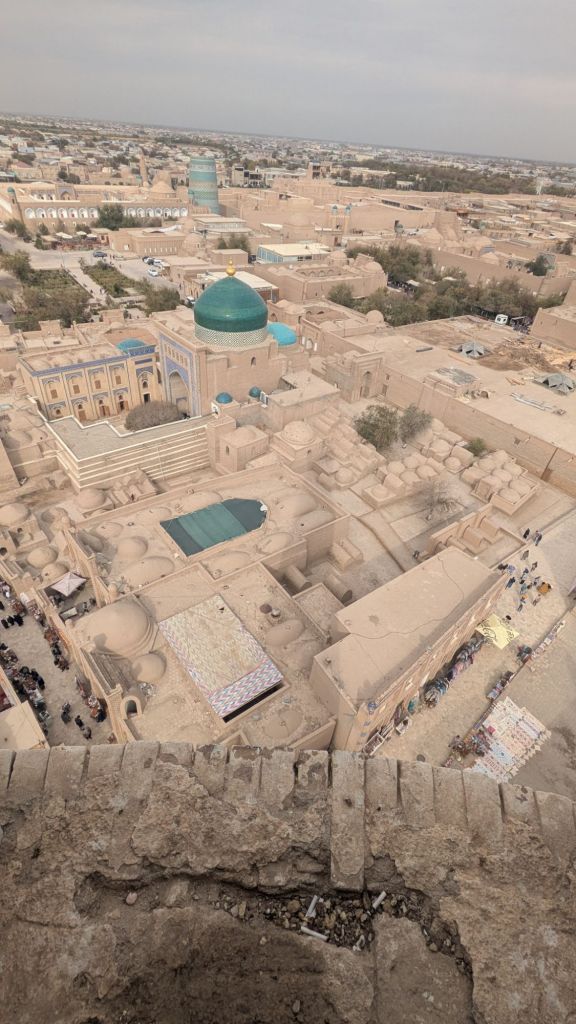
We paid extra to climb the 175 huge spiral steps to the top of the minaret. It was interesting to see how the steps themselves are an integral part of the structure. And, of course, stunning views from the top.


Pahlavon Mahmud Mausoleum

A real renaissance man, as well as being a poet he was an undefeated wrestler, and apparently wrestlers pray to him before matches.


Nurullaboy Palace

Located outside the old city, this palace was huge, lovely, and (bonus) had very few visitors. We didn’t see it all as we were getting hungry for a late lunch and the teahouse at the palace was closed.

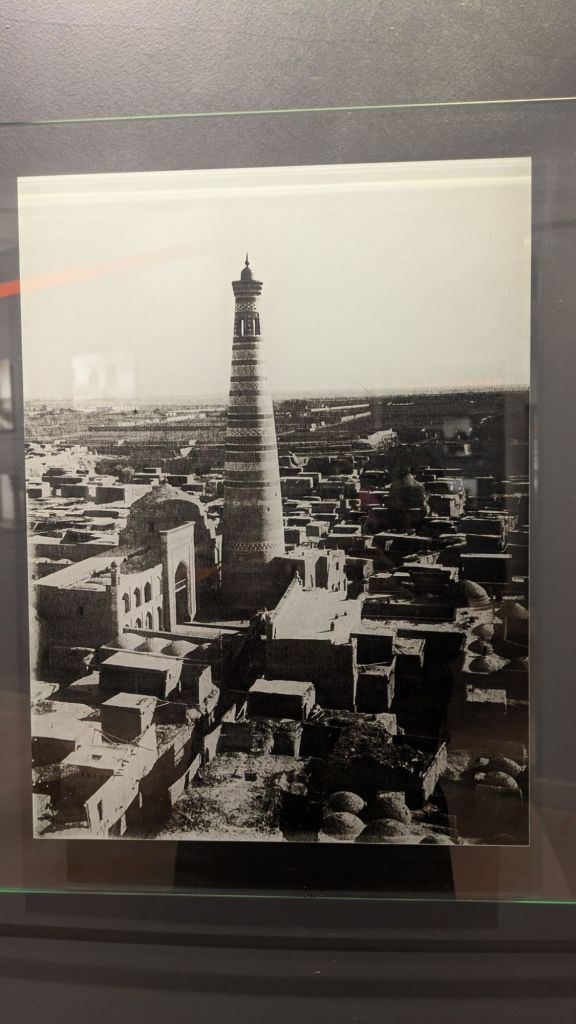
This exhibition was fascinating old, old pictures and videos. The minarets and mosques in Khiva have not changed much over the years (unlike Samarkand, where there has been a lot of recent rebuilding).

“Our” minaret in 1910:


Juma Mosque

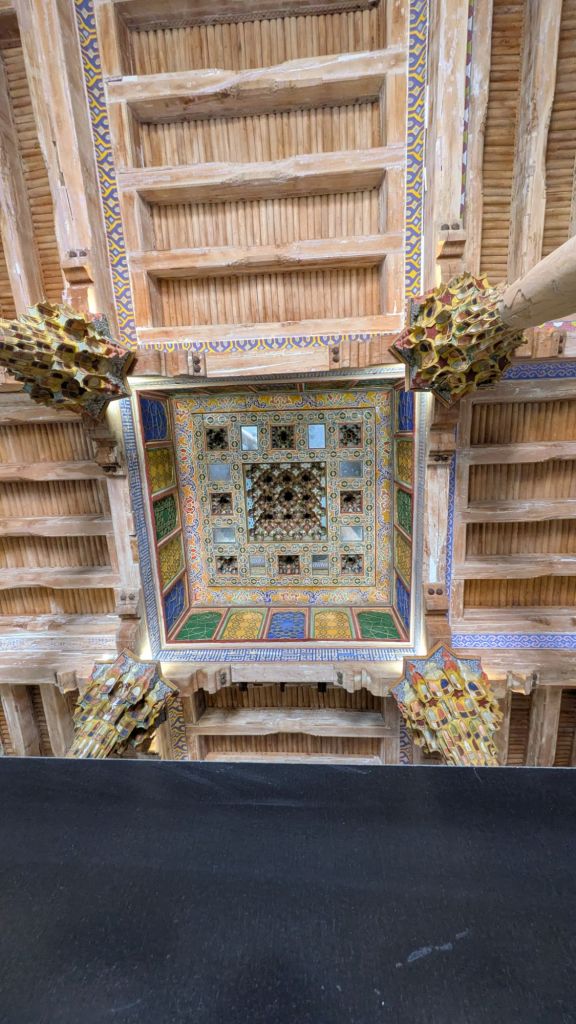
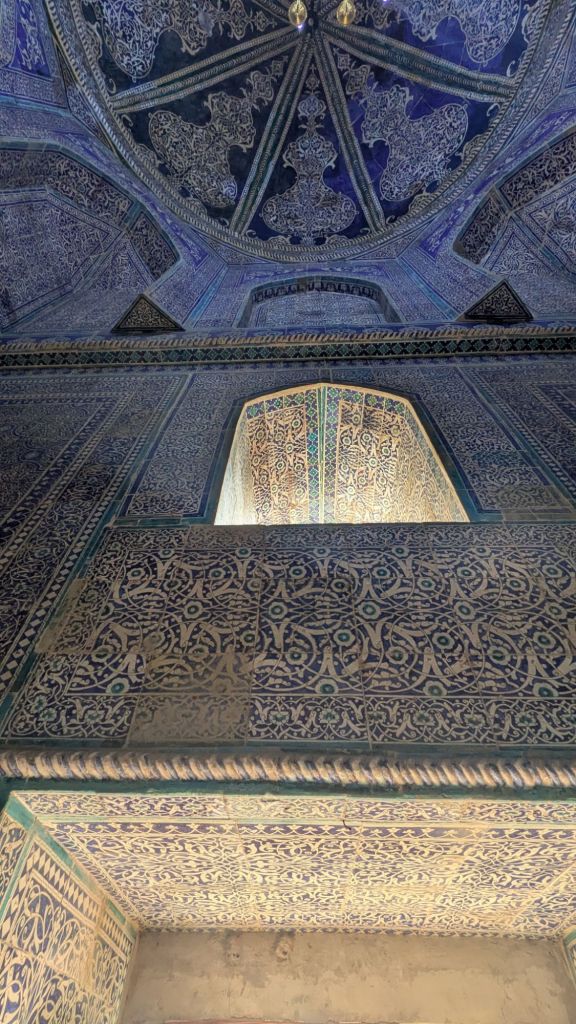
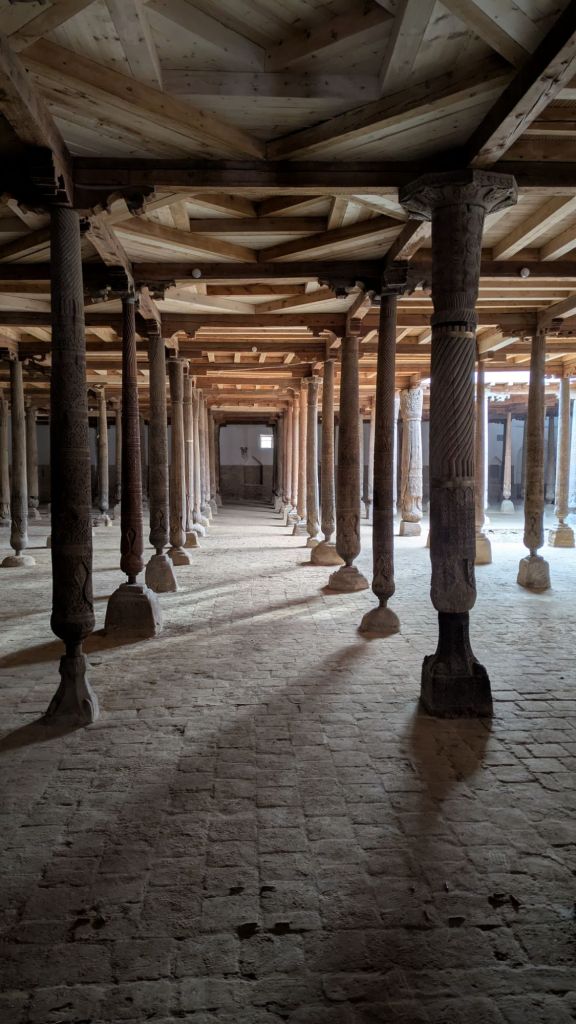
Sadly the Juma Mosque was closed for renovations. I was looking forward to visiting it as it is described as very different to the other mosques, with a forest of ornately carved pillars, and magical light. We were able to peek through a gap in the door.


Silk Museum

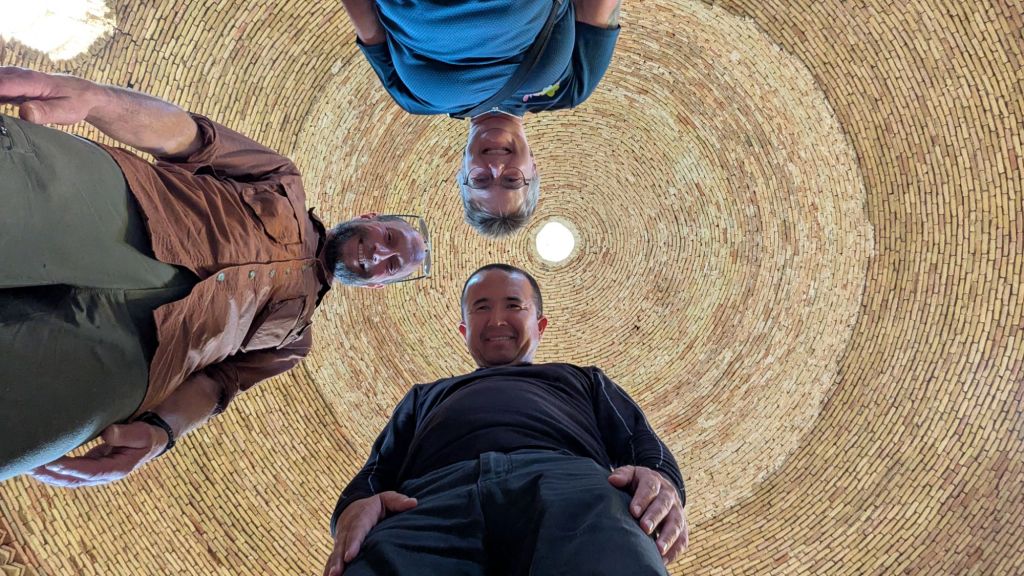
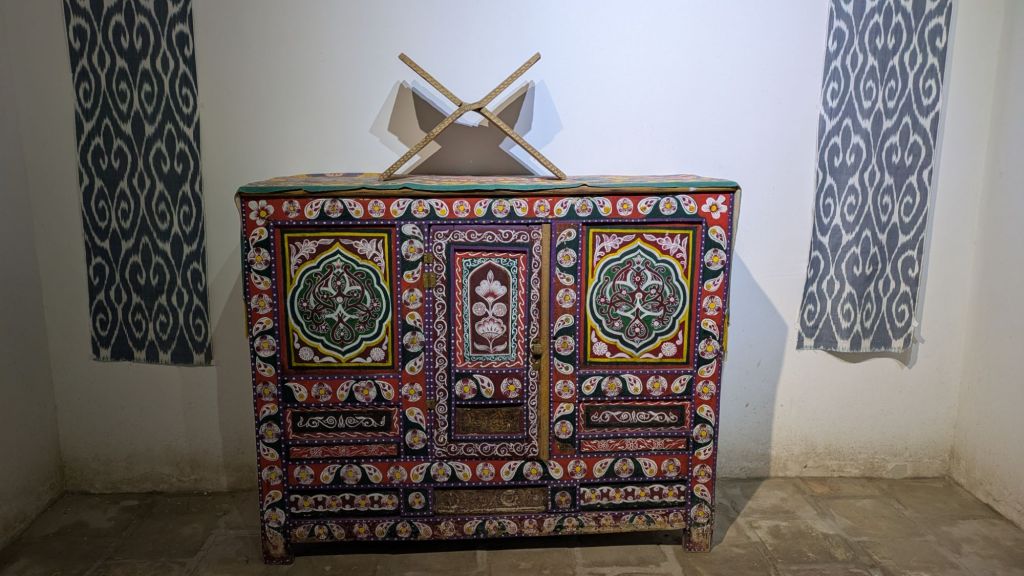
We accidentally went to the silk museum instead of the carpet weaving museum, and it was a lucky mistake. The museum has only been open a year, and is a non-profit. Our guide/docent was super sweet and the whole experience was fun and interesting.

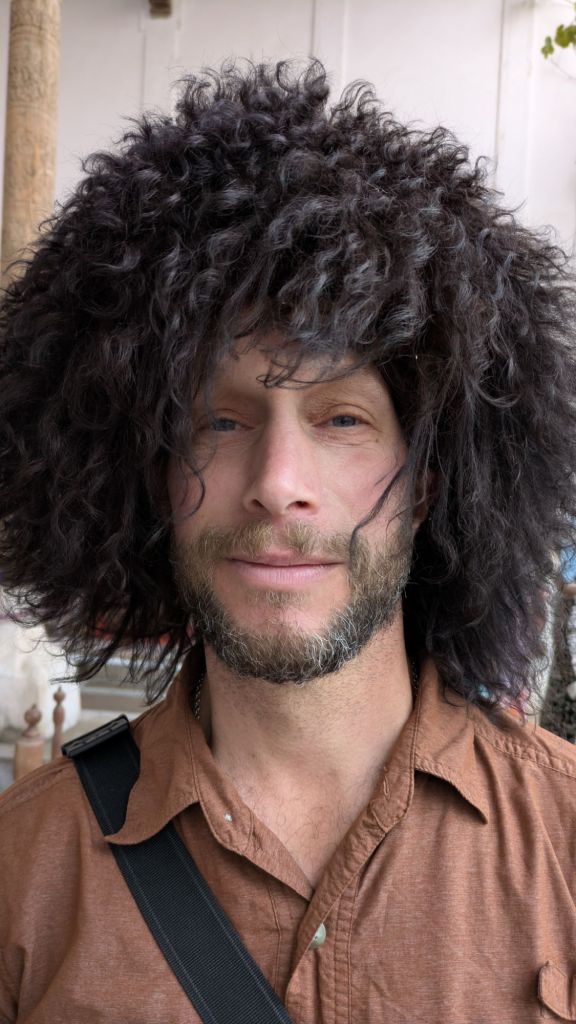
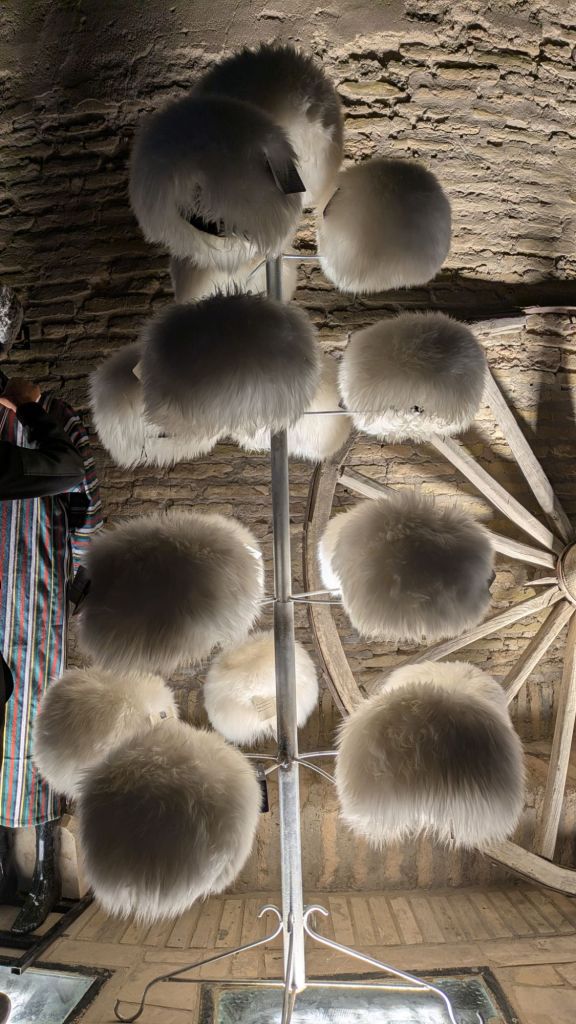
Derek finally got to try the hats he has been eyeing.

Blocks for printing silk money.


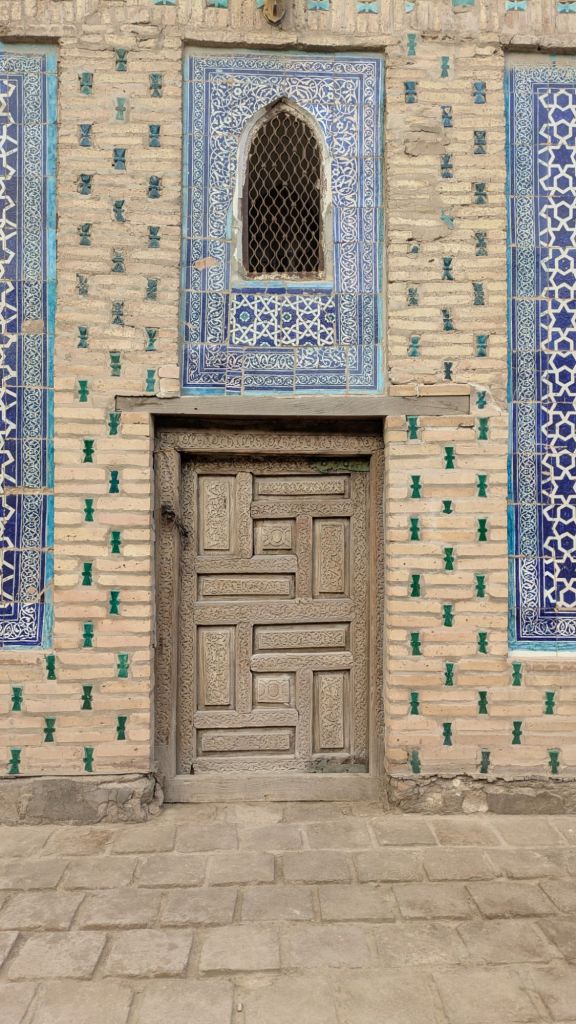
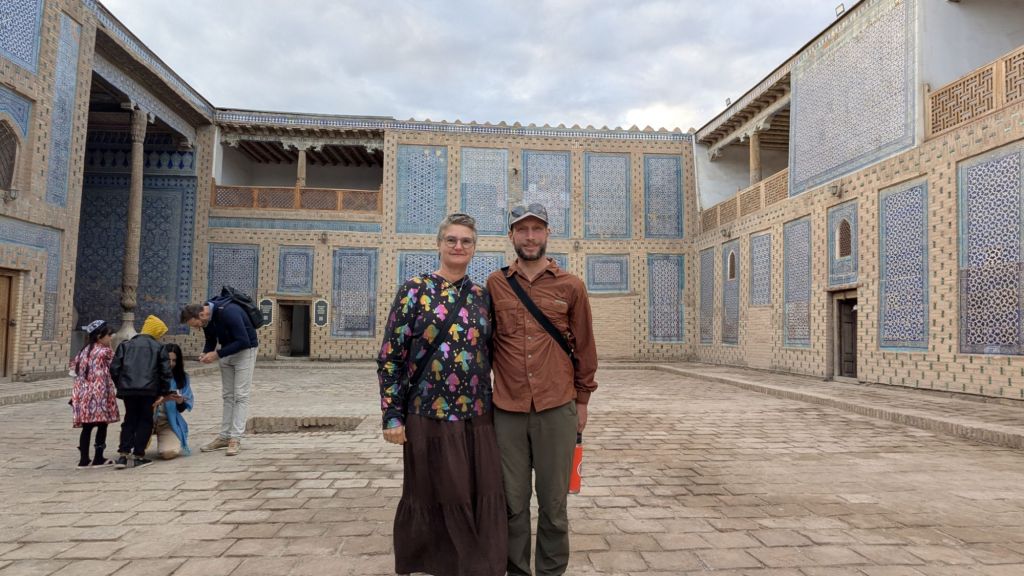
Tash Khauli Palace


Other assorted Khiva things…


Then we had a six hour drive to Bukhara, mostly on a very straight, very long, concrete highway. It really gave an insight as to what the tedium of traveling the Silk Road by camel must have been most of the journey.

Fortresses of Ancient Khorezm — UZ8

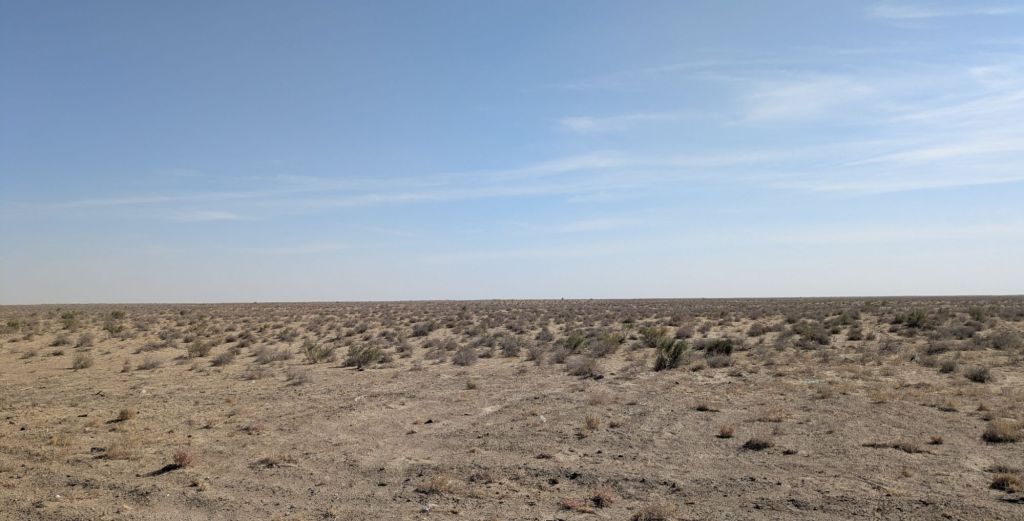
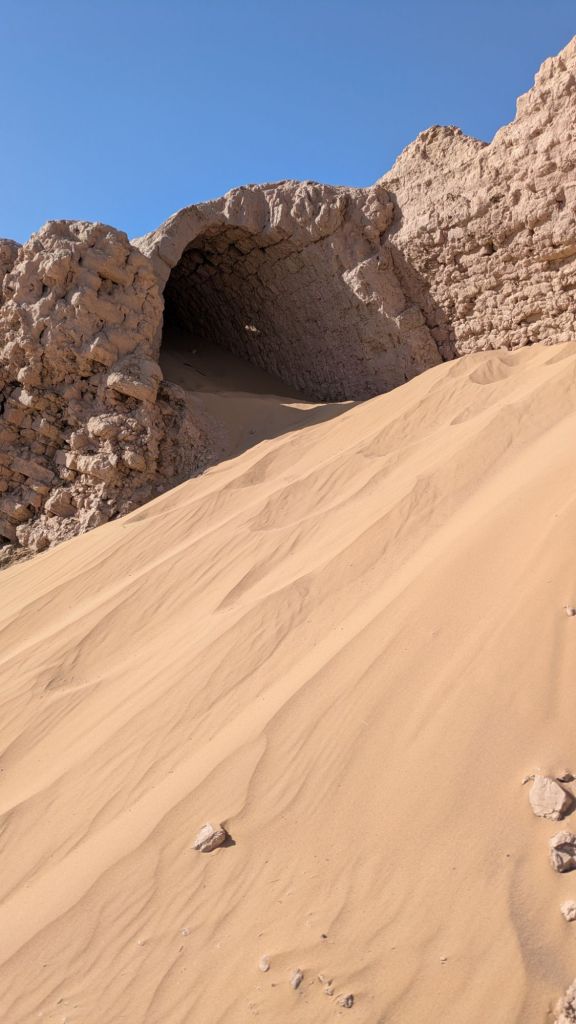
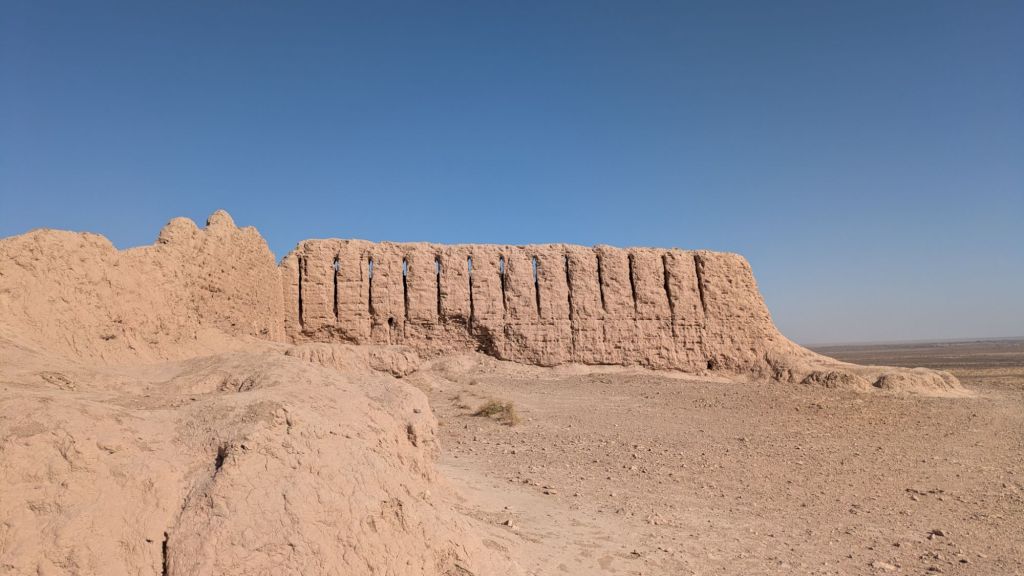
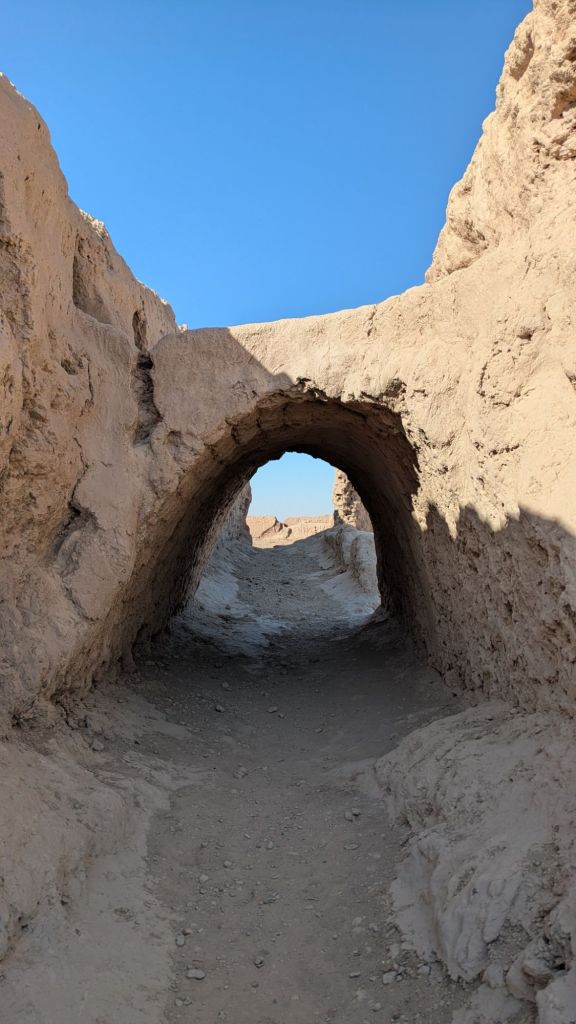
To travel from Nukus to Khiva we took a private tour through the Khorezm Desert with various stops along the way. The drive itself was a full experience with crazy fast driving and passing on rough roads. It included getting pulled over, which caused a lengthy loud argument between our driver and the police.

A History of Khorezm – is the history of the Amudarya flowing through the Karakum and Kizilkum deserts, along with the huge spaces of ancient Khorezm oasis. Moistening the ground where it flowed and making it fertile, Amudarya has been the source of life over hundreds of years in blazing desert sands. Therefore, the towns, fortresses, and settlements have always followed the riverbed constantly changing its direction.

~ Abu Raykhan Al Beruni.


Chilpyk

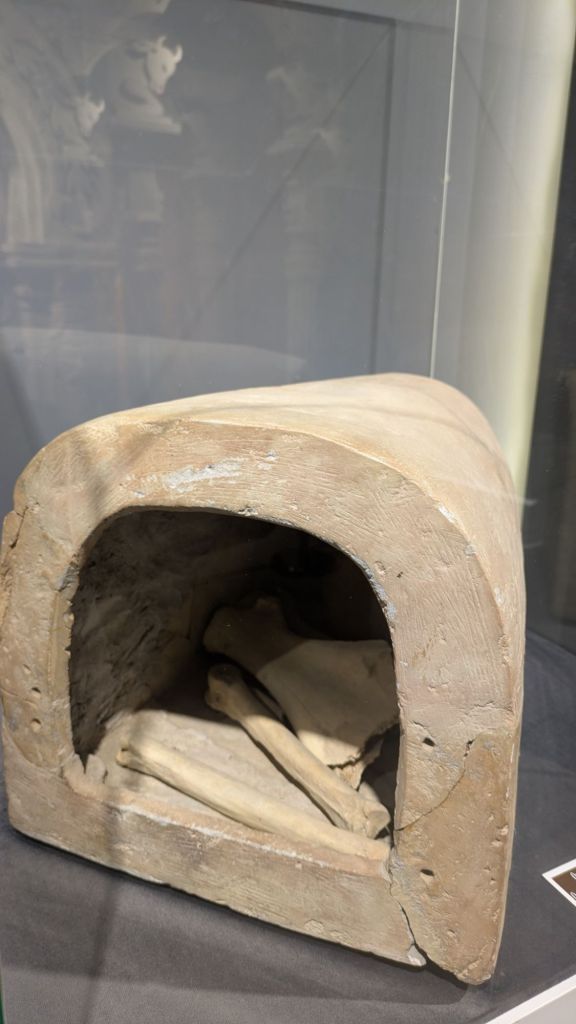
The Zoroastrian method for body preparation and burial seems very reasonable to me.

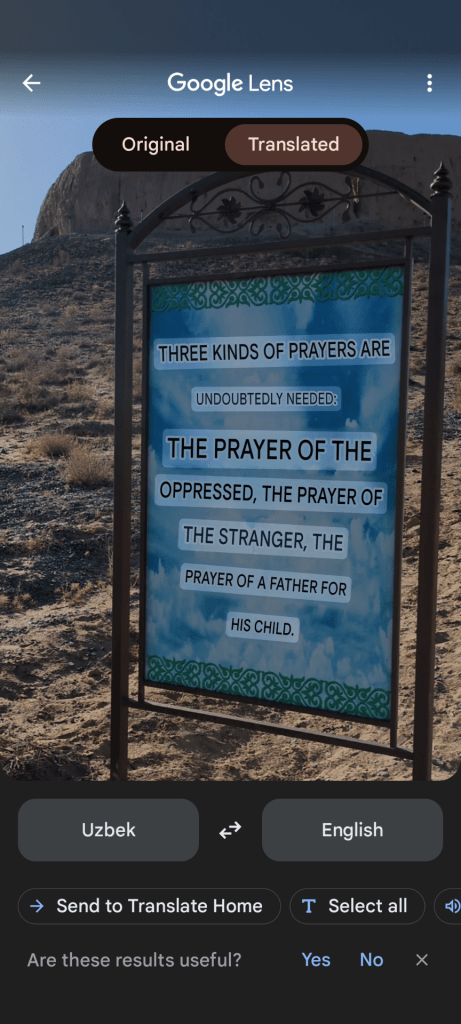
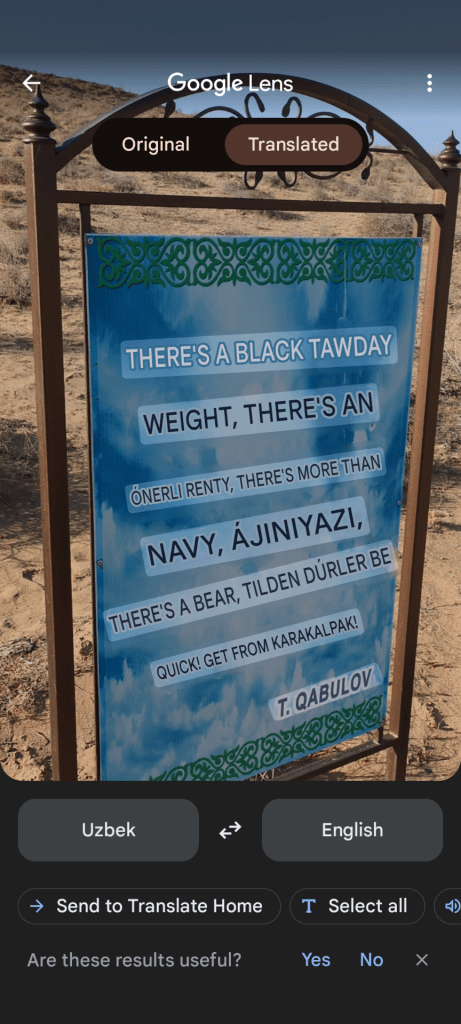
We used Google Translate to read all the signs on the steps and particularly liked these translations:


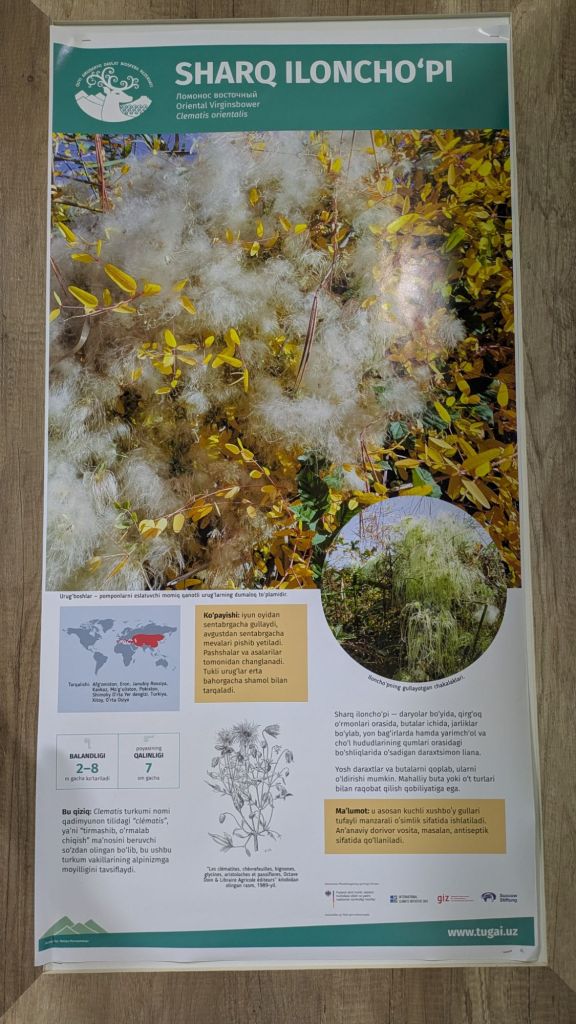
Baday Tugai – nature reserve

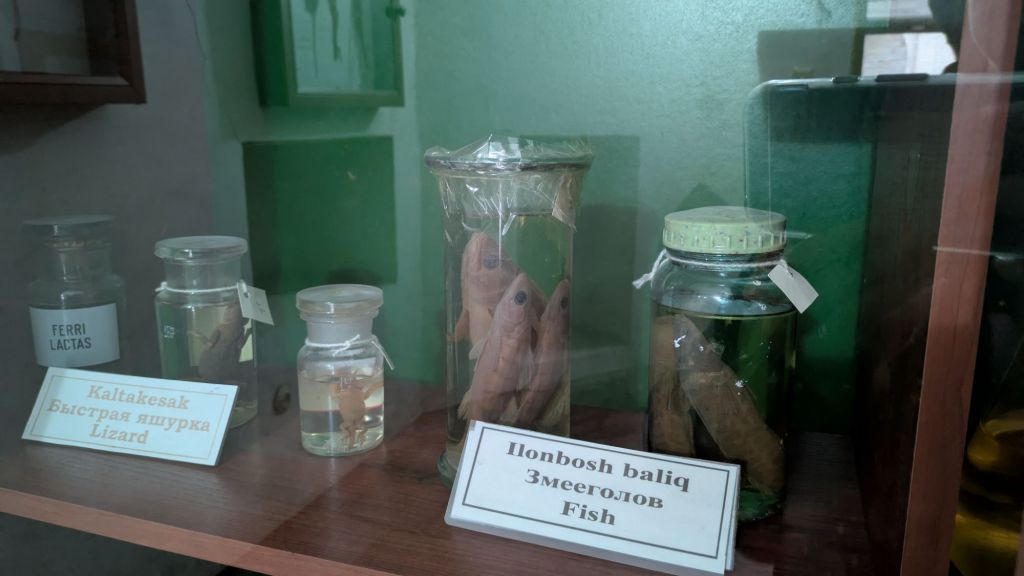
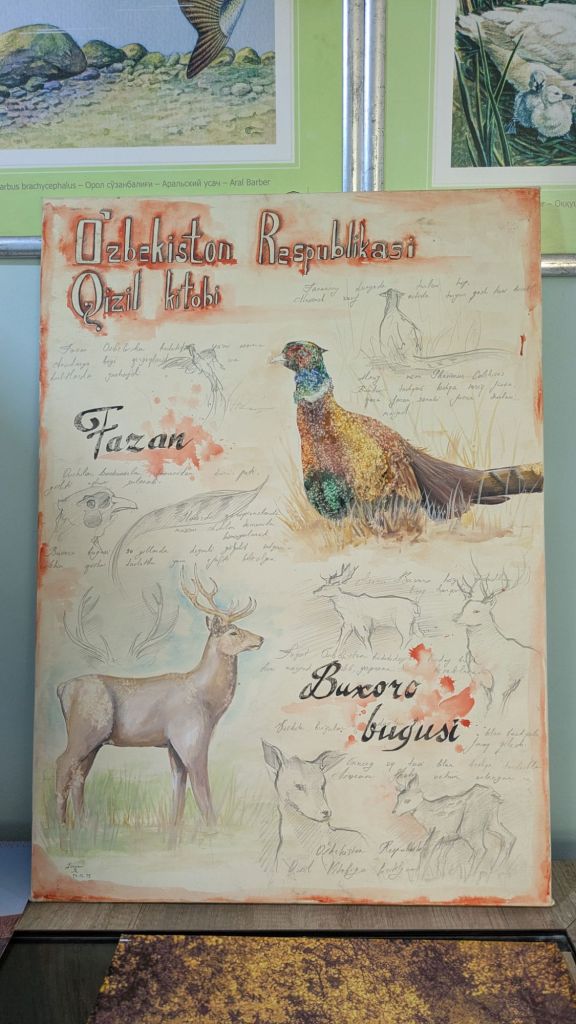
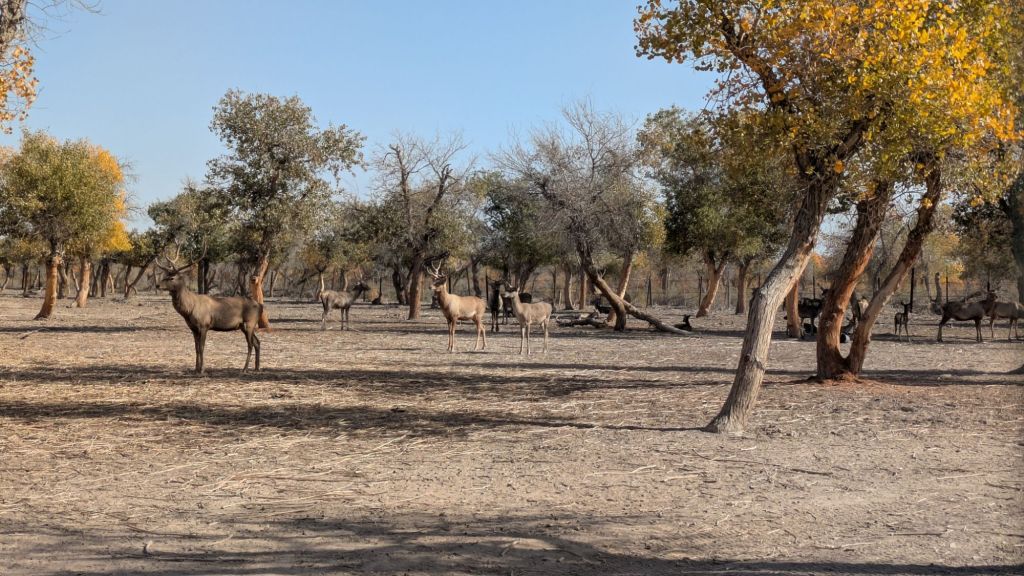
This was a very government-y place. They took copies of our passports and then we looked at a museum (some poor taxidermy and frogs & snakes in formaldehyde) for a few minutes. Then we drove and saw some deer in an enclosure. Later we found information that these Bukhara deer are endangered and this is a recovery program.

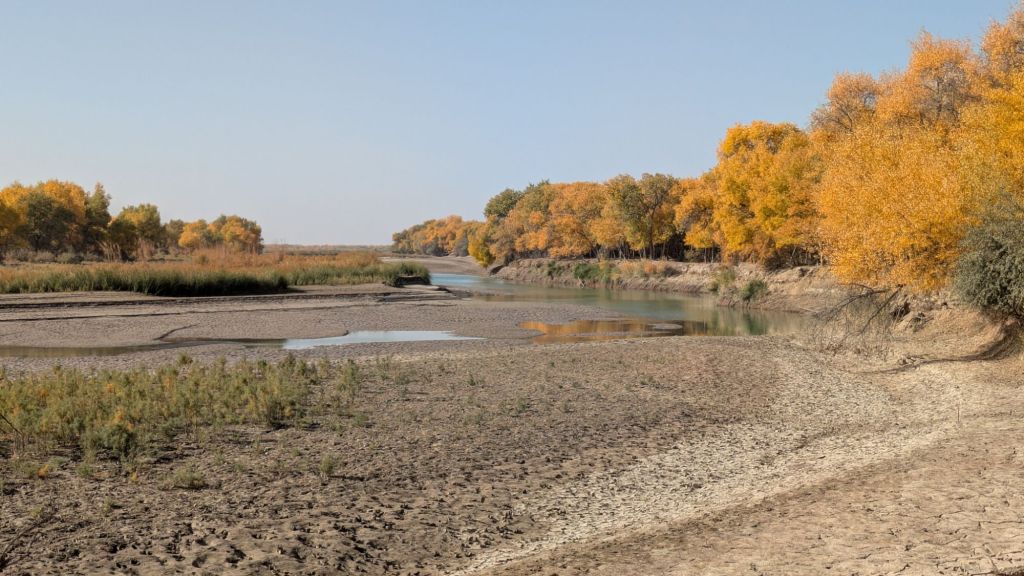
Then we drove to a beautiful spot by a river and saw some wild deer, which I almost caught in a photo, and vaguely captured in a video.


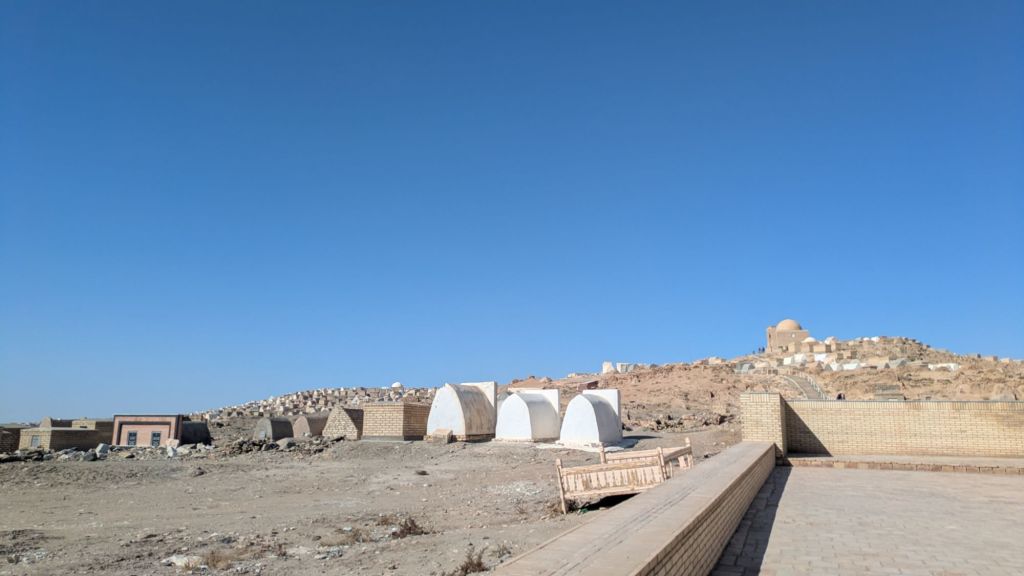
Sultan Vays Baba Mausoleum

In the middle of the largest cemetery I have ever been in the middle of; OK, not counting Arlington National Cemetery.

Very few tourists, but crowds of people there praying. An Imam invited us to sit and share some bread with him – pretty certain he prayed for our conversion.


Toprak-kala Settlement

The renovations showing probable original structure shapes were completed two years ago.


Bonus Fortress


Ayaz-kala Fortress


We arrived in Khiva around 5pm, just right for check-in and this view from our room:

And then a rooftop, sunset dinner…

And an evening stroll to get the lay of the land for full exploration the next day.


Nukus, Desert of Forbidden Art — UZ7

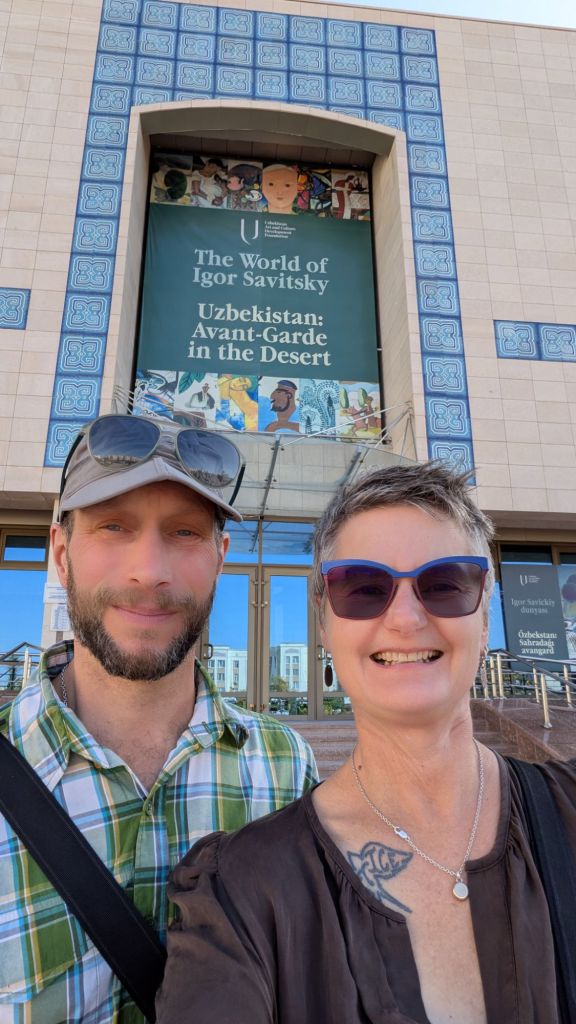
When starting researching Nukus I came across an article about a hidden gem of a museum in the middle of “nowhere”. In this case nowhere is a city of more than 360,000; but, other than the Savitsky Museum the only other touristy thing people travel to Nukus for is a disaster tourism jumping off point to view the wasteland that used to be the Aral Sea.

Heather told us about an old documentary about the museum, and we watched that before our trip. The Desert of Forbidden Art is available on YouTube and is pretty great – not only as background and context for the art collection, also as a grounding in the history of Karakalpakstan, and Soviet Era impacts on the region and on artists during that time.

The Savitsky Nukus Museum of Art usually occupies two buildings, one for each collection. Currently one building is closed for renovations, so the condensed collections are each housed on one floor of the open building.


Of all the sites and museums we have visited this far in Uzbekistan this one has the best interpretation, and translations, by far.

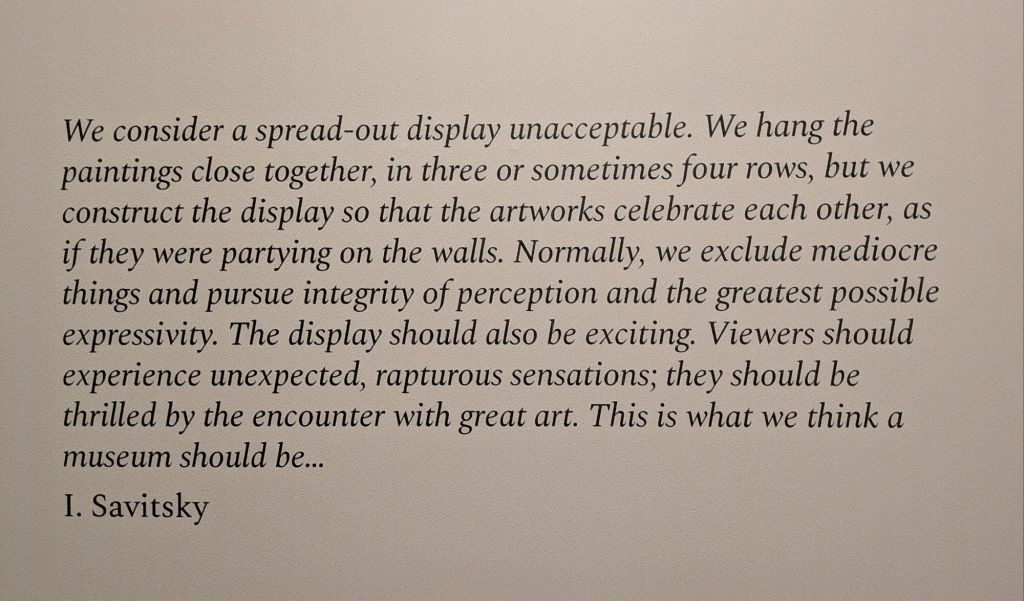
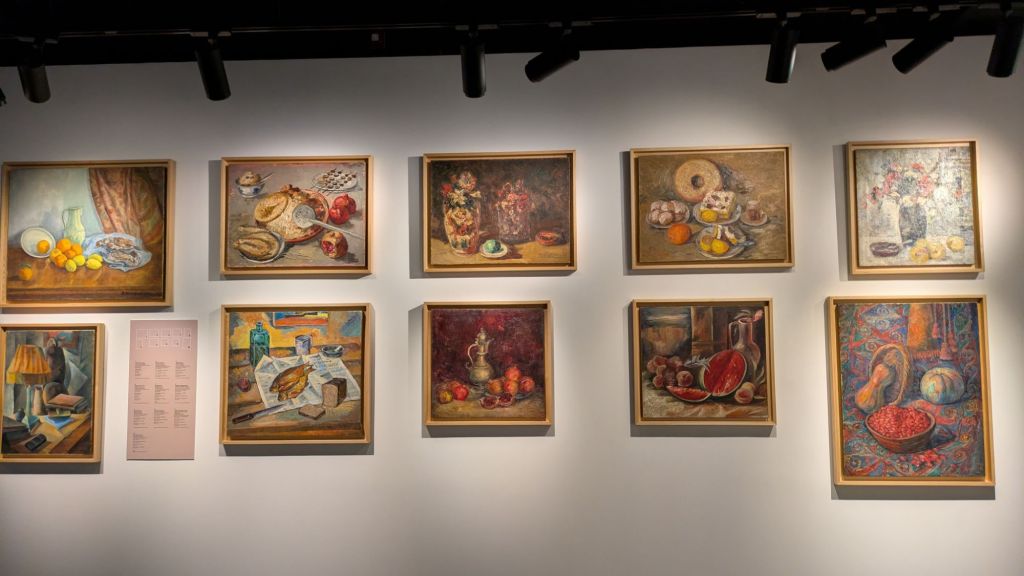
While Savitsky isn’t considered a great artist, I think his artistry is in curation and exhibition. For example his words about how he prefers to display art:

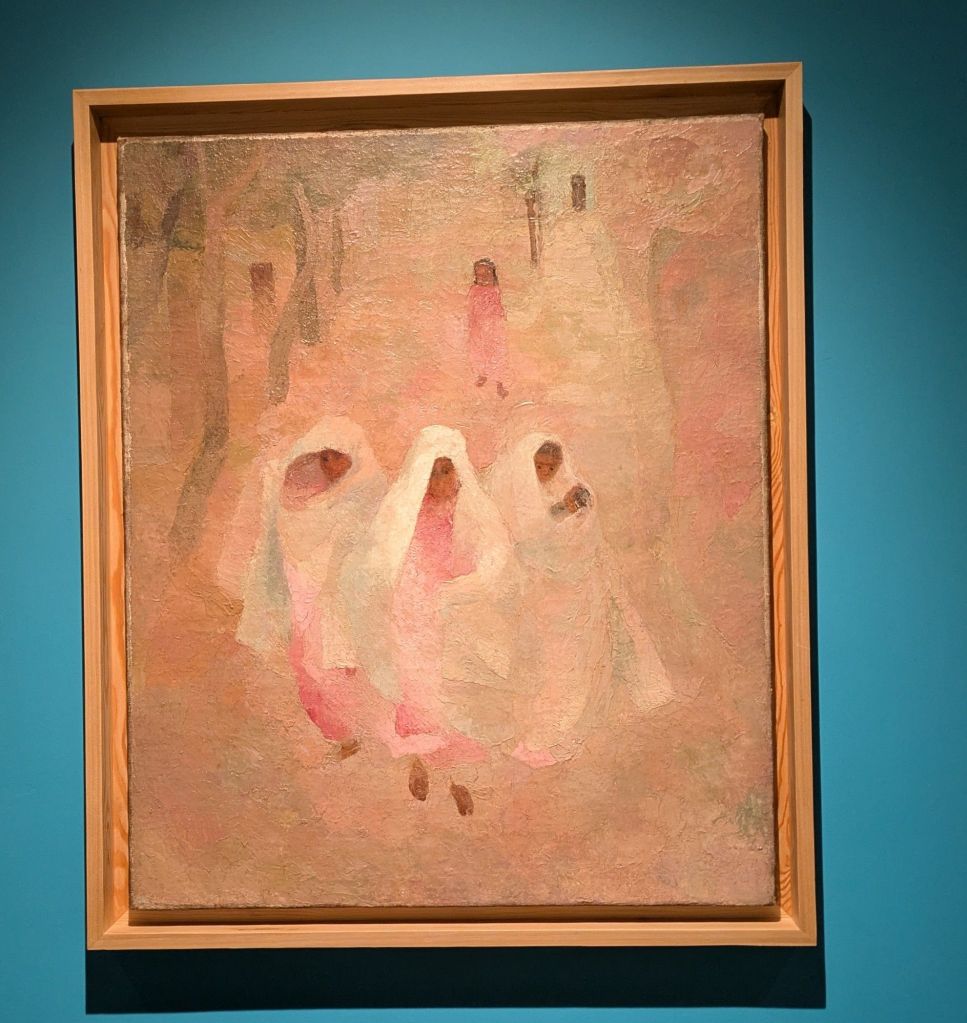
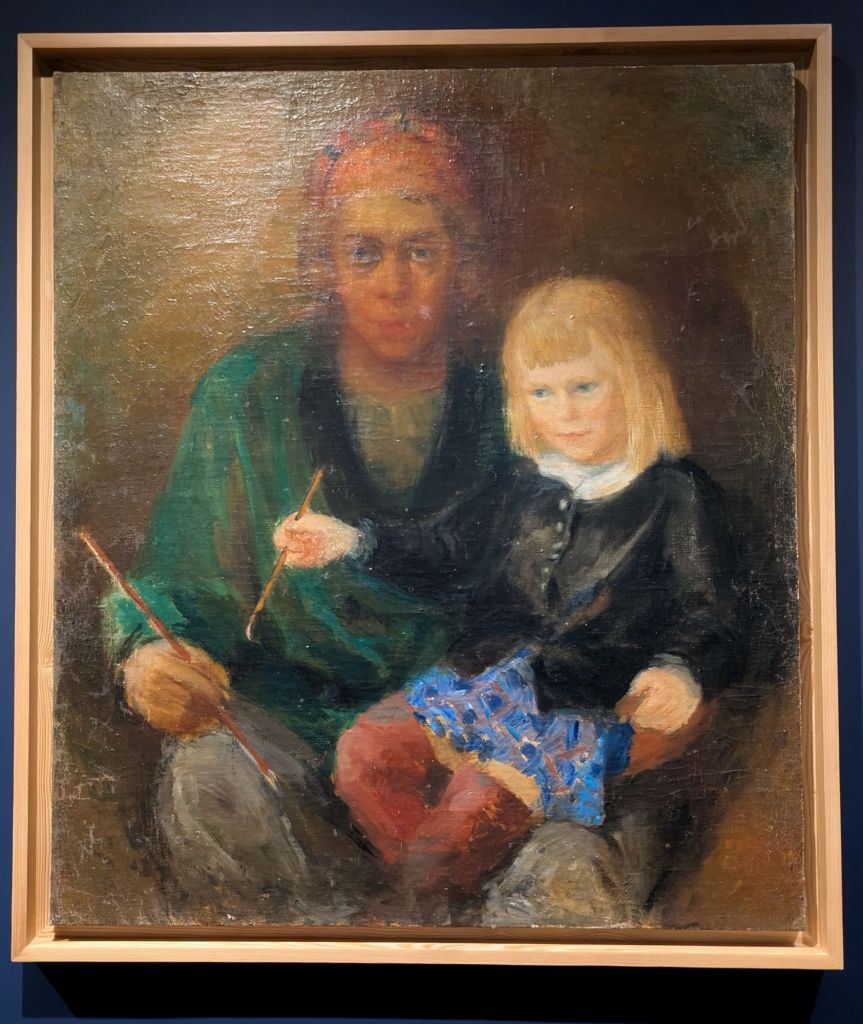
Bull, oil on canvas, by Vasily Lisenko is memorable in the movie, and those stark black eyes are even more disconcerting in person.

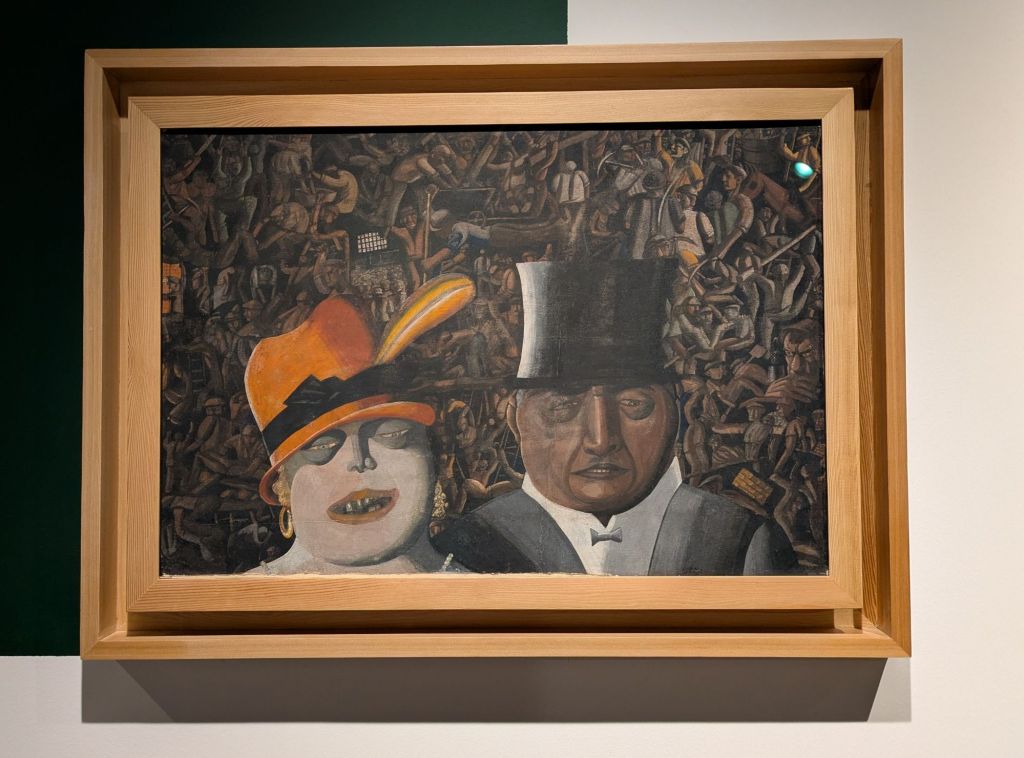
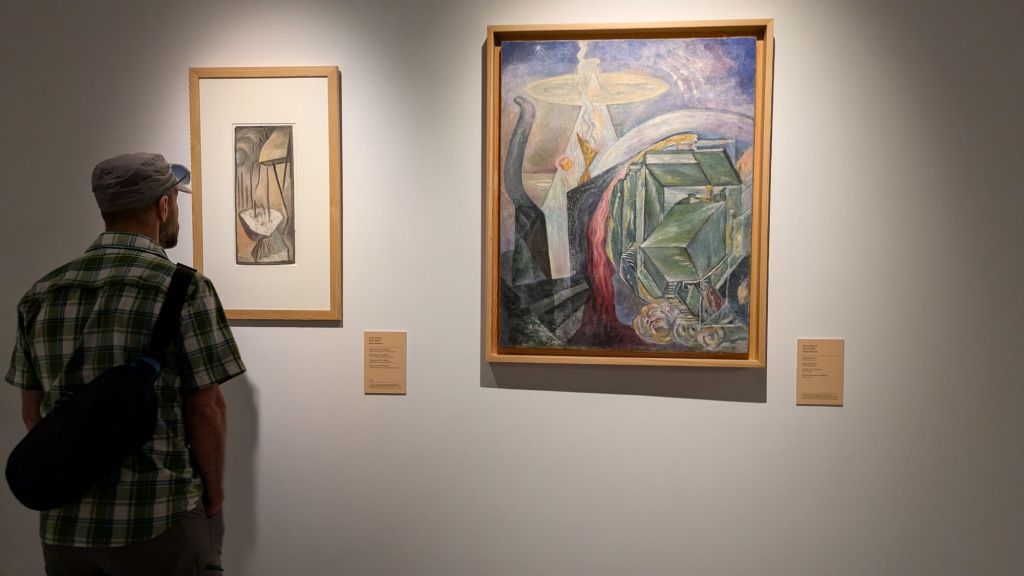
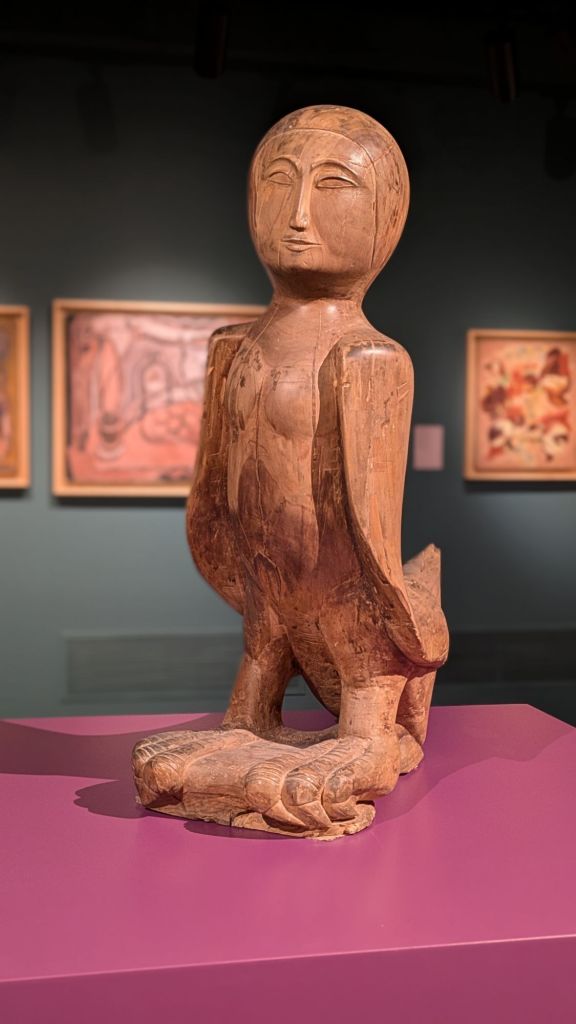
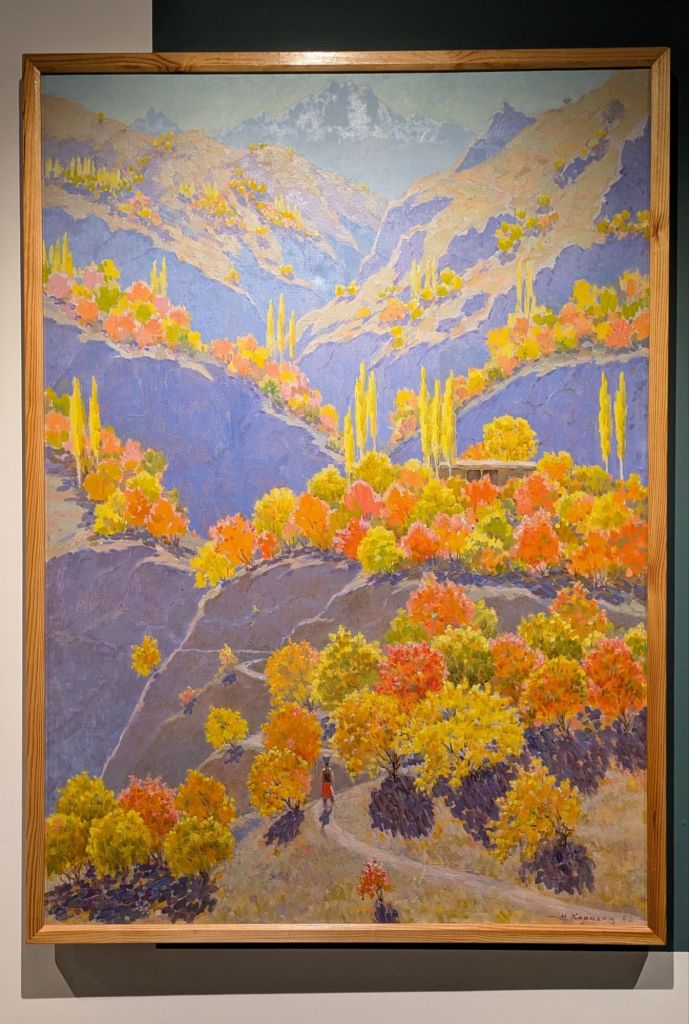
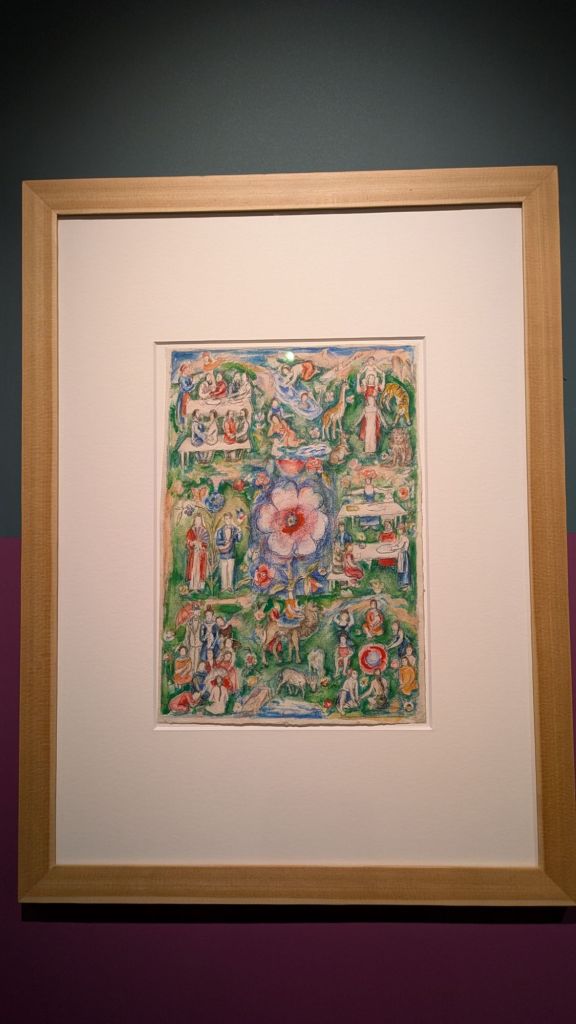
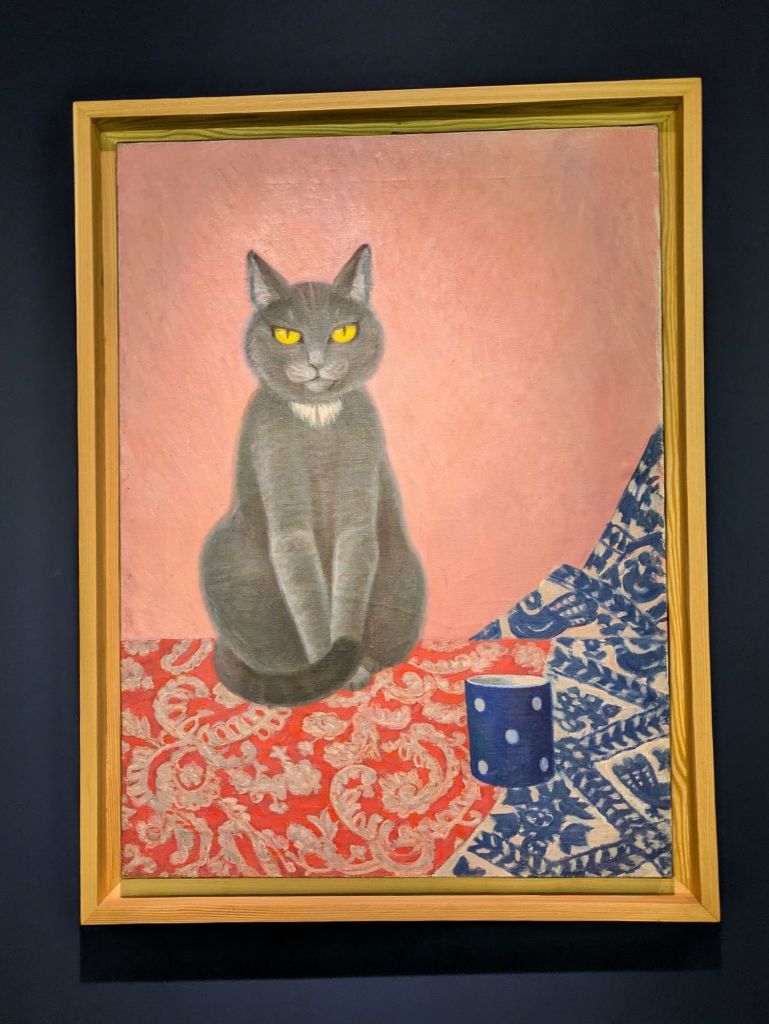
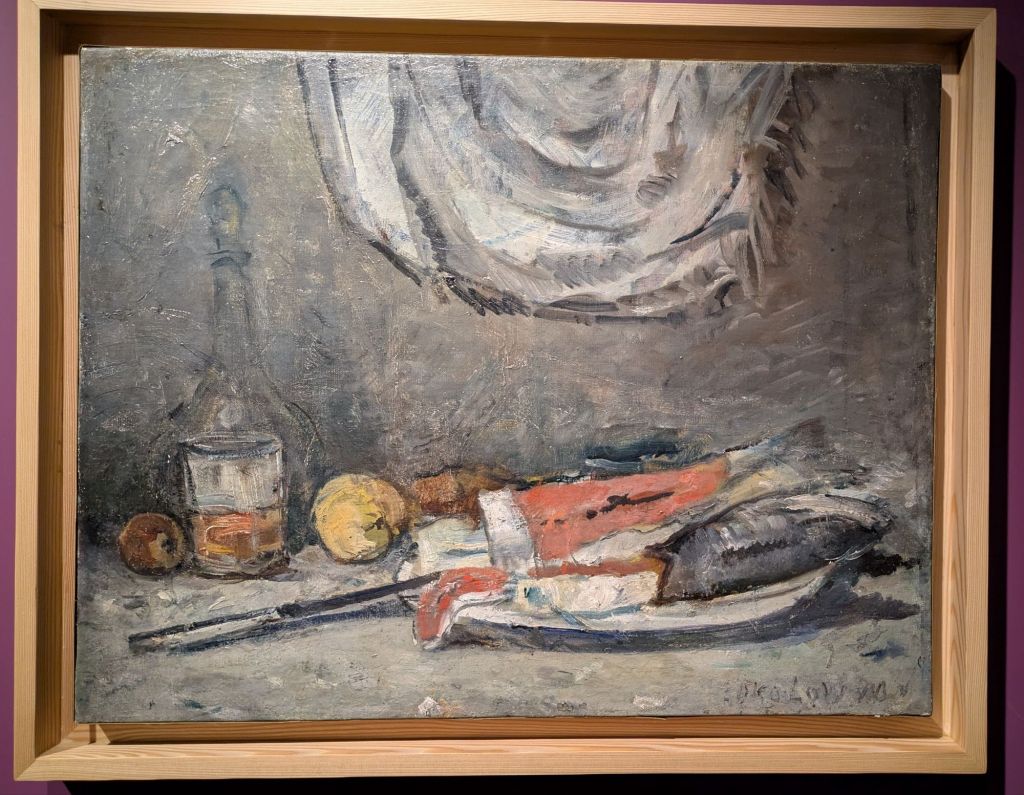
I’m far from an art expert, but there was lots I found visually and emotionally interesting and pleasing. Here are a few that stood out to me/us.


I liked this phrase from one of the interpretative panels: Resounds with the fire of colors ~ Esenin (Russian Poet)


Both of us have been sick this entire trip, mostly congestion and cough, but some fever in there at times. This mellow, peaceful day was very welcome. Hopefully  we kick the crud for the final week…

Dushanbe — UZ6

Dushanbe is considered a difficult post for US Embassy staff, so emphasis is given to providing comfortable home spaces. Heather’s house for her three years here is close to the US Embassy on the edge of the city. Behind the gated wall is a large paved area, a rose and magnolia garden, and a grape trellis. Nestled amongst the roses is a large tapchan that Heather has beautifully furnished.

Air pollution is often deadly in Dushanbe. There’s a massive coal-fueled electricity plant that recently came online. But, on the days when air pollution is lower the tapchan is an idyll.

October tends to be a low pollution time, so we got lucky and enjoyed some relaxing tapchan moments.


Emomali Rahmon, has been President since 1994 and heads an authoritarian regime.with very poor human rights records. The whole set up is corrupt and showy. Putin was in Tajikistan for a summit last week and Dushanbe ground to a halt. Extravagant flower gardens appeared out of nowhere, at least one took up an entire traffic lane.

There are photos and signs honoring Rahmon all over the place. It really seems like the kind of arrangement that Trump would like.

Since the end of the Soviet era many of the beneficial and interesting buildings, such as the National Teahouse have been demolished and replaced with ostentatious and exclusive government buildings that are mostly empty shells.

As we were only here for a couple days we didn’t actually spend time exploring the city – just driving through to get to a hike, for dinner, and to get to the airport.


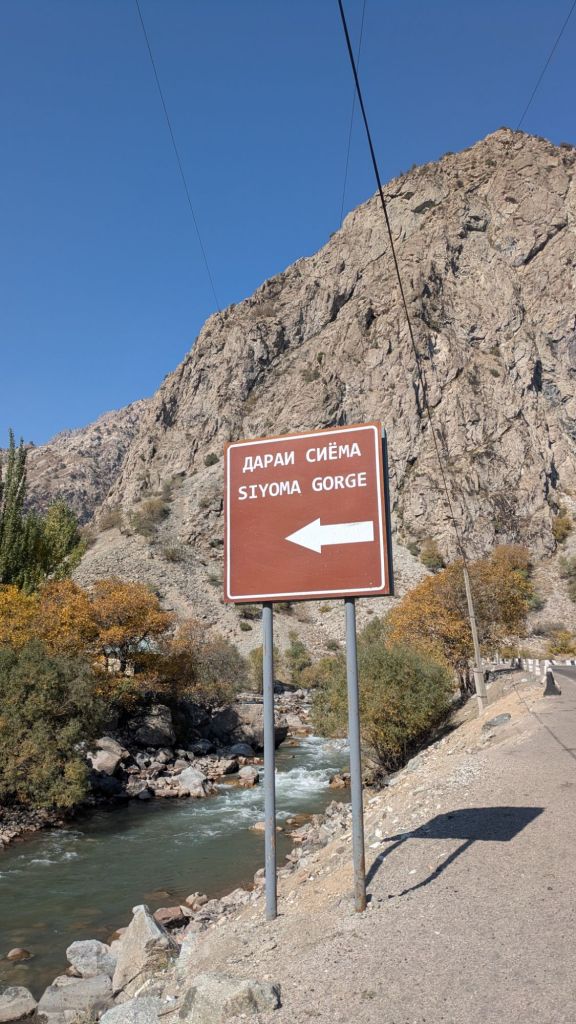
Siyoma Gorge

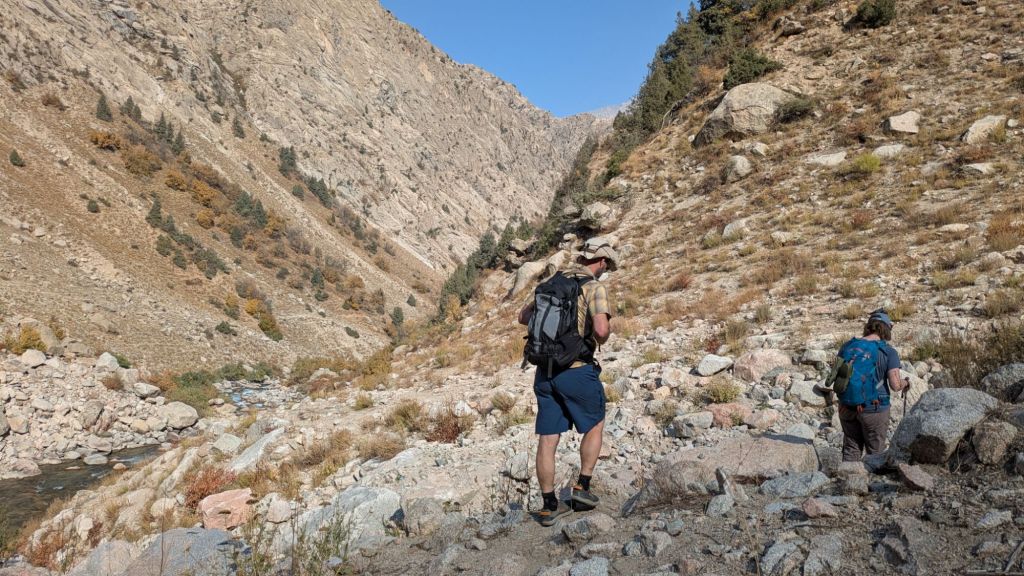
Heather guided us on one of her favorite hikes up the Siyoma Gorge.

On the drive there, on a very busy road we encountered this:

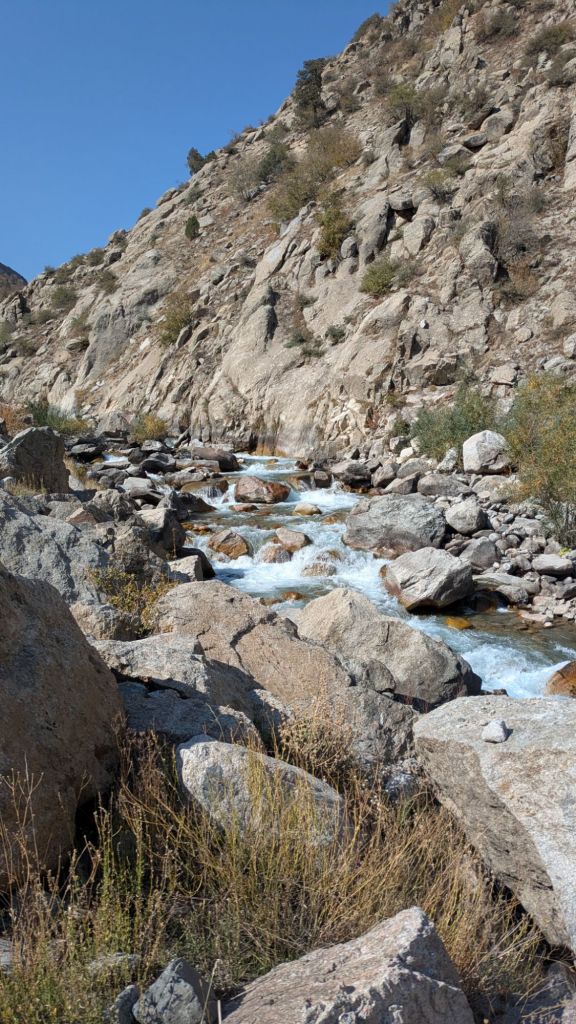
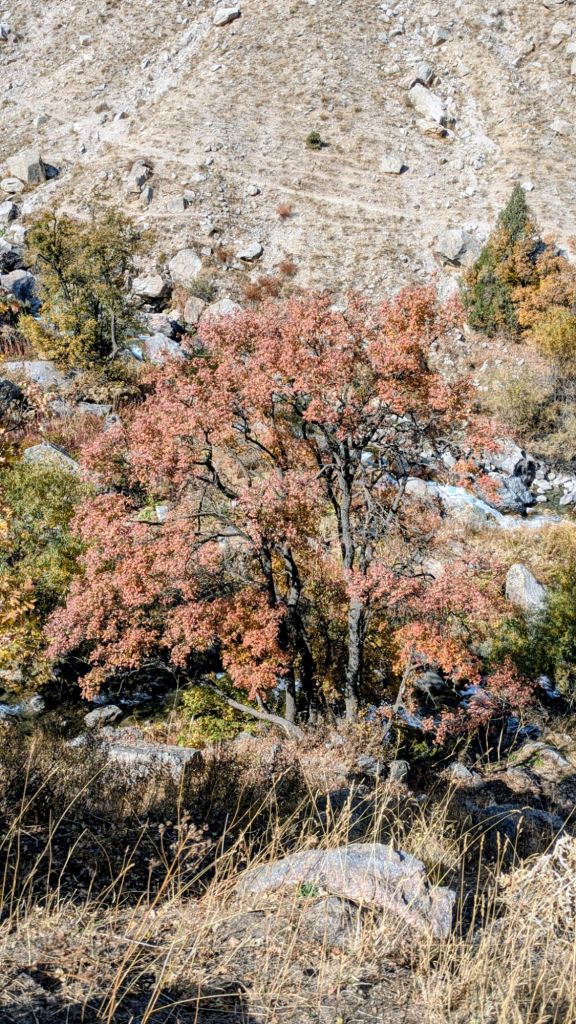
The hike was a fairly mellow 3 mile out and back with 1,700 elevation gain. The challenge was starting at ~5,000 feet. 95% of Tajikistan is considered mountainous, with the most famous being the Pamirs. The mountains here, even these relatively smaller Fann Mountains, are so severely tall and rocky. And then, in this gorge, the loveliest stream and fall colors were such a respite.

We made leftover fish sandwiches with fatir bread for lunch.

Found some fireweed:

There are many bee hive wagons dotted around. Honey is a major local commodity.


Dinner at Bohora

We crashed a dinner with an Embassy guest and Heather’s coworkers at a local fancy restaurant that’s very special to Heather’s Tajik coworkers.

We came prepared with earplugs and ready for sensory overload. There was an extravagant light show, lounge singers, and Tajik dancers.


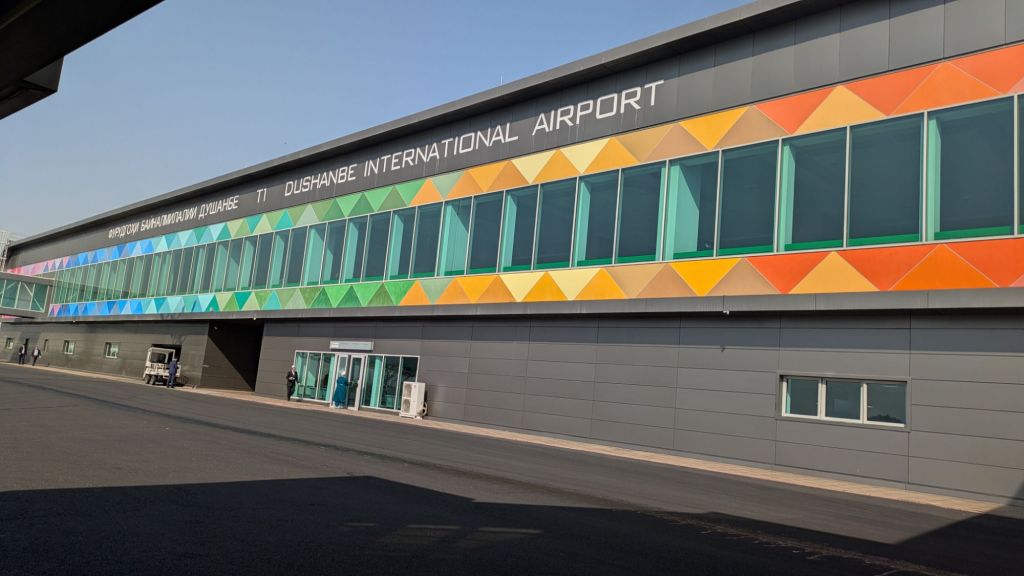
Heather drove us into the city this morning and helped us with getting a cab to the airport. Today we are flying to Nukus via Tashkent… For the next phase of vacation in the Republic of Karakalpakstan, an autonomous region of Uzbekistan…

Haftkul (Seven Lakes) — UZ5

The drive from Samarkand to Panjakent and then up to the Seven Lakes isn’t far, but it did take us about 7 hours to get from the hotel to the 7th lake.

The first time suck was the border crossing from Uzbekistan to Tajikistan. It took us about 90 minutes to complete numerous steps for the car as well as the people.

The rest of the time was spent carefully picking our way up the single track gravel road up the valley past lakes 1-6. Heather’s patient driving and the mighty Tajburu (2008 Subaru) got it done – and the autumn color views were a treat along the way.

The lakes were formed by landslides damming the Shing river. These dam areas are massive, and people now live on them…. And landslides still occur. It’s a beautiful, but challenging place to live.

The children in villages were delighted to see us and ran alongside the car practicing saying “hello”.

We arrived at Hazorchasma, the seventh lake, around 3pm… Leaving a couple hours for a short hike as we wanted to be off the road before dark, and our homestay was at Nofin, the 4th lake.


Hazorchasma

We were the only hikers on the Seventh Lake trail, though we did see numerous locals with donkeys returning with bundles of wood and plants. Oh, and a local dog joined us for the hike, which was cute until he decided he didn’t like someone’s cow.

We paused after a couple of miles and sat by an enclosure. As we sat there more and more became apparent about the folks living in the compound. Two women were sweeping the leaves with twig brooms. One of them was even climbing into trees to shake leaves down to sweep them up. This wasn’t a lawn, mind you, it was a field. And it was windy. It really looked like busy work to us, in a life that is very much harsh subsistence.

We also spotted structures under overhangs and in caves, our hunch was livestock shelters. There were a couple small houses, built from mud bricks and wood.

On the way back we crossed the stream and explored a seasonal shepherd Hamlet that was not currently in use.


Jumaboy Homestay

There are several new home stays under construction along the Lakes road. Jumaboy is one of the most established. Our host, Muslim, spoke great English. He was eager to learn new marketing strategies and ideas. And has a knack for tracking down development support, such as the greenhouse. He even has his own methane plant, for cooking and as car fuel. Many of the cars here have been rigged to run off a tank of methane instead of the factory petrol. (A very hazardous but pragmatic switch)


Swimming at Soja (Second) Lake

If you know me, you know I needed to swim. I almost didn’t make it, it’s glacier feed and very chilly water.


Tunnel of Death etc.

The drive to Dushanbe continued, back down the gravel road and then up, up, up to a 3+ mile long tunnel at 8,500 feet which Heather refers to as the Tunnel of Death. It’s one lane in each direction, maybe 80% of it with functioning lights. People pass in the tunnel. People pass on blind corners. People pass on the gravel shoulder at speed. Some of the decisions are astonishing to behold.

We stopped at a roadside cafe with fresh sambusa (the Tajik name for somsa), and drinks cooled by spring water.


We stopped for dinner just before reaching Dushanbe, a restaurant Heather had always heard was good, but had not yet been to. Our tapchan was across the busy road from the restaurant, servers had to use a crosswalk and dodge traffic to wait on tables. It was road-noisy but otherwise nice and the food was good.

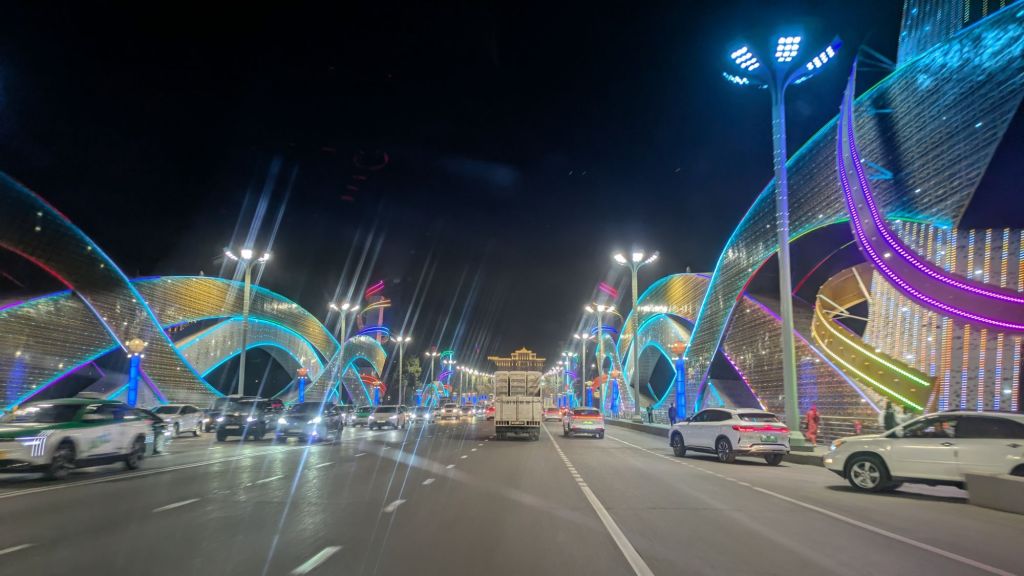
We saw a little of Dushanbe by night on the way to Heather’s place. Including a garishly lit bridge.

We got a tour of the house and then, as the air pollution wasn’t too high, we spent the evening on the tapchan.

Next up… Dushanbe….