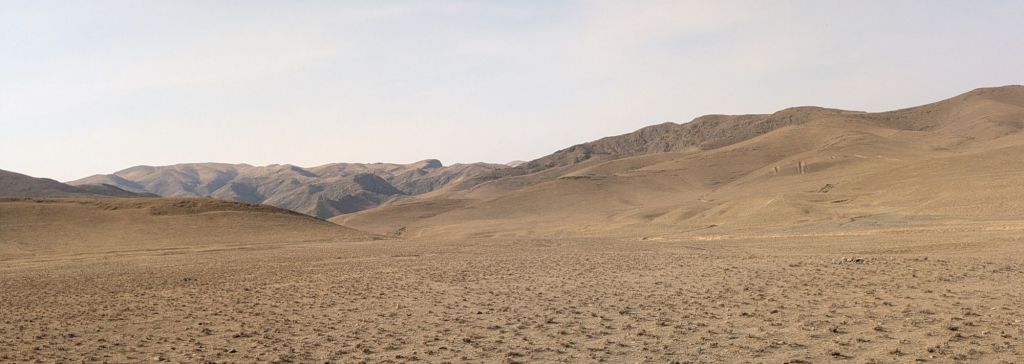
Ostensibly a three day horse ride from village-to-village homestays, this ended up being so much more than that.
We stopped mid-way on the drive from Bukhara to Asraf to scramble around to see some roadside petroglyphs.


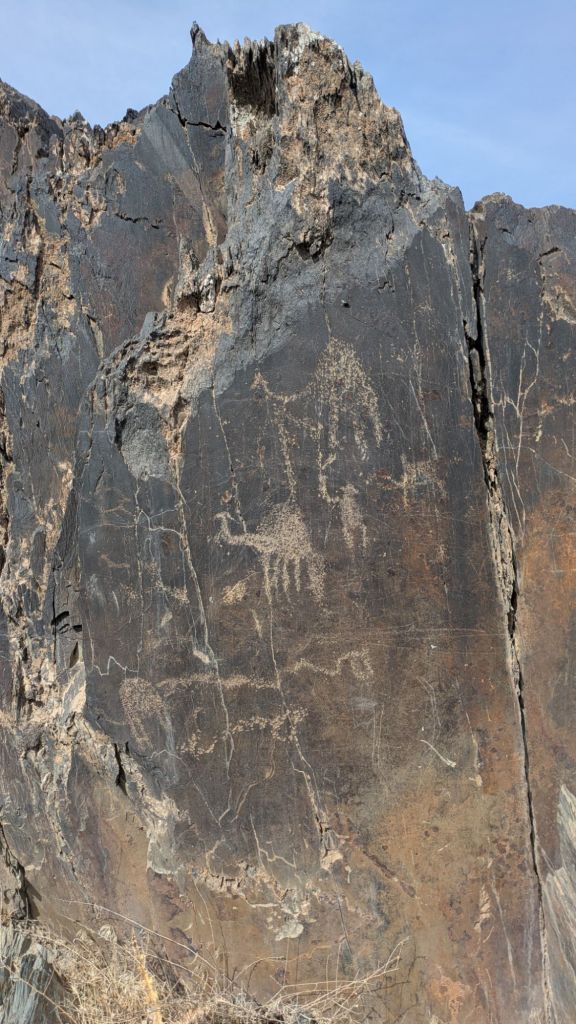


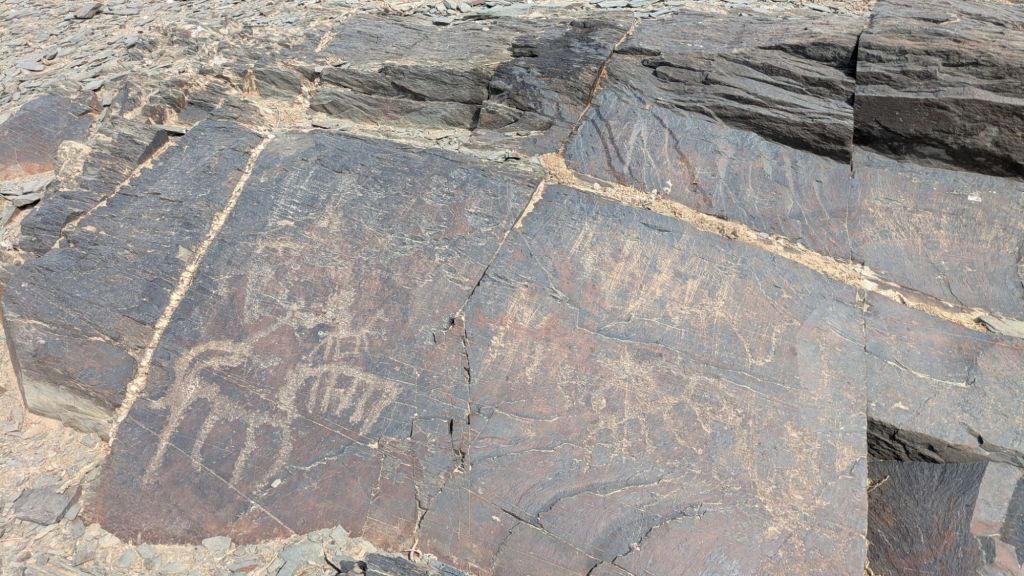
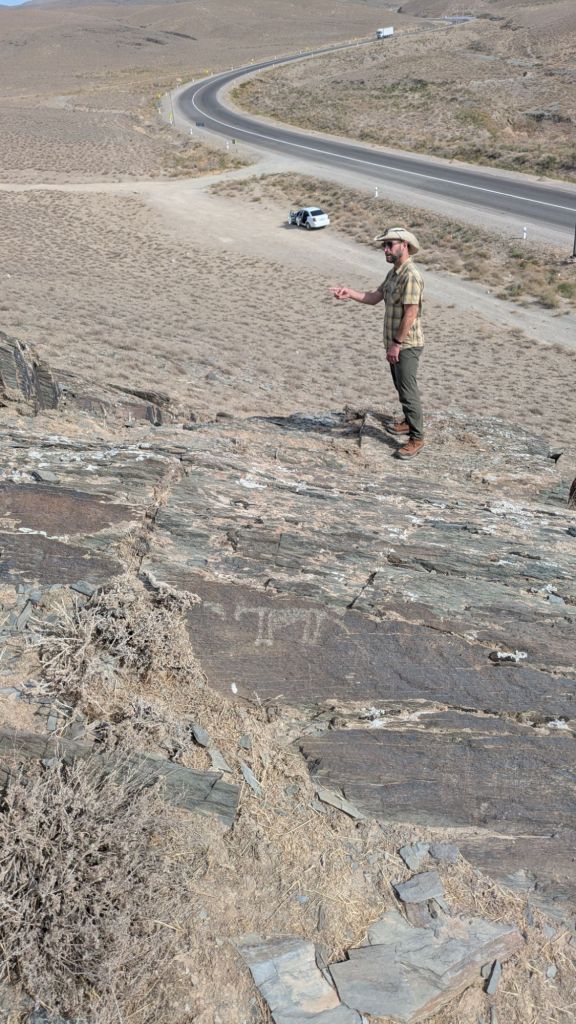
Approximately 4,000 years old!
Ride One


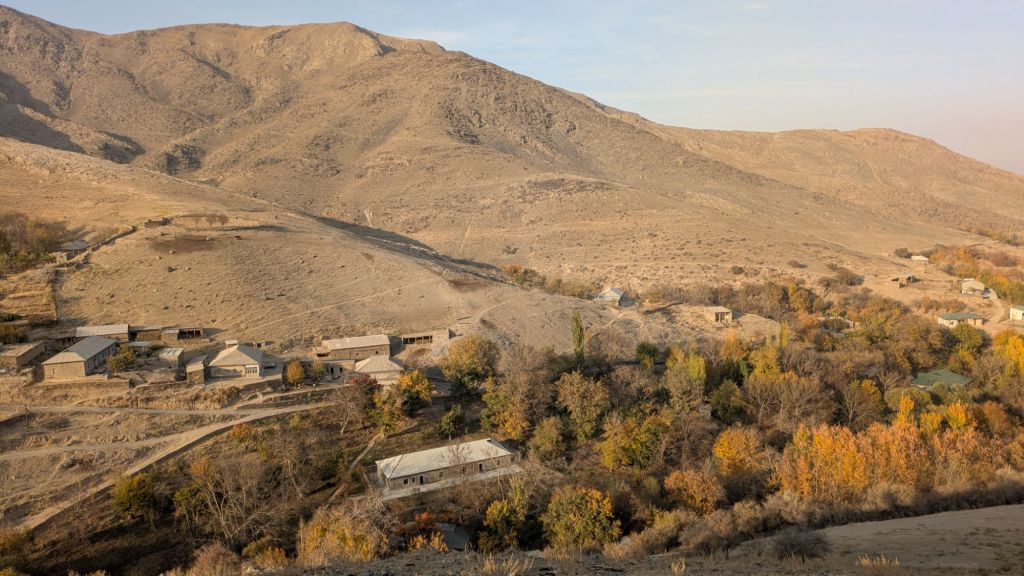
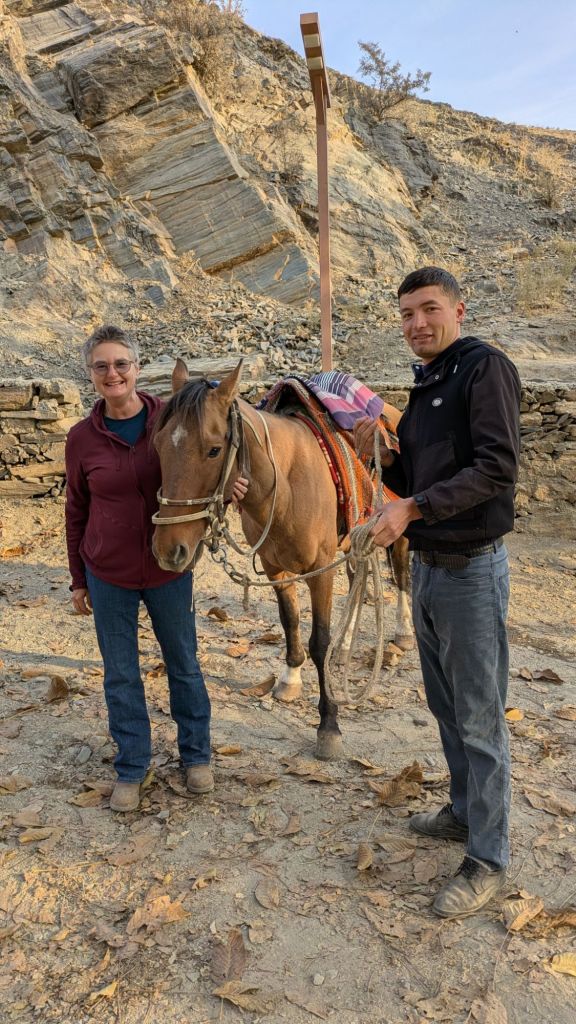
A 6.7 mile loop from Aslon’s Homestay in the tiny village of Asraf, nestled in a valley in the Nuratau Mountains. This was a shakedown ride to cover the basics and get to know the horses. I was assigned the laziest, least motivated old horse ever. I had to chide him to keep up for, literally, the entire ride. Other than that it was a nice afternoon.
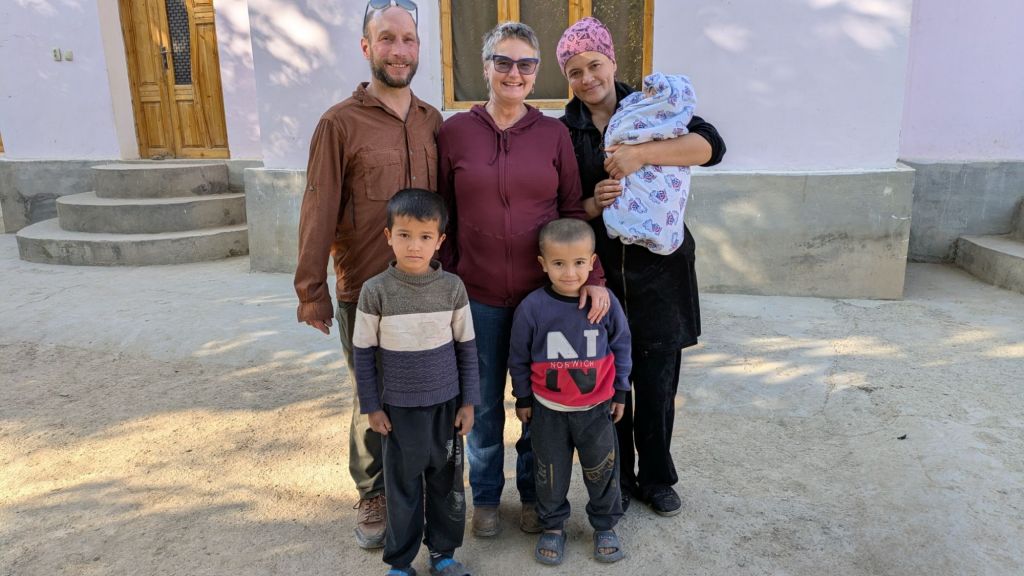
The homestay was cozy and the family was sweet.


Check out these power lines!

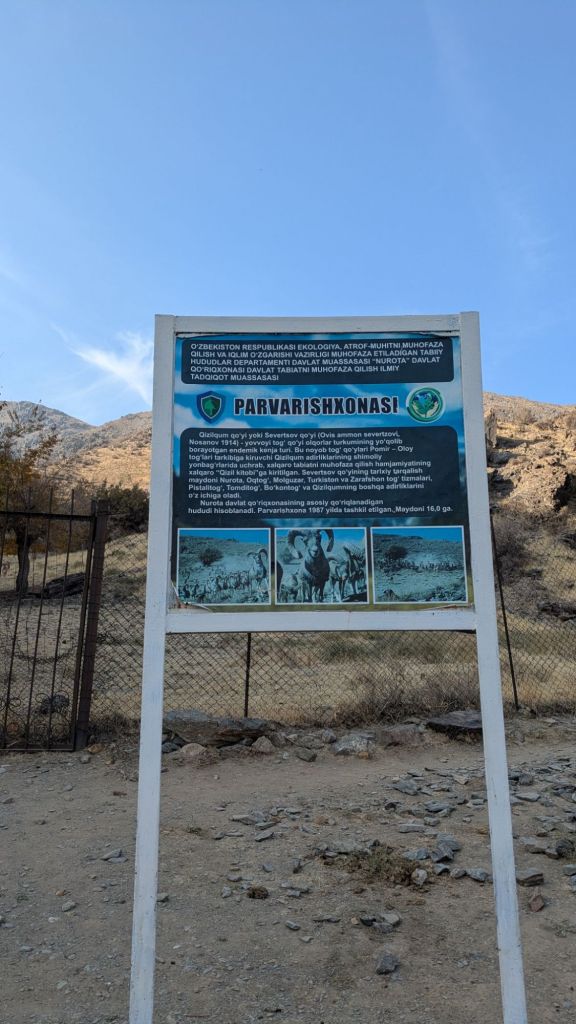
After the ride we hiked for a few miles; we were lucky to see some wild sheep. Our guide shared lots about life in the mountains. He is an enthusiastic subsistence farmer and while he thinks growing your own is pretty much a cure all for the world’s ills he is also pretty pessimistic about climate change. He pointed out many differences and how they are increasing recently.




Ride Two
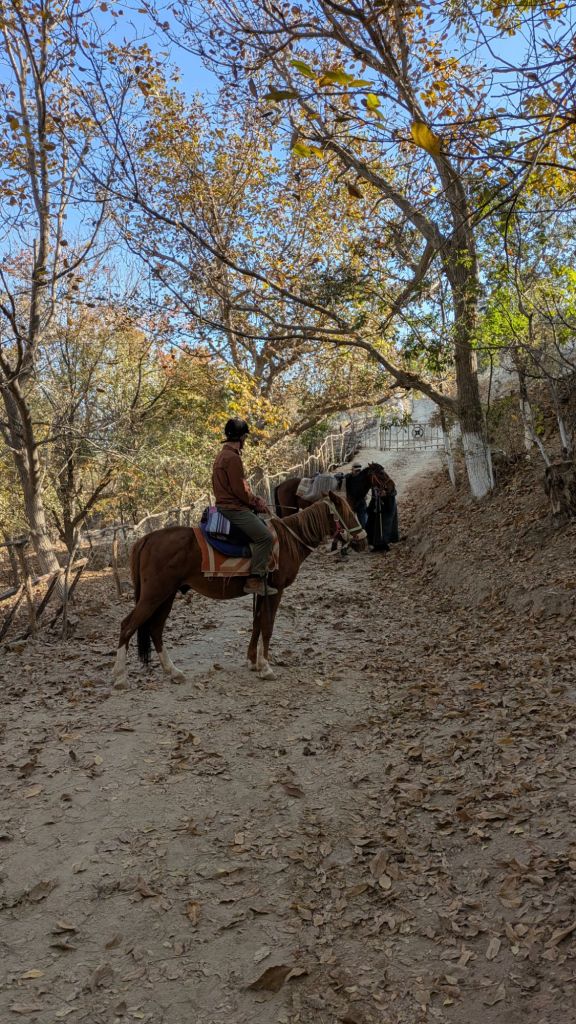
Asraf to Hayat – 9 miles

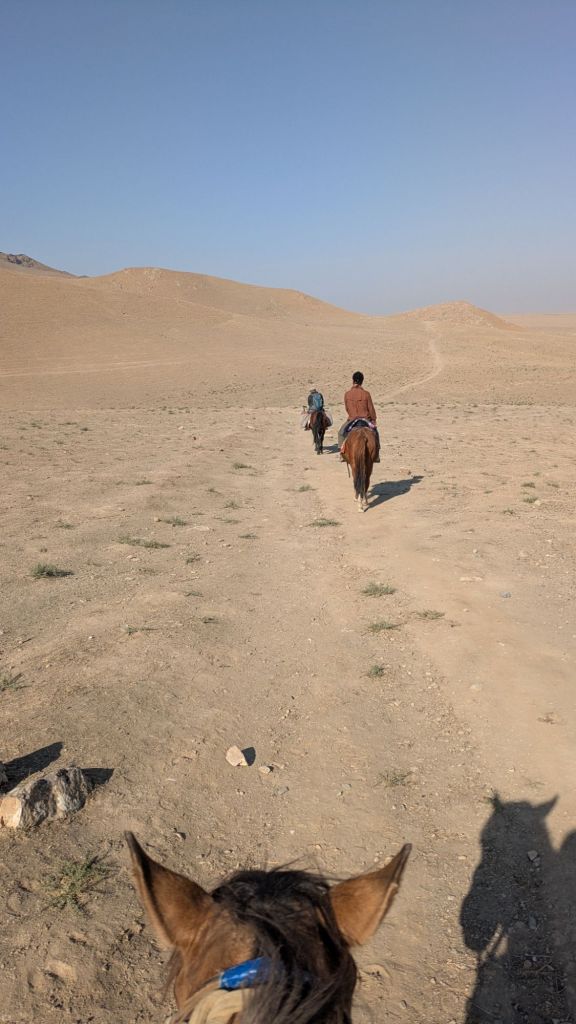


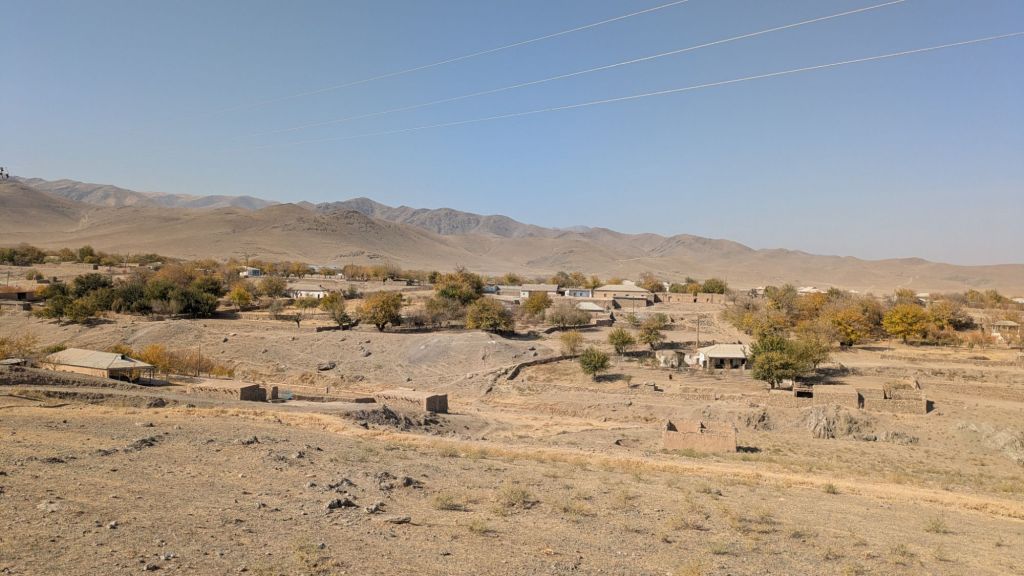

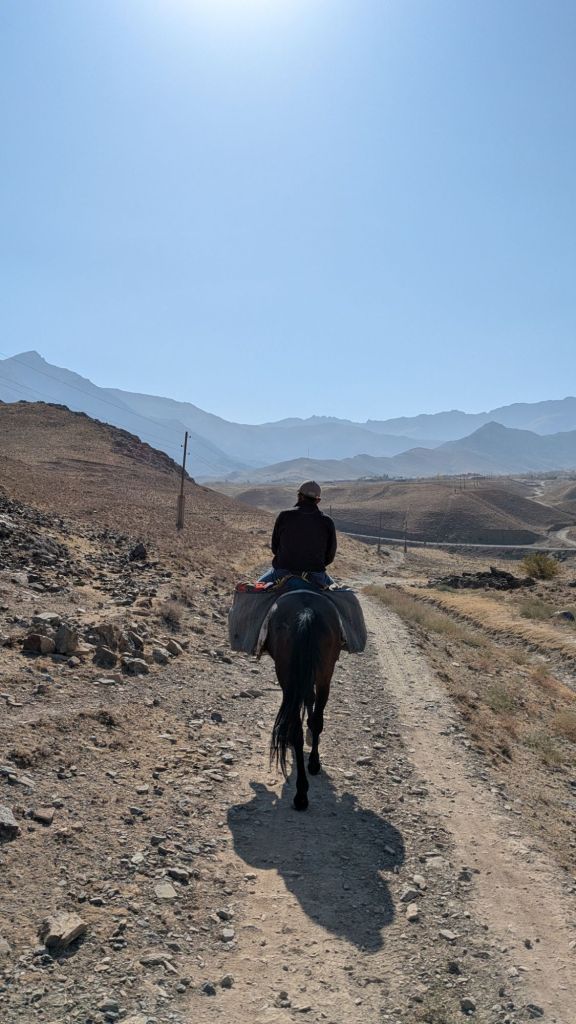
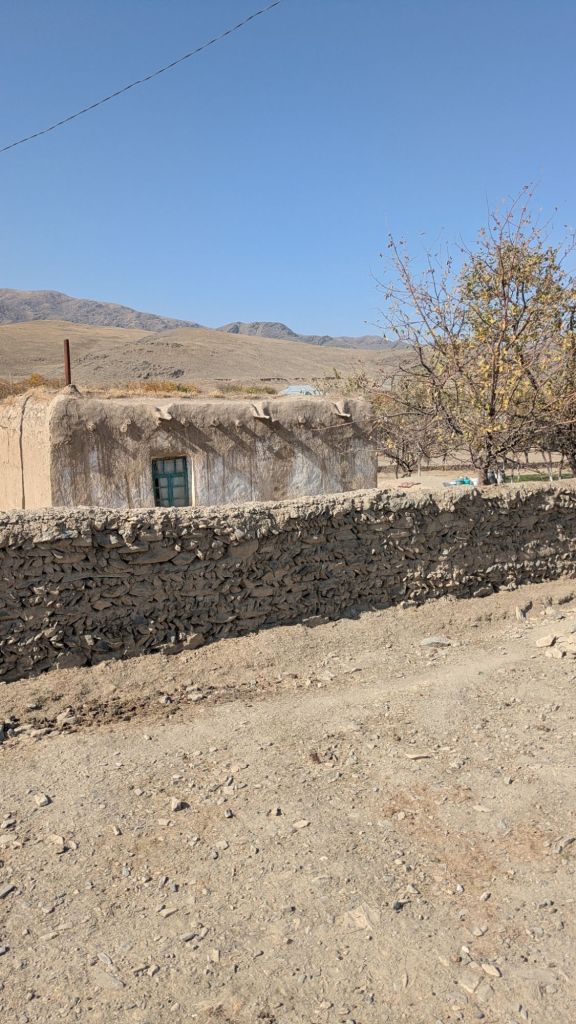
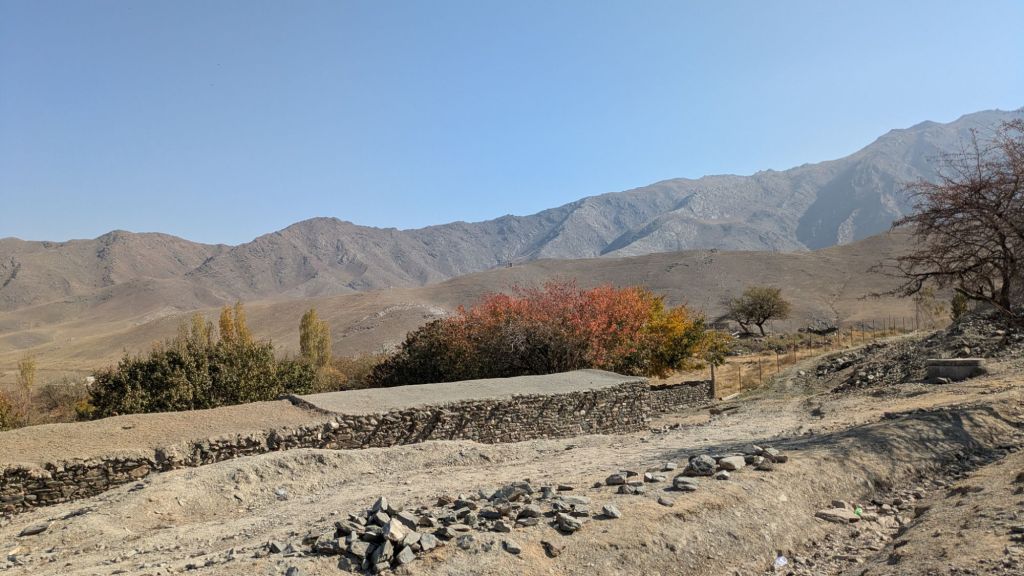
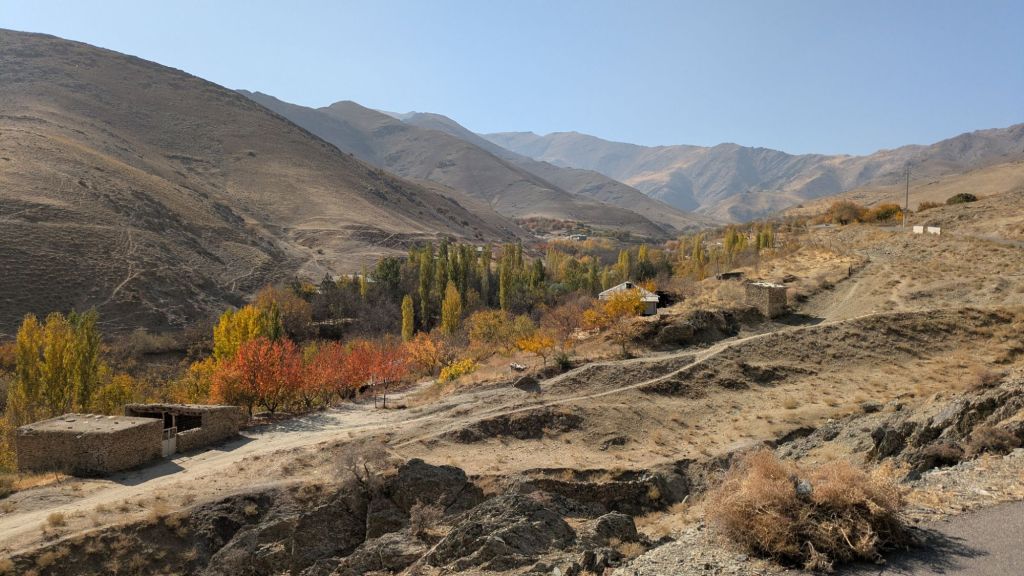
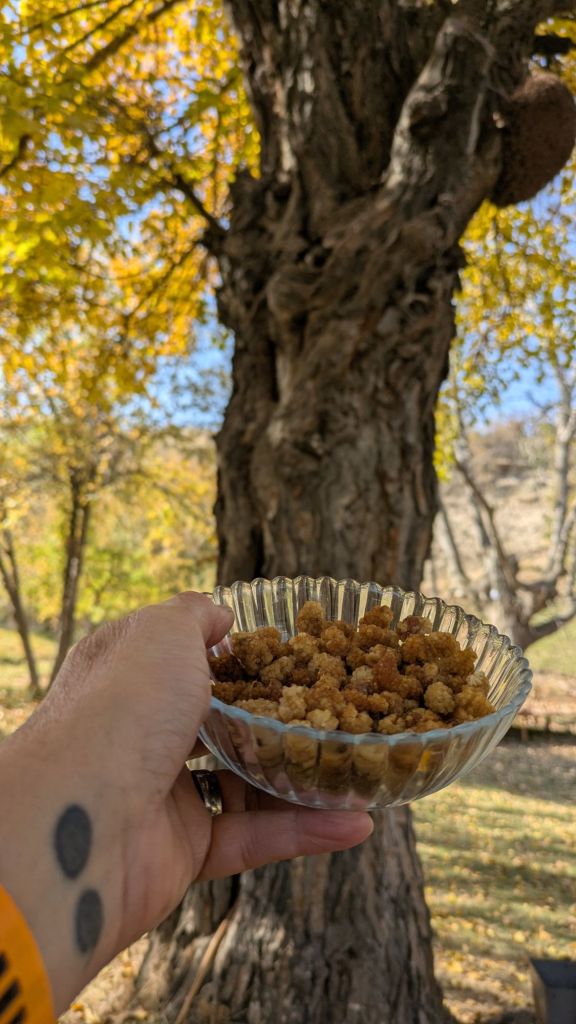
The Nuratau Mountain Guesthouse and eating meals under a mulberry tree was a highlight. Especially as the meal included mulberries from the tree!


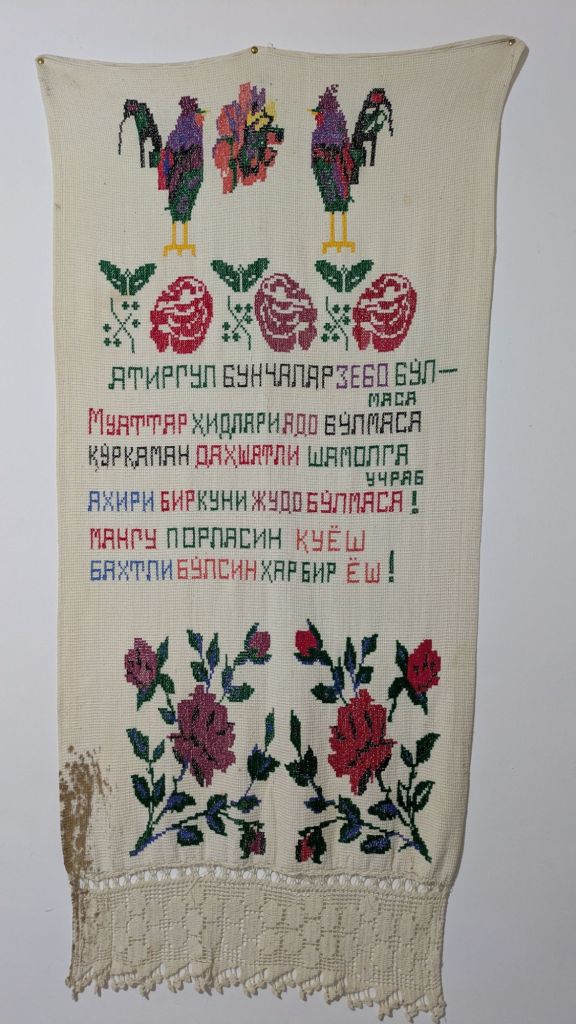
Decorations in our room were embroidered by the hosts grandmother. He had his little sister translate the poem for us via a phone call.

Ride Three
Hayat – Majerum – 9.3 miles


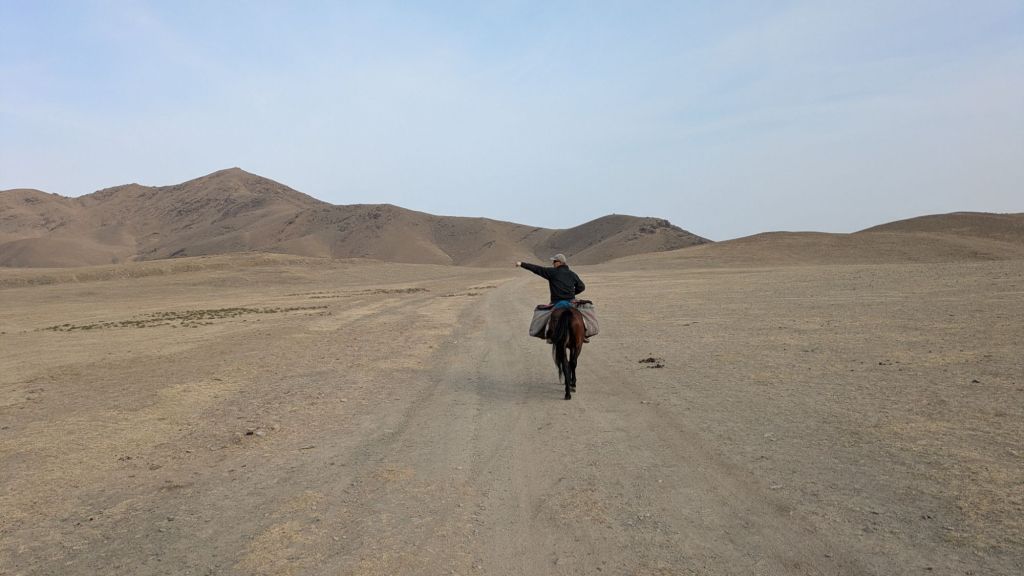
Kupkari is an ancient, traditional and contemporary, popular sport – the “ball” is a dead goat. Our host at the guest house plays, and showed us a bunch of reels and tiktoks of recent games. We missed seeing one in the local field by just a few days.
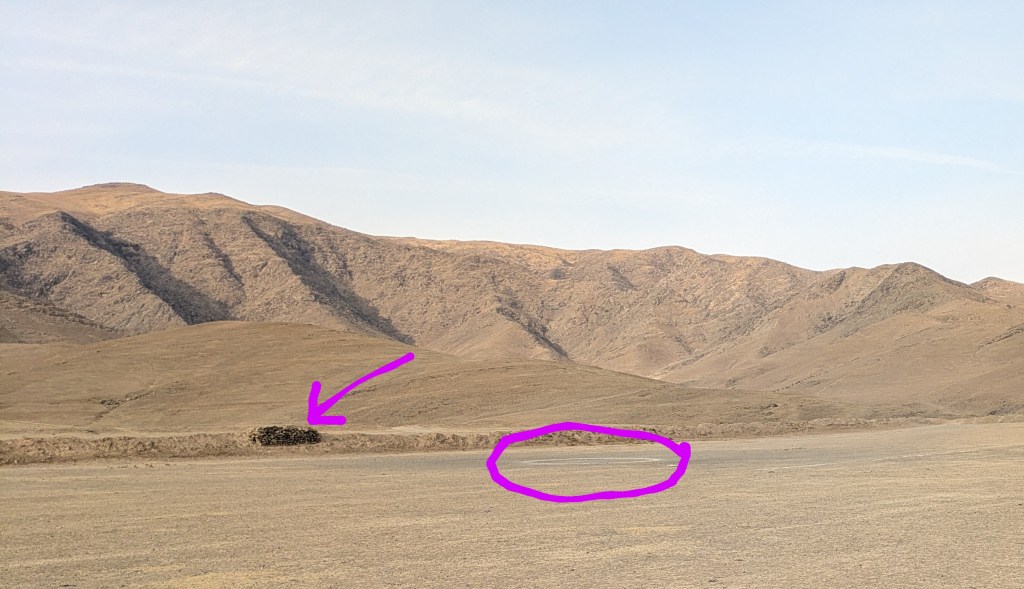
He described it as essentially an individual game, but if you successfully have the goat and are heading to the goal your friends help fend off any challengers. We rode across the kupkari field soon after leaving the village. Here’s the goal:

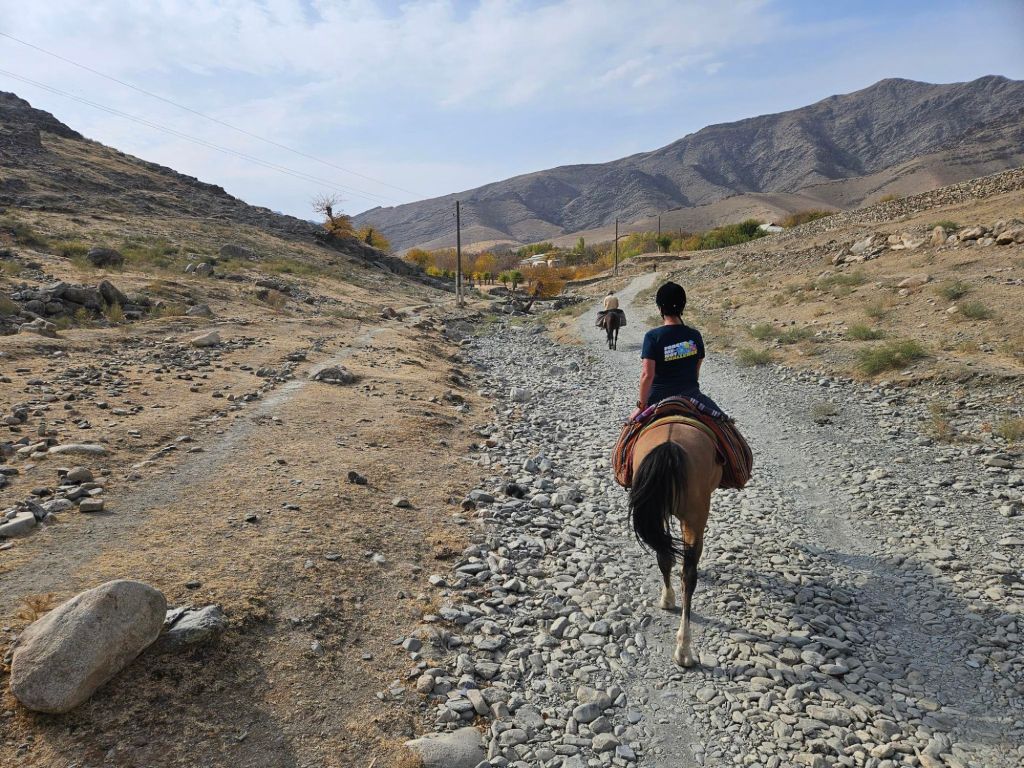
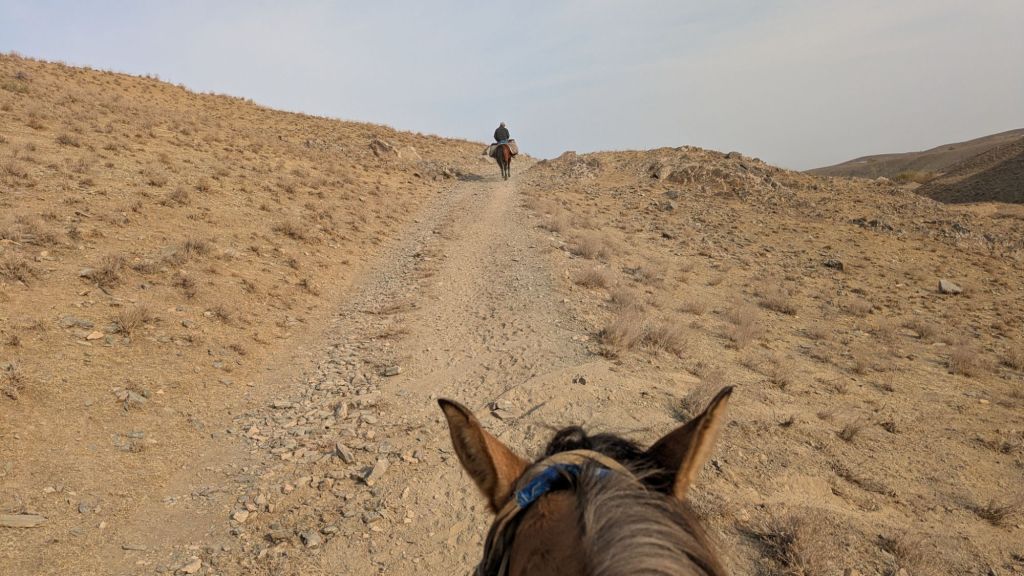
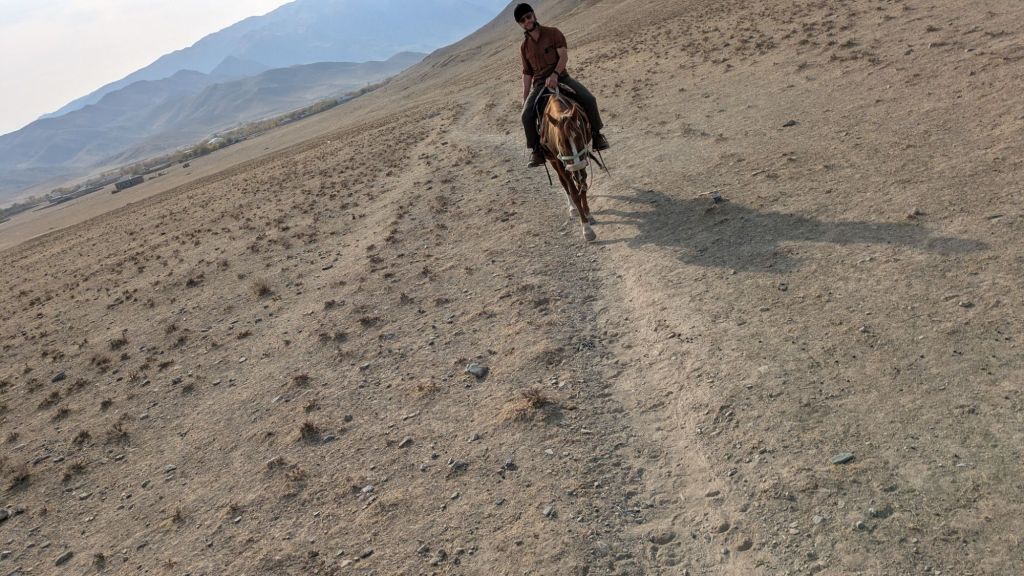
We definitely leveled up on this ride, with mostly single track and some steep hills on loose rocks.



Alexander the Great’s Tree?
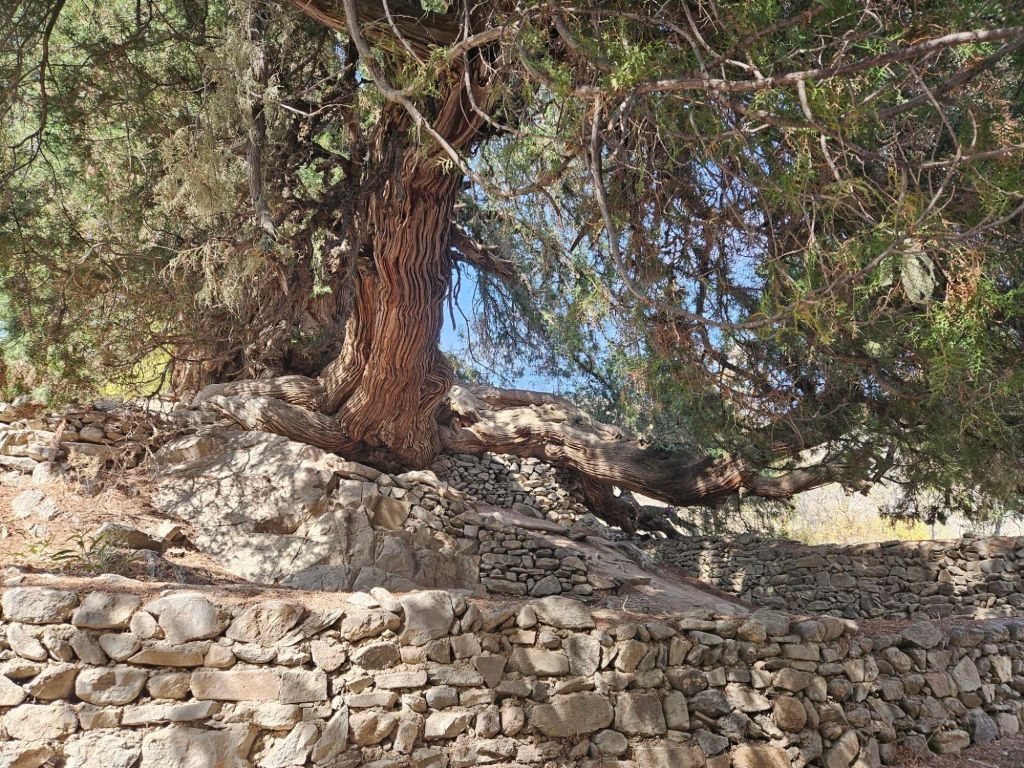
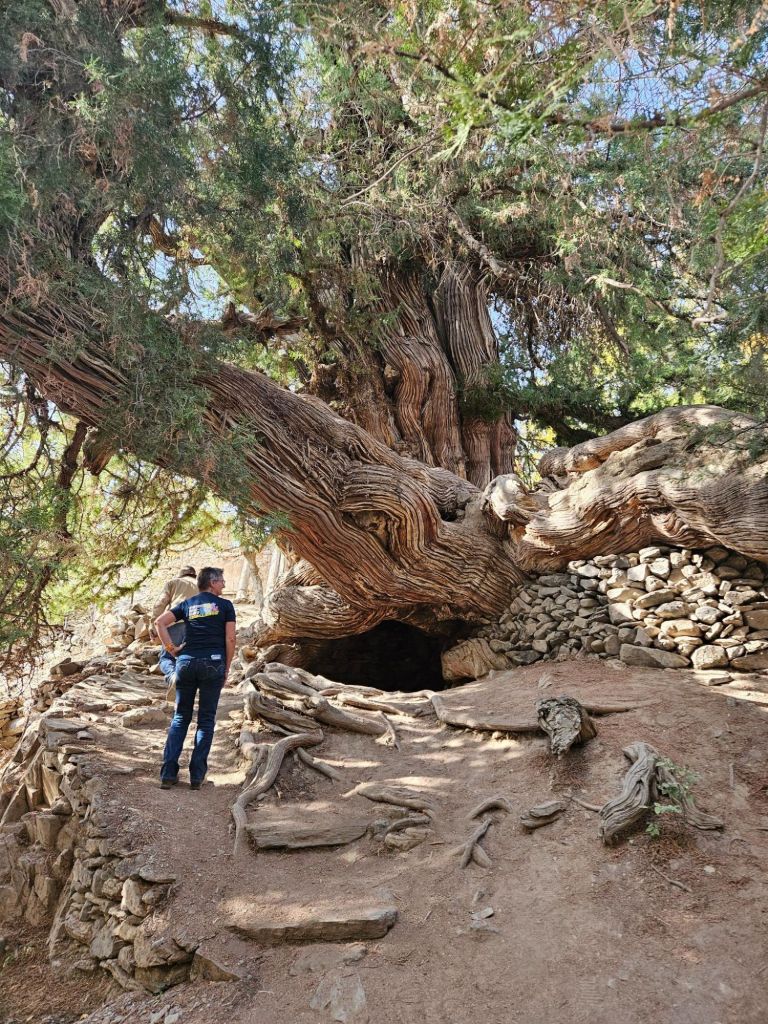
We did a short walk to view an ancient juniper tree that is a sacred pilgrimage site for locals. Based on the legend that it was planted on the grave of one of Alexander the Great’s commanders it is about 2,300 years old. Its trunk girth is ~75 feet! It is a sprawling tree and is hard to really capture in photos.

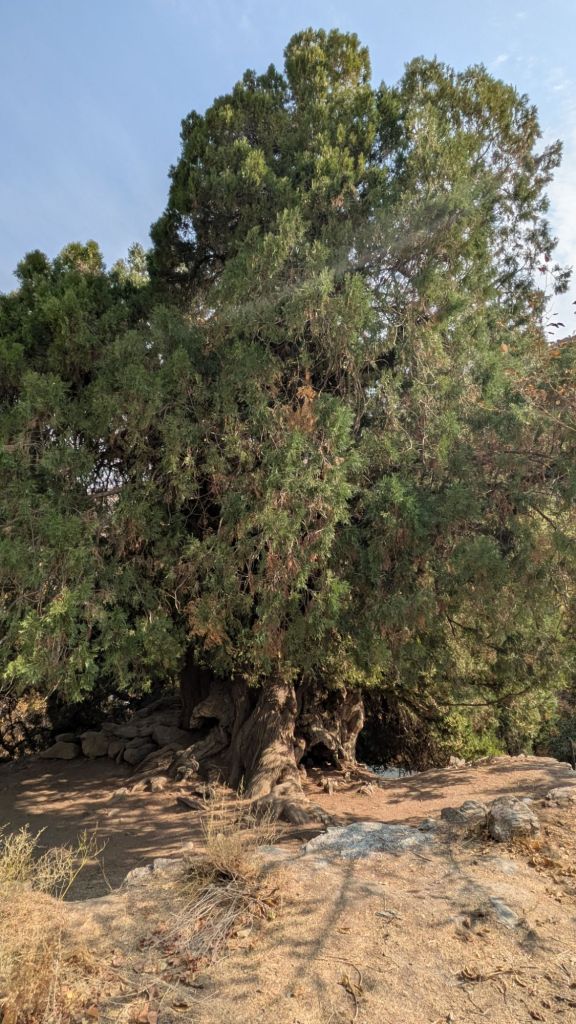

There are various ruins and old buildings around the area.


Next up was heading back to Bukhara for an overnight train, but as our train wasn’t until 11pm and our driver had the rest of the day open, he offered to make some additional stops along the way.
Nur Fortress
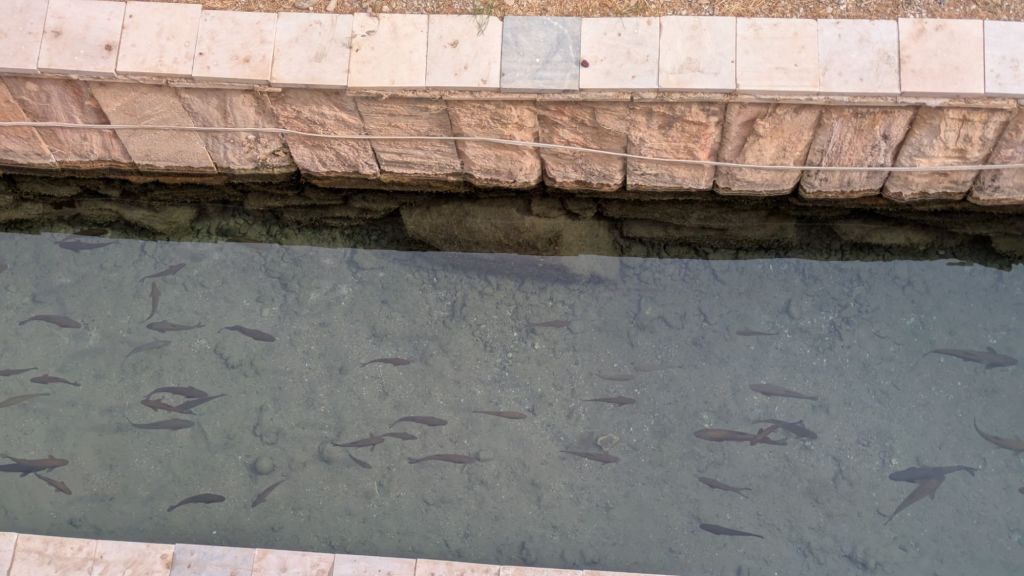
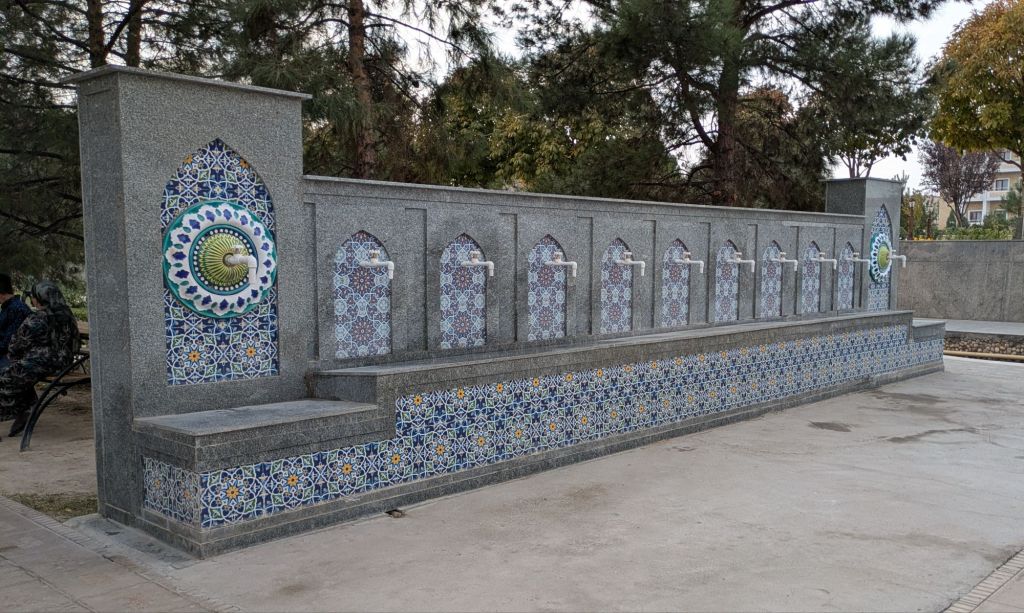
Nur was founded in 327BC by Alexander the Great. The name of the city is now Nurota. The spring is likely why it was selected as an excellent town site.
Both the water and the fish are considered sacred. There is a unique, ancient water supply system “karez” still in place.


Sardoba Malik
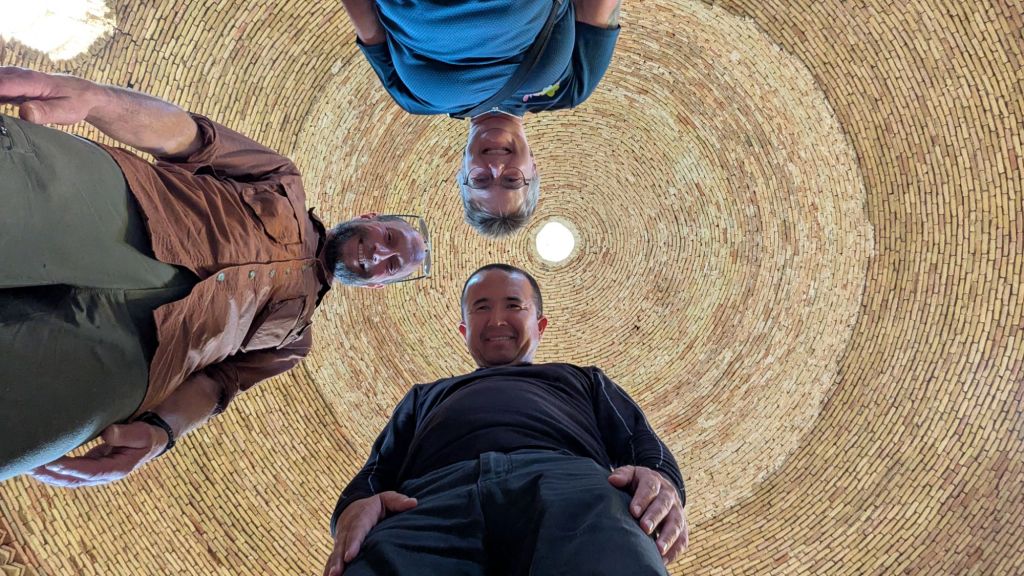
An ancient water cistern, circa 12th century, an underground reservoir to serve the caravanserai and the settlements around what became Navoiy.

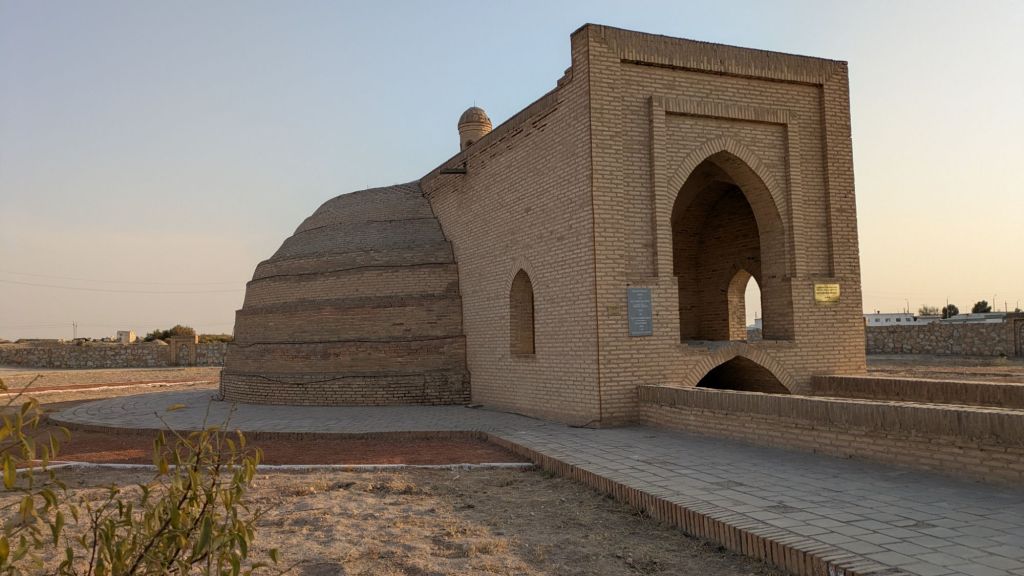
We had dinner together in Bukhara before being dropped off at the station.
Next up last day shopping and eating in Tashkent. And then likely another post about general sights, sounds, experiences, and the food.
Jet lag was REAL this week, but reentry has mostly been smooth…
 Quillpig